_
Showing posts with label arts. Show all posts

23 July 2016

10 Misnomers - 500 Words Ep. 28


Looking back through the HH archives the other day, we happened across this little gem of information:


The Pont Neuf, then, is a misnomer—its name really doesn’t (or, at least, no longer) fits it. 

And from strawberries to the Big Bang Theory, this week on the Haggard Hawks YouTube channel we’re looking at 10 misnomers precisely like this one:


In fact the dictionary is so full of examples like these that cutting our list down to just 10 here was a brutal business. Koala bears, for instance, aren’t bears. Irish moss is a marine algae. Chinese chequers aren’t Chinese. Fireflies aren’t flies. Peanuts aren’t nuts. Thousand Island dressing takes its name from an archipelago of 1,864 islands. And let’s not get started on the Hundred Years War

But as misnomers go, this one will forever be one of the best:


So how the dickens did that happen?

The colour pink as we know it today takes its name from the Dianthus flowers known as “pinks”. They in turn are thought to take their name either from the use of pink as a verb, meaning “to perforate” or “to give an ornate trim”, or else from the even older use of pink as an adjective, meaning “half-closed” or “winking” (which was, at the risk of making this discussion even more complicated, the original meaning of pink-eye). If that’s the case, then pink probably has its roots in Dutch, and might even be a distant relative of blink.

The “pink” in French pink is something of a mystery, but one very plausible theory claims that it derives from an old German word, pinkeln, literally meaning “to pee” (hence its yellowy colour). This murky-yellow shade of pink is actually the oldest recorded use of the word pink in Englishand remains in use in artistic contexts—but nowadays the pale red version has all but taken its place.

Why? Well, no one is entirely sure, but one popular theory is that the use of pink to refer to pale red derives from the popularity of Dianthus flowers in Elizabethan England. According to the story, pinks were one of Queen Elizabeth I’s favourite flowers and so were grown and sold all across England in the sixteenth century. That helped to establish their name, pink, with their pale fuchsia colour, and it’s that colour that the word has remained attached to ever since. 



10 March 2016

Histriomastix

Late on Monday night (or early on Tuesday morning, depending on where you’re reading this…) a brilliant word quietly crept onto the @HaggardHawks Twitter feed:


…and I thought you might like to know a bit more about it.

A histriomastix is indeed a theatre critic (or a “severe critic of playwrights” as this dictionary defines it), but that’s putting it lightly: the word histriomastix literally means “scourge of actors”, and the suffix –mastix derives from an Ancient Greek word for a horsewhip. There’s a reason why this word has such abrasive connotations, however: it was invented by someone who really, really, hated actors. 

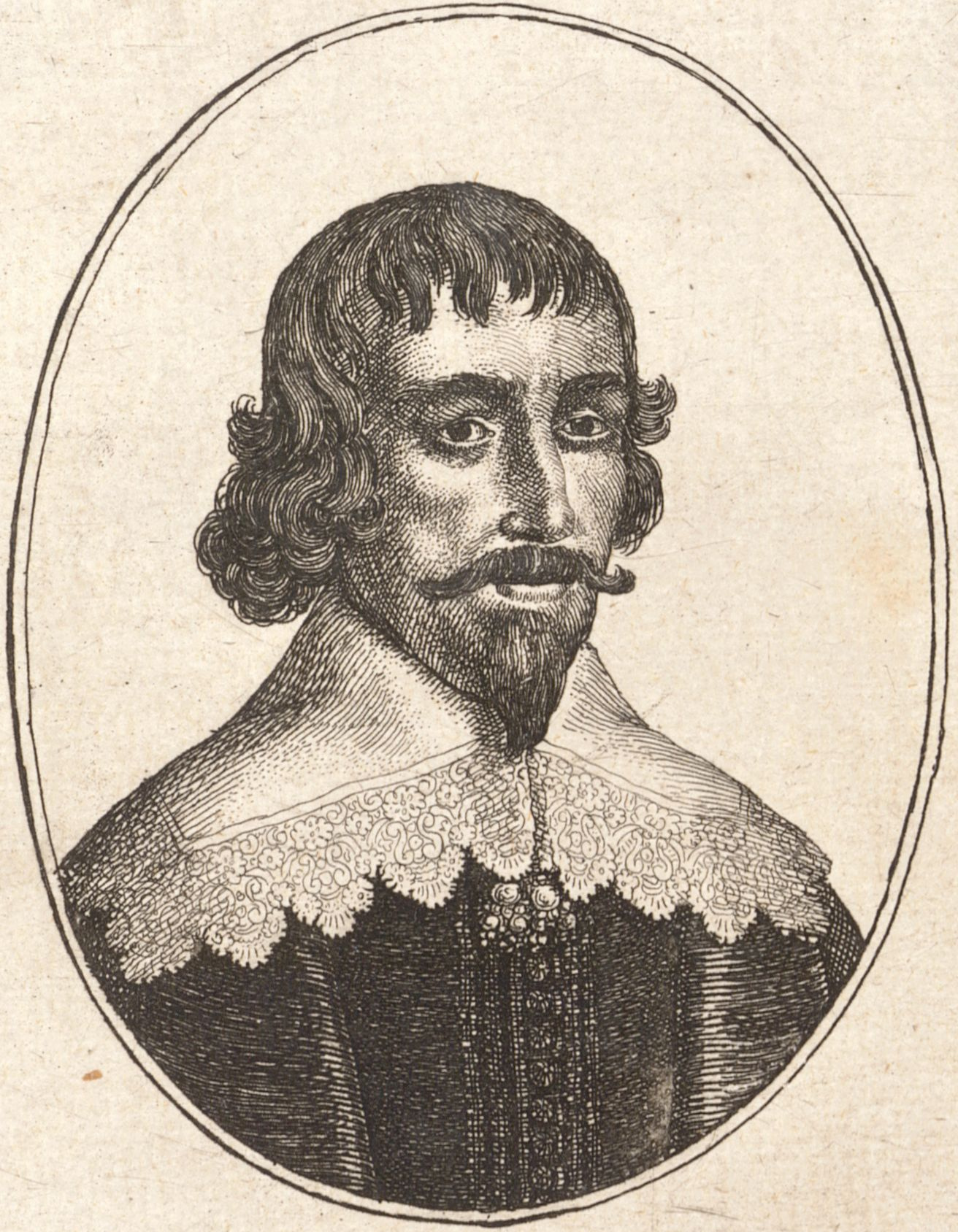
His name was William Prynne, a seventeenth century English lawyer, pamphleteer, and notoriously hard-nosed Puritan. Born in Somerset in 1600 and educated at Oxford, it’s thought that Prynne was first introduced to Puritanism during his training to become a barrister at London’s Lincoln Inn in the mid-1620s; he published his first Puritanical literature the year before he was called to the Bar in 1628.

Over the next four decades, Prynne published more than 200 books and pamphlets, the majority of which outlined his stringent views on everything from Christian redemption (some people were predestined never to be redeemed by Christ’s atonement on the Cross, he believed) to the length of a person’s hair (men’s hair should be kept short, women’s should be kept long, and anything in between was “unseemly and unlawful to Christians”). 

Like all Puritans, he railed against any form of celebration or revelry, and so out went singing, dancing, music, and Christmas, which was dismissed as derivative of the Roman Bacchanalia, a fact that “should cause all pious Christians eternally to abominate [it]”. But as unpopular and uncompromising as Prynne’s opinions were, none landed him in as much trouble as when he turned his reproachful attention to one group in particular: actors.

Prynne saw acting and masquerading as no different from any other kind of revelry, and in 1632 published a rambling 1,000-page essay of unadulterated condemnation to explain his stance. Entitled Histriomastix: The Player’s Scourge or Actor’s Tragedy, in it Prynne attacked almost every facet of the theatre, from the actors themselves (“sinful, heathenish, lewd, ungodly spectacles”, “pernicious corruptions”, “intolerable mischiefs to churches, to republics, to the manners, minds, and souls of men”) to their costumes (“a confluence of all whorish, immodest, lust-provoking attires … sufficient to excite a very hell of noisome lusts in the most mortified actors’ and spectators’ bowels”). 

Shakespeare’s trick of having men and boys dressing as women to play female characters—“representing the persons of lewd notorious strumpets”, according to Prynne—was “undoubtedly sinful, yea, utterly unlawful to Christians”. The plays themselves were written off as “deceitful fictions, which would quickly teach men to cheat, to steal, to play hypocrites and dissemblers”. And the “obscene, lascivious lust-provoking songs and poems” performed in them were “abominable unto Christians” as they risked “enflaming the outrageous lusts” of the audience, who are “transported by them to a Mahometan paradise or ecstasy of uncleanness”. Well, quite.

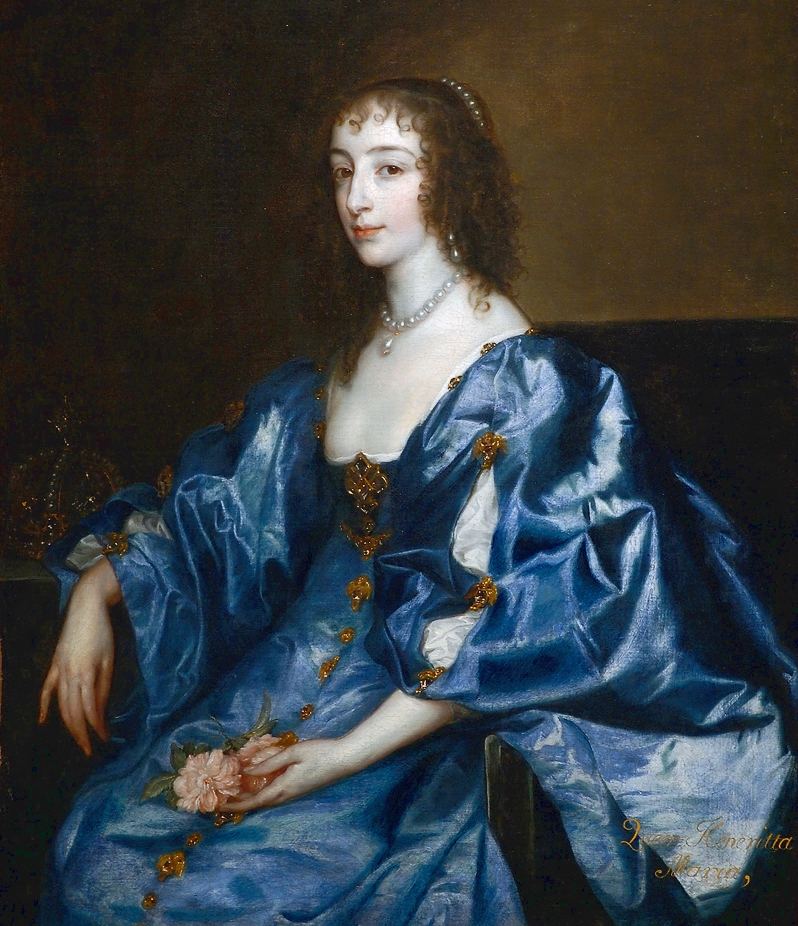
Each to their own, of course, but in this instance there was one small problem with Prynne’s vitriol: alongside her duties as queen consort, the reigning King Charles I’s wife Henrietta Maria liked nothing better than donning something from her confluence of all whorish attires and performing in a good old deceitful fiction. Put another way, she was an actress.

Consequently, Prynne’s Histriomastix soon attracted the attention of the royal household, and his outspoken opinions on the theatre were soon being spun as a less-than-subtle slight on Queen Henrietta herself. The Archbishop of Canterbury, William Laud, and the Attorney-General, William Noy, had Prynne arrested and thrown in the Tower of London, and on 17 February 1634 he was sentenced to life imprisonment, fined an eye-watering £5,000 (equivalent to £400,000 today), stripped of his Oxford degree, and, just when things could scarcely get any worse, ordered to be pilloried and have both his ears cut off. The case understandably caused a sensation—and amid all the brouhaha, the English language earned a new word for a harsh and uncompromising theatrical critic. 

But not even that insane catalogue of punishments was enough to stop Prynne. Thrown back into the Tower, he continued his writing, this time turning his attention away from the theatre and towards the moderate anti-Puritan clergy who had landed him in jail. In 1637, he found himself again in hot water after publishing an attack on the Bishop of Norwich. For a second time he was handed a life sentence, fined another £5,000, pilloried and, for what it was worth, sentenced to have what little remained of his ears again cut off. This time around he was also branded on both sides of his face with the letters “SL”, which according to the courts was to show everyone that he was “seditious libeller” —but Prynne preferred to tell people that it stood for stigmata laudus, or “the marks of praise”. 

Remarkably, Prynne’s luck suddenly changed in 1640, when the Long Parliament—convened by King Charles to fund his on-going battles against rebellion in Scotland—overturned his conviction, released him from the Tower, and reinstated all his legal qualifications (which he soon put to good work prosecuting Archbishop Laud when he was later arrested and tried for treason; Laud was eventually executed in 1645). Prynne also continued his pamphleteering, but as Charles I’s monarchy collapsed and England was thrown into Civil War, his condemnatory attention soon turned to Oliver Cromwell.

Although Cromwell himself was a Puritan, Prynne took exception to his and his supporters’ interpretation of radical Puritanism. He despised those championing the king’s execution, was suspicious of Cromwell’s republican army, and ultimately found himself supporting the Royalist cause. After Cromwell’s downfall and the Restoration of the monarchy in 1660, Prynne’s stance was rewarded by Charles II with a seat in Parliament—and, ironically, the position of Keeper of the Records of the Tower of London. 

He died in 1669, his hatred of actors and his invention of the word histriomastix earning him a place in the dictionary. It’s quite a life story, though—and would make a great play. Kickstarter, anyone? 


12 March 2015

Pencil

Earlier on today, we tweeted this: 
And we thought you might like to know a bit more about it.

It’s easy to presume that pen and pencil are related words, but in fact they’re completely unconnected. Pen comes from the Latin word penna, meaning “feather”, making it an etymological cousin of words like pennant, empennage and even penne pasta. The earliest pens were quills—long birds’ feathers dipped in liquid ink—and it’s from there that the modern pen eventually evolved.

Pencil, on the other hand, comes from penicillus, which was originally the Latin word for artist’s paintbrush. Brushes were used as writing implements long before modern pencils of lead, chalk and eventually graphite were developed in the Middle Ages, and it’s from there that the modern pencil emerged in the late 1500s. 

In turn, the Latin word penicillus is a diminutive of penis—no, honestly—which, besides the obvious, could also be used to mean “tail” in Latin. But how did a word meaning “little tail” also come to mean “paintbrush”? Well, picture a lion’s tail, with a soft tuft of hair at the end of it, and you can probably see the resemblance. Just make sure you’re picturing its tail.


The world’s most dangerous paintbrush

26 February 2015

Trivia

One thing that HaggardHawks deals with quite a lot—all the time, in fact—is trivia. Random bits of throwaway information. Miscellaneous facts. 

Dissect the word trivia under an etymological microscope and you’ll find two fairly obvious Latin roots: tri-, taken from the Latin for “three” (as in “triangle”), and -via, the Latin word for “road” or “way” (as in “you can only get into town via the diversion at the end of the high street that takes you two miles out your way”). So how did a word that apparently means something like “three roads” come to imply “random information”? 

The answer lies in the early Middle Ages with a little-known scholar named Martianus Minneus Felix Capella, born in Roman north Africa more than 1500 years ago. As well as having a name that sounds like a magic spell, Capella was one of the first proponents of a classical system of learning called the Seven Liberal Arts—seven fundamental subjects he considered the cornerstones of a good education.


The pilot of Celebrity Squares was a complete failure

Capella’s work continued to be studied and discussed long after his death, until eventually the idea of the Seven Liberal Arts had become a well-established part of Western education. Although precisely what these seven subjects were changed a bit over time, by the Early Modern period the complete set was widely understood to be arithmetic, geometry, astronomy, music, grammar, rhetoric and logic.

The first four of these—arithmetic, geometry, astronomy and music—were considered the more worthwhile ‘mathematical sciences’, dealing with concepts of quantity and magnitude, and so were set apart from the others as a separate higher tier of learning known as the quadrivium, a play on the Latin word for a crossroads. The remaining three—grammar, rhetoric and logic—comprised a lower tier of learning, dealing purely with matters of prose and language. And in contrast, it became known as the trivium, the Latin word for a place where three (rather than four) roads meet.

Because this trivium was considered the less important of the two, by the late nineteenth century its name—or rather, its plural trivia—had come to be used of less important knowledge in general, and eventually any random, throwaway facts or pieces of information. 

Precisely like this one.