_
Showing posts with label grammar. Show all posts

17 March 2016

I, Part II

Last year on the HaggardHawks blog, we looked at why the lower-case letter i—and its alphabetical cousin j, for that matter—has a dot above it. Turns out it had something to do with stopping intelligent people being mistaken for their knees. But this week in our noticeably infrequent series of Questions About The Language You Never Even Thought About, we’re posing another I-related conundrum: why do we capitalize the pronoun I?

After all, none of the other English pronouns—including all the other first person pronouns, like me, mine, my and myself—is capitalized, unless you happen to be God or He Who Should Not Be Named. Nor was I’s ancestor, the Old English word ic, written with an uppercase letter. And the translated equivalent of I in most other languages is usually left in lowercase, like the French je, Spanish yo, Italian io, and German ich.


Speaking of German, it of course capitalizes all of its nouns, like Mann and Frau, Apfel and Orange, Kapitalbuchstaben and Kleinbuchstaben. That’s something that English reserves only for its proper nouns (John Smith, Australia, the Cabinet, Sister Act), unless you happen to have some kind of point-making rhetorical effect in mind, as in “He doesn’t just think he’s the bee’s knees, he thinks he’s The Bee’s Knees”.

German does however capitalize the formal form of its second person pronoun, Sie, “you”, along with all its derivate case forms like Ihr, “your”. That’s part of a linguistic phenomenon known as the T-V Distinction, which has nothing to do with how much better than terrestrial television Netflix is, but rather the way in which some languages like to show polite respect by altering the pronouns used to refer to people you don’t know very well or hold in high regard. It’s the same reason why French speakers will politely ask you to respondez s’il vous plaît, unless they know you particularly well (in which case résponds s’il te plaît will do just fine). Same goes for voulez-vous coucher avec moi, çe soir, but you really shouldn’t be saying that to someone you don’t hold in high regard.


So is this what’s happening in English? Do we think so highly of ourselves that we’ve grown accustomed to capitalizing our first person pronoun? Some etymologists have suggested so, and have even theorized that there’s a latently egocentric, psychological reason behind uppercase I. But if that’s the case, why hasn’t that filtered down to the likes of me and myself, or we and ourselves? And why is it only English speakers who are self-centred enough to capitalize ourselves while other languages are not? Don’t answer that.

So perhaps there’s something more pragmatic going on. An alternative theory claims that because the pronoun I occurs so frequently in sentence-first position, it’s only natural that it would eventually become capitalized. It’s a plausible idea, but does I really occur enough times in sentence-initial position to permanently alter its form in every other context? And again, why hasn’t the same thing happened to all the other pronouns?

Instead the most likely explanation of how we ended up with capital I is a surprisingly practical one, instigated by the fact that around the time capital-I first began to appear in English texts—in the Middle English period, roughly 700-800 years ago, so Chaucer’s Canterbury Tales provides much of its early evidence—there was a phonological change also taking place.

At that time, many dialects of English were busy reducing the Old English word for Iic or ich, which was pronounced a bit like “itch” but without the T—to a single “i” sound, making the Cs and Hs normally used to spell it no longer necessary. In written English, however, a single lowercase letter i can look a little lost on its own, and in a densely handwritten document it’s easy to imagine just how easily a solitary pint-sized stroke, even with or without its dot, might be misread, overlooked, or even dismissed as a smudge or dash.

As a result, early Middle English scribes began making their single letter Is a little bigger, so that they could stand a little prouder and little more robust on the line of text. And over time, that became the standard and gave us the pronoun capital I. And that’s The Truth—or at least, the Best Theory We Have.


30 April 2015

Cacemphaton


Earlier this month, UK Labour Party leader Ed Miliband made headlines (as well as a new Labour Party slogan) by exclaiming that “Hell, yes!” he was tough enough to be the next Prime Minister. Then, earlier this week, David Cameron likewise made headlines when he admitted to feeling “bloody lively” about the upcoming election. Well, somebody has to.

But no matter how rousing, how convincing, or how appropriate you might think the two leaders’ sweary outbursts were (and if they think this is swearing, they should really try standing at a bar in Newcastle on a Friday night), their use of tongue-worms nevertheless brings to mind two brilliant terms from the murky world of rhetoric.

The first, cacemphaton, is the rhetorical use of bad language. It literally means “bad show” or “bad appearance” in Greek, the phaton suffix being a distant relative of words like phantom and epiphany. It was coined by the Roman rhetorician Quintilian in the first century AD, in his enormous guide to speech-making, Institutio Oratoria, or “The Institutes of Oratory”. Twelve volumes of rhetorical treatises, you say? Count me in! 

(Asking a rhetorical question and then answering it yourself? That’s anthypophora.) 

Marcus Fabius Quintilian: He’ll never catch a cab up there.

Quintilian, unsurprisingly, wasn’t a big fan of bad language—in fact he labelled it “objectionable”, “corrupt”, and “unbecoming”. So when it came to actually writing about the expletives he had in mind, he neatly dodged the issue by writing instead that, “it would be tedious to specify them, and in doing so I should dwell upon the very fault which I say should be avoided.” He’s got a fucking point.

But the bad language Quintilian was referring to wasn’t the same “bad language” we use today. Instead, he used cacemphaton to refer to a clumsy or ill-advised choice words, and in particular a chance combination of words that could be misinterpreted or misheard as something vulgar. By means of an example, he singled out the Latin word intercapedo, meaning “interruption” or “interval”, which he advised against using because its final two syllables sound remarkably like the Latin word for “I fart”.

So originally cacemphaton referred to the unintentional use of bad or vulgar language—like when the F word suddenly appears in the middle of your polite request to “pass a fork and knife”, or when you tell someone to “catch it!”, and instead it sounds like a warning not to step in a used litter tray. But over time Quintilian’s definition broadened, so that today cacemphaton generally refers to any rhetorical use of coarse or vulgar language, particularly for emphasis or effect. The unintentional “bad language” that Quintilian identified, meanwhile, is now termed cacosyntheton—literally “badly put together” language.

If you are going to swear, though, there should always be a good reason for it—which brings us to the second word on our list: lalochezia. It describes the use of foul language to relieve stress, pain or frustration. So those words that rush through your mind (and out of your mouth) when you miss your train, stub your toe, or accidentally brush against a hot iron? That’s lalochezia. 

Appropriately enough for a word concerning foul language, lalochezia itself has a pretty foul etymology. So while the initial lalo– is a derivative of the Greek word for “speech”lalia (as in glossolalia, the proper name for speaking in tongues), the –chezia part is a derivative of the Greek verb chezo—which means “to defecate”, and is a not-so-distant ancestor of the English word shit. So, etymologically speaking at least, lalochezia is literally “shitting out of your mouth”. 

Quintilian would have been horrified.


31 March 2015

Zed

So zed is British and zee is American, yes? Well, that might be the case today, but once upon a time things were quite different...

Historically, both zed and zee were used pretty much interchangeably in both British and American English, alongside a whole host of other more outlandish names for the last (or rather, second last) letter of the alphabet, like izzard, uzzard, zad, shard and, our personal favourite, ezod. Of the two we’re talking about here, however, zed it by far the oldest, and takes its name via French and Latin from that of its Greek equivalent, zeta. Zed first appeared in print in the early 1400s, in a Middle English document that fairly straightforwardly described it as “þe laste lettre of þe a b c”—which is considerably nicer than what William Shakespeare had to say about it.

Zee, on the other hand, first appeared in print in a British language textbook—Thomas Lye’s New Spelling-book—in 1677. The name zee itself is thought to have originated as nothing more than a dialect variation of zed, probably influenced by the regular bee, cee, dee, ee pattern of much of the rest of the alphabet. But precisely how or why it became the predominant form in American English is unclear.

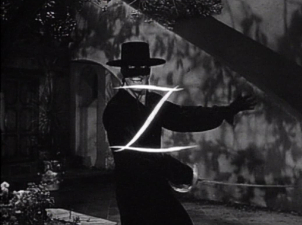
Thanks to his new calling card, everyone knew where Zubin Mehta had been

One widely-held theory is that because zed, as the older of the two, was the most widespread variation amongst British English speakers, during the Revolutionary War American English speakers looking to distance themselves from anything even vaguely British simply adopted the zee version as their own to make a stand—no matter how small it might seem—against British control. Alternatively, there mightn’t have been any political reasoning behind it at all, and the name might simply have come to the forefront as American English was forced to adapt and simplify as more and more colonists—coming from ever more distant countries, and speaking an ever more varied array of languages—began arriving in the New World.

Whatever the motivation might have been, by the mid-nineteenth century zee had become the standard form of the letter Z in the United States, and has remained so ever since. 

Though the campaign to resurrect ezod begins here...


13 March 2015

Oxymoron

You probably already know what an oxymoron is—a terribly good figure of speech in which two contradictory words or ideas are juxtaposed for rhetorical effect. Like Shakespeare’s “witty fool”, Chaucer’s “hateful good”, Tennyson’s “falsely true”, Hemingway’s “scalding coolness”, Milton’s “darkness visible”, or Cameron’s “True Lies”. But you were probably already unconsciously aware of that. Like an open secret. Or old news.

A light heavyweight. And some dry ice.

But you might not know that the word oxymoron itself, appropriately enough, is an oxymoron. The oxy– part (the same as in words like oxygen, paroxysm and peroxide) comes from the Greek word for “sharp” or “acrid”, oxys. The –moron part (the same as in, well, moron) comes from the Greek word for “dull”, moros. So an oxymoron is literally a “sharp-dull” turn of phrase.

There’s something fantastically oxymoronic about oxymoron being oxymoronic. But it’s certainly not alone. That Greek word moros, for instance, is also the root of sophomore, the first part of which is the Greek word for “clever” or “wise”, sophos. So a sophomore is literally a “wise-dull” person. 

Similarly, if you play the pianoforte then you’re playing the Italian words for “soft”, piano, and “loud”, forte—the name was deliberately coined because the piano was the first keyboard instrument that allowed the player to change the volume of what he or she was playing. And the preposterous meaning of preposterous comes from the fact that it combines two entirely contradictory Latin words: prae, meaning “before”, and posterus, meaning “after” or “subsequent”. So something described as preposterous is literally as absurd as something that has its “before after”.

And then there are words like bittersweet, and speechwriting. The word bridegroom literally means “bride-man”. Firewater is an old name for strong liquor. And how can you really have a ballpoint when balls don’t have points? Or be a spendthrift when thrifty people don’t spend? And how exactly can you be wholesome? Feel free to add your own oxymoronic examples to this list. 

In random order, of course. 


7 March 2015

Ampersand

This:

is called an ampersand. It’s derived from a handwritten combination of the letters E and T, as in et, the Latin word for “and”You might have already known that. But whether you did or you didn’t, the fact is that the swirly thing you usually call an “and sign” actually has a name. And if it has a name, then there’s a reason for it having that name. Which is where we come in.

Up until as recently as the mid 1900s, it was standard practice when reciting the alphabet to use the Latin phrase per se (literally “by itself”) to differentiate between individual letters of the alphabet—like A, I, and O—and single-character homographic words—like a, I and O.

So the letter A would be read as “A per se A”, to ensure it was distinguished from the indefinite article a. The letter I, similarly, would be “I per se I” to differentiate it from the pronoun I. And the letter O would be “O per se O” to differentiate it from the interjection O!

But because it was just another character representing just another unit of the English language, the symbol & was also once considered a letter of the alphabet, and was included after Z in twenty-seventh place. And so to differentiate & from the conjunction and, the alphabet once ended with a final “X, Y, Z, and & per se &”.


Eyetests were a lot easier in the 1920s

Sometime in the early nineteenth century, this “and per se and” ran together into a single word, and, eventually, the name ampersand was born. 


& that’s that.