_
Showing posts with label English. Show all posts

26 August 2016

10 Words Coined By Writers – 500 Words Ep. 33


If you’ve been keeping up with the HH 500 Words YouTube series, you’ll have seen a few literary lists crop up amidst all the weird words and word origins. Back in February, we marked Dickens’ birthday with a list of words derived from his characters. In April, we marked the 400th anniversary of Shakespeare’s death with a list of words he used that no one can quite decipher. 

And this week, we’re heading back down the library with 10 Words Coined By Writers:


One word that could have made this list (and would have done, had we not already addressed it in our video on little-known opposites) is eucatastrophe, a term coined by Lord of the Rings author JRR Tolkien as the opposite of catastrophe: a sudden event of sheer good fortune in the plot of a story that typically hastens its conclusion.


Lewis Carroll’s chortle could have made our top 10 too, had we not already explained its origins in our video on portmanteaux. But one word that failed to make the final cut here and yet still deserves an explanation, is the story behind James Joyce’s little known contribution to particle physics: the quark.

A quark, for those of you not too well versed in this subject (a minority, surely…) is defined by the Oxford English Dictionary as:
Each of a group of subatomic particles regarded, with leptons, as basic constituents of matter, and postulated never to occur in the free state but to be combined in pairs to form mesons and in triplets to form baryons, and to have fractional electric charges, +⅔ and −⅓ that of the proton.
Well, that clears that up. But without going too deeply into the science behind the likes of leptons and quarks, all that concerns us here is that quarks were first postulated by American physicist and Nobel Prize winner Murray Gell-Mann in 1964. Although originally theoretical, Gell-Mann’s model of the subatomic “particle zoo” has since been validated, and ultimately the terminology he used in his original explanation has since become the standard across all physics. But why call them quarks in the first place? Well, why not let the man himself explain. 

In 1978, Gell-Mann wrote to the editor of the OED Supplement to explain the thinking behind his word:
I employed the sound “quork” for several weeks in 1963 before noticing “quark” in Finnegans Wake, which I had perused from time to time since it appeared in 1939 ... I needed an excuse for retaining the pronunciation “quork” despite the occurrence of “Mark”, “bark”, “mark”, and so forth in Finnegans Wake. I found that excuse by supposing that one ingredient of the line “Three quarks for Muster Mark” was a cry of “Three quarts for Mister…” heard in H. C. Earwicker’s pub.
In other words, as Gell-Mann later expounded in his book, The Quark and the Jaguar (1995), he knew the sound of the word he wanted to use before he decided on how it should be spelled; at one time, he explained, quark might even have been spelled “kwork”. But then, purely by chance, he stumbled across the word quark in James Joyce’s enigmatic writing, and the Q spelling stuck. 

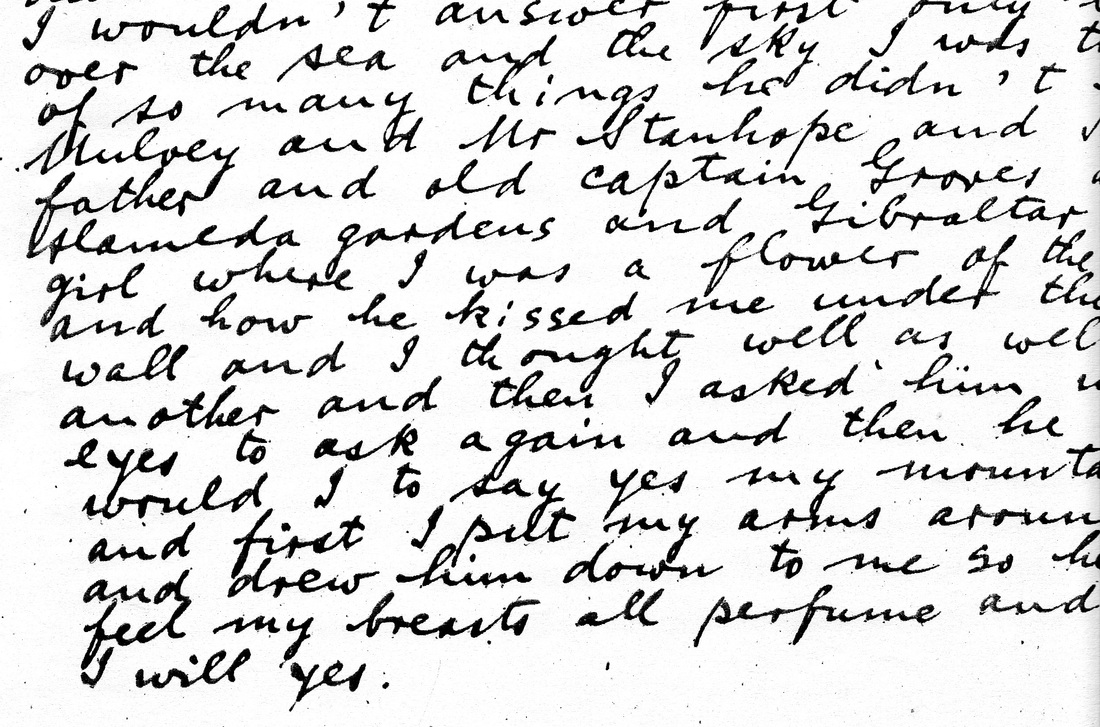
One question remains, however—what was James Joyce’s quark in the first place? Well, it’s presumed that the quark used in Finnegans Wake is meant to represent the sound of a seagull, and is used in the novel as a call to buy a round of drinks. Any excuse…


19 August 2016

10 Words That Sound Rude (But Really Aren’t) - 500 Words Ep. 32


A few days ago, HH tweeted this:


It’s one of those words that, if you’re not careful, could be taken in a very, very questionable direction. But there are plenty of words that don’t even have to be mispronounced to raise eyebrows—they’re just straight-up dirty. Or, at least, that’s how it might seem.


Peniaphobia, for instance, is nothing more than the fear of poverty and destitution. Pissasphalt is a type of bitumen. A tittynope is a crumb or portion of something, left over after all the rest has been used. A cockchafer is a beetle. A cock-bell an icicle. In fact, whether you’re talking about assart or spunk-water (you can thank Tom Sawyer for that one), there are quite a few words in the English language that sound rude, but really—genuinely—aren’t.

So brace yourselves, because it’s 10 of those that are the subject of this week’s YouTube video:


If you haven’t had your fill, there are nearly 100 words like these for your perusal over on Mental Floss, any one of which could have made the final cut here. One word that didn’t, however, and that perhaps needs a little more explanation, is this:


The key to this word (and others like it) is that sluttish originally meant just “untidy” or “slovenly”, while labelling someone (of either sex—Chaucer describes a man as sluttish in the Canterbury Tales) as a slut once simply implied that they were messy or disorganised.

But by the end of the fifteenth century that meaning had begun to broaden. Now it was people’s characters and morals—and, wholly unfairly, women’s morals in particular—that were being described as sluttish, if they were loose or disreputable, and it’s from there that the word’s modern connotations eventually emerged.


The older use of slut and sluttish to mean “untidy” survived right through to the early 1900s, giving the word coverslut more than enough time to emerge in the language in the mid-1600s. Essentially, it referred to nothing more than a garment warn to disguise untidy clothes underneath, or to protect your clothes from messy work or chores. So despite appearances, it was really nothing more than an apron.


2 August 2016

10 Words For Other Words


If you’ve been keeping up with the HH “500 Words” YouTube series, you’ll so far have found out about 280 of the 500 words we’re going to look at this year. But this week, we’re turning things around. 

So from hypernyms and hyponyms to holonyms and holophrases, this week’s video is looking at 10 Words for Other Words.


(And for more words like those, then be sure to check out the HH article that inspired it over on Mental Floss.)

One word that didn’t make the final cut here, however, is backronym. We’ve discussed some backronyms on YouTube before—mainly in our 10 Word Origins Stories That Are Completely Untrue video—and it’s a myth-busting topic that’s always worth revisiting.

Backronyms are words or phrases that are widely and mistakenly believed purported to be acronyms. Posh, for instance, is often claimed to stand for “port out, starboard home”, a reference to moneyed cruise ship passengers paying for the best views on both the outward and homeward bound parts of their voyage. Golf too is said to stand for “gentlemen only, ladies forbidden” (or ladies do something else that begins with F). And the distress signal SOS is famously claimed to stand for “save our souls”, or “save our ship”.


“It says, ‘you may have been missold PPI.’”

None of these is true, of course. Posh is simply thought to come from an old slang word for cash or loose change. Golf is probably descended from an old Dutch word for a club, colf or kulf (albeit with perhaps some influence of a Scots word for a stout blow to the head). And the letter combination “SOS” was chosen as a distress signal for no other reason than that its rhythmic and symmetrical combination of dots and dashes [· · · – – – · · ·] is so immediately noticeable. Incidentally, precisely the same combination of dots and dashes could also be used to spell the letters “VTB” in Morse code, but the designation SOS was used because of its own symmetry and memorability.


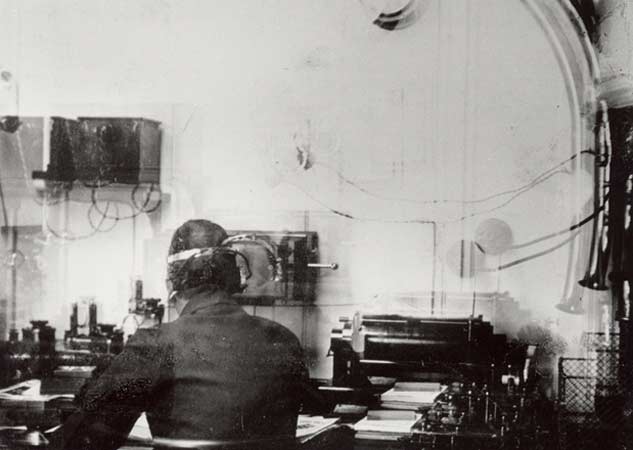
Before SOS was adopted in the early 1900s, however, the standard telegraph distress signal was “CQD” [– · – ·    – – · –    – · ·]. It’s fair to say that that’s hardly the most recognisable or memorable arrangement of dits and dahs on offer, so why pick that?

Well, on their own the letters “CQ” had long been used as a telegraphic distress signal as they sound identical to the French word “sécu”, an abbreviation of sécurité. The Marconi Telegraph Company simply added a letter D to this to make their first recommended distress signal, CQD. But just like SOS, CQD also fell foul of backronymy and before long myths had emerged claimed that it stood for “come quickly—danger!”, or “come quickly—drowning!”

Problems with interpreting the confusing set of letters “CQD” over a poor signal, however, eventually led to calls for a more immediately recognizable distress signal to be adopted, and so SOS was officially introduced in 1906. 


23 July 2016

10 Misnomers - 500 Words Ep. 28


Looking back through the HH archives the other day, we happened across this little gem of information:


The Pont Neuf, then, is a misnomer—its name really doesn’t (or, at least, no longer) fits it. 

And from strawberries to the Big Bang Theory, this week on the Haggard Hawks YouTube channel we’re looking at 10 misnomers precisely like this one:


In fact the dictionary is so full of examples like these that cutting our list down to just 10 here was a brutal business. Koala bears, for instance, aren’t bears. Irish moss is a marine algae. Chinese chequers aren’t Chinese. Fireflies aren’t flies. Peanuts aren’t nuts. Thousand Island dressing takes its name from an archipelago of 1,864 islands. And let’s not get started on the Hundred Years War

But as misnomers go, this one will forever be one of the best:


So how the dickens did that happen?

The colour pink as we know it today takes its name from the Dianthus flowers known as “pinks”. They in turn are thought to take their name either from the use of pink as a verb, meaning “to perforate” or “to give an ornate trim”, or else from the even older use of pink as an adjective, meaning “half-closed” or “winking” (which was, at the risk of making this discussion even more complicated, the original meaning of pink-eye). If that’s the case, then pink probably has its roots in Dutch, and might even be a distant relative of blink.

The “pink” in French pink is something of a mystery, but one very plausible theory claims that it derives from an old German word, pinkeln, literally meaning “to pee” (hence its yellowy colour). This murky-yellow shade of pink is actually the oldest recorded use of the word pink in Englishand remains in use in artistic contexts—but nowadays the pale red version has all but taken its place.

Why? Well, no one is entirely sure, but one popular theory is that the use of pink to refer to pale red derives from the popularity of Dianthus flowers in Elizabethan England. According to the story, pinks were one of Queen Elizabeth I’s favourite flowers and so were grown and sold all across England in the sixteenth century. That helped to establish their name, pink, with their pale fuchsia colour, and it’s that colour that the word has remained attached to ever since. 


6 July 2016

10 Words Derived From Places In America - 500 Words Ep. 26


It seems we’re always late to the party here at HaggardHawks. Yes, it was July 4 last Monday but, hey—what can you do? 

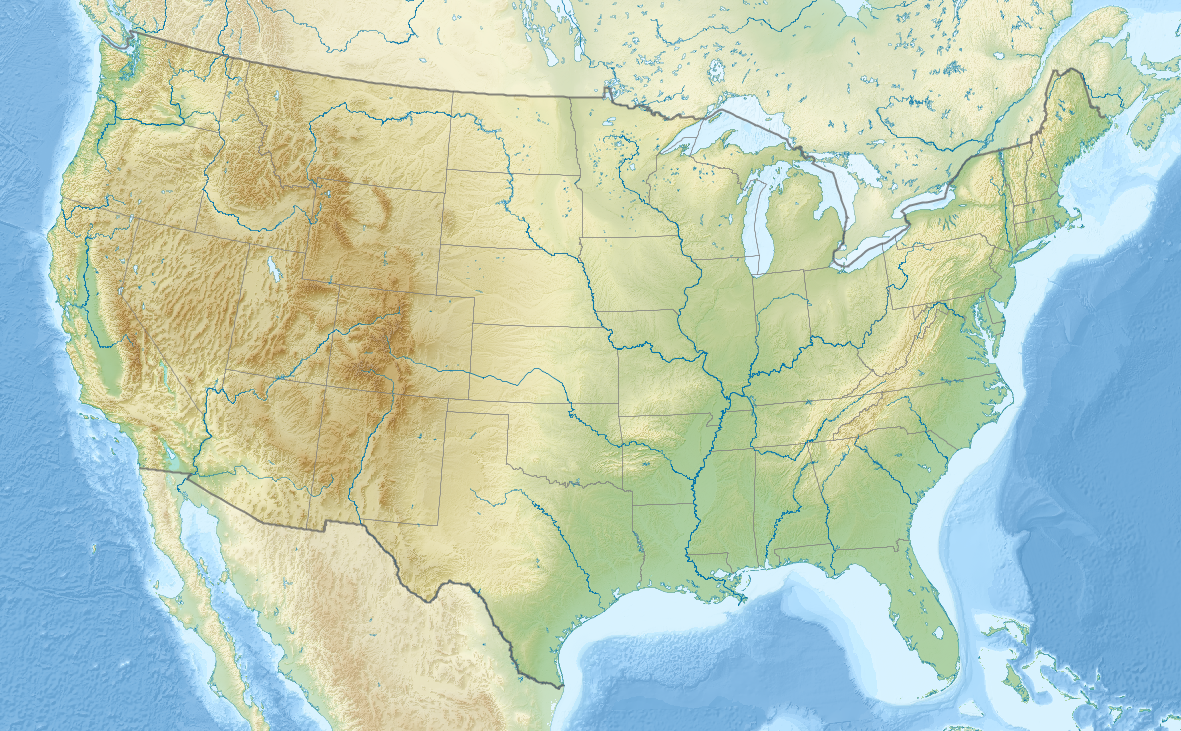
So. A very belated Happy Independence Day to anyone reading this over in the States, and in honour (or rather honor) of your celebrations, this week on the HH YouTube channel we’re looking at 10 places in the United States that somehow ended up in the dictionary. Dinner jackets. Outdoor symposiums. Endless, mind-numbing political speeches. Frankly, it’s all here.


One little bit of linguistic Americana that didn’t make the final cut this week, however, is hooch.

As a slang term for alcohol—and in particular homemade or rough quality alcohol—the word hooch first appeared in the language in the late nineteenth century. It derives from the name of the Hoochinoo, a tribe of Tlingit Native Americans based on Admiralty Island in the far southeast of Alaska. And as they knew all too well, if there’s one thing guaranteed to keep you warm on a cold southeast Alaskan night, it’s home-brewed alcohol. Apparently. 

The Hoochinoo had long manufactured their own liquor, but when the Klondike Gold Rush brought 100,000 prospectors to the region in mid-1890s, they realised they had the perfect captive audience. Before long, they were making a considerable profit selling their alcoholic beverages to the prospectors hoping to strike it rich in the Yukon—and to the prospectors, the name Hoochinoo, and eventually the reduced form hooch, came to be their byword of choice for potent, homebrewed booze. (Booze, incidentally, is another story for another day…)

As for the Hoochinoo themselves, they took their name from a local Tlingit word, Hutsnuwu, literally meaning “grizzly bear fort”, thought to be either the name of one of the tribe’s settlements on the island, or else a local name for the island itself. All of which makes hooch the perfect geographical accompaniment to your tuxedo, your Denver boots and, of course, absolute bunkum