It seems we’re always late to the party here at HaggardHawks. Yes, it was July 4 last Monday but, hey—what can you do?
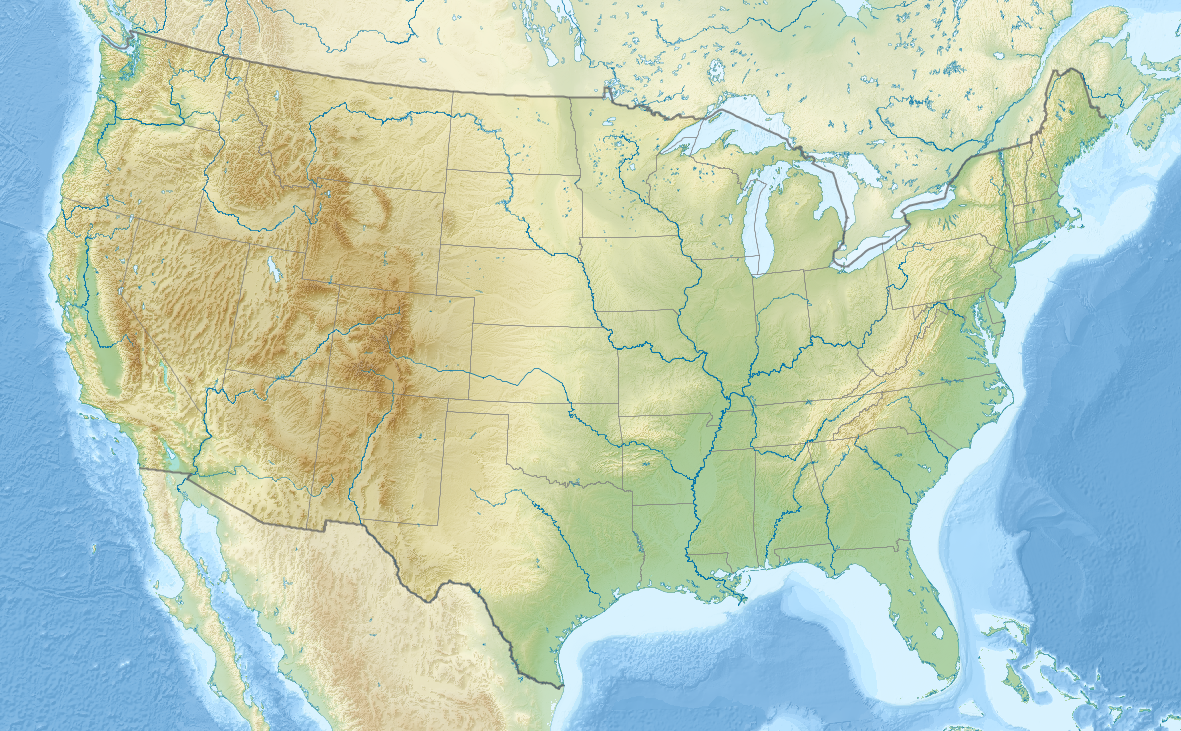
So. A very belated Happy Independence Day to anyone reading this over in the States, and in honour (or rather honor) of your celebrations, this week on the HH YouTube channel we’re looking at 10 places in the United States that somehow ended up in the dictionary. Dinner jackets. Outdoor symposiums. Endless, mind-numbing political speeches. Frankly, it’s all here.
One little bit of linguistic Americana that didn’t make the final cut this week, however, is hooch.
As a slang term for alcohol—and in particular homemade or rough quality alcohol—the word hooch first appeared in the language in the late nineteenth century. It derives from the name of the Hoochinoo, a tribe of Tlingit Native Americans based on Admiralty Island in the far southeast of Alaska. And as they knew all too well, if there’s one thing guaranteed to keep you warm on a cold southeast Alaskan night, it’s home-brewed alcohol. Apparently.
The Hoochinoo had long manufactured their own liquor, but when the Klondike Gold Rush brought 100,000 prospectors to the region in mid-1890s, they realised they had the perfect captive audience. Before long, they were making a considerable profit selling their alcoholic beverages to the prospectors hoping to strike it rich in the Yukon—and to the prospectors, the name Hoochinoo, and eventually the reduced form hooch, came to be their byword of choice for potent, homebrewed booze. (Booze, incidentally, is another story for another day…)
As for the Hoochinoo themselves, they took their name from a local Tlingit word, Hutsnuwu, literally meaning “grizzly bear fort”, thought to be either the name of one of the tribe’s settlements on the island, or else a local name for the island itself. All of which makes hooch the perfect geographical accompaniment to your tuxedo, your Denver boots and, of course, absolute bunkum.
As with a lot of particularly ancient place names like this, that’s just one of a few competing theories of course, nevertheless it’s still the most likely of the bunch suggested so far. But as we said back then, it’s easy to forget that when it comes to etymology—or rather, toponymy, which is the branch of linguistics dedicated to place name origins—the names of countries and continents, rivers and seas, towns and cities (and all the other proper nouns in the language for that matter) behave just like “ordinary” words. Put another way, there’s a reason why everywhere is called what it’s called. And it’s 10 of those stories and meanings that we’re looking at in this week’s 500 Words video.
If you’ve been keeping up with the new HHYouTube channel, chances are you’ve already seen the second video in our new #500Words project, which went online yesterday. Looking at the meanings and origins of 10 Words Spelled Q Without U, this time around one of the words included the qindarka or qintar, the name of a monetary unit used in Albanian:
Qindarka itself essentially means “a little part of 100” in Albanian—which, let’s face it, isn’t the most original name for a coin equal to 1 one-hundredth of something. But it’s what the qindarka is 1/100th of that’s more interesting. As mentioned in the video, the principal unit of currency in Albania is the Albanian lek, which takes its name from Alexander the Great. According to the history books, Alexander was born in Pella in Macedon (now in modern-day Greece) in 356BC.
But in Albania, there’s an uncorroborated (and somewhat controversial) theory that Alexander—along with the likes of Aristotle, Pyrrhus, and Alexander’s father Phillip II—was born in Illyria, the region of ancient Europe that corresponds today to the Balkans peninsula and modern-day Albania. Was Alexander the Great really Albanian? Well, it’s doubtful. But the theory is nevertheless commemorated by the name of the Albanian currency.
But what about the rest of the world? Are there any more etymological gems jangling around the pockets and wallets of other countries?
Admittedly, the vast majority of world currencies take their names from fairly bland or predictable roots. Many refer to weights and measures, like the pound, which once referred to the value of one pound of silver, and the lira, which in turn takes its name from libra, the Latin word for “pound”.
Likewise, both shekel and peso literally mean “weight” in Hebrew and Spanish (peso derives from the same etymological root as pendant, in the sense of something being weighed on a balance or set of scales), while more obscure entries in this category include the Kazakhstani tenge (which literally means “a set of scales”), and the Mauritanian ouguiya, which takes its name via French and Arabic from the Latin word for “ounce”, uncia. The Ukrainian hryvnia too is named for an ancient local unit of weight once used to measure precious metals.
Like the qindarka, other currencies have straightforward numerical roots, referring to fractions or portions of something larger. Dinar, the name of the main unit of currency in 11 different countries, is derived from the Latin denarius, literally “a tenth part.” Similarly, the cent, centime,and centesimo all have names referring to a fraction of 1/100th.
Some names are even less inspired: the Afghanistan afghani is divided into 100 smaller units called pul, which literally means “money”. The taka of Bangladesh takes its name from a local Bangla word meaning “cash”. The Vietnamese đồng and the manat of Azerbaijan and Turkmenistan also just mean “money”, while the ngultrum of Bhutan has a Dzongkha name literally meaning “money pieces.” The Japanese yen, Korean won and Chinese yuan all mean “round”, while the yuan has also been known as the renmimbi since 1949—which literally means “the people’s currency”
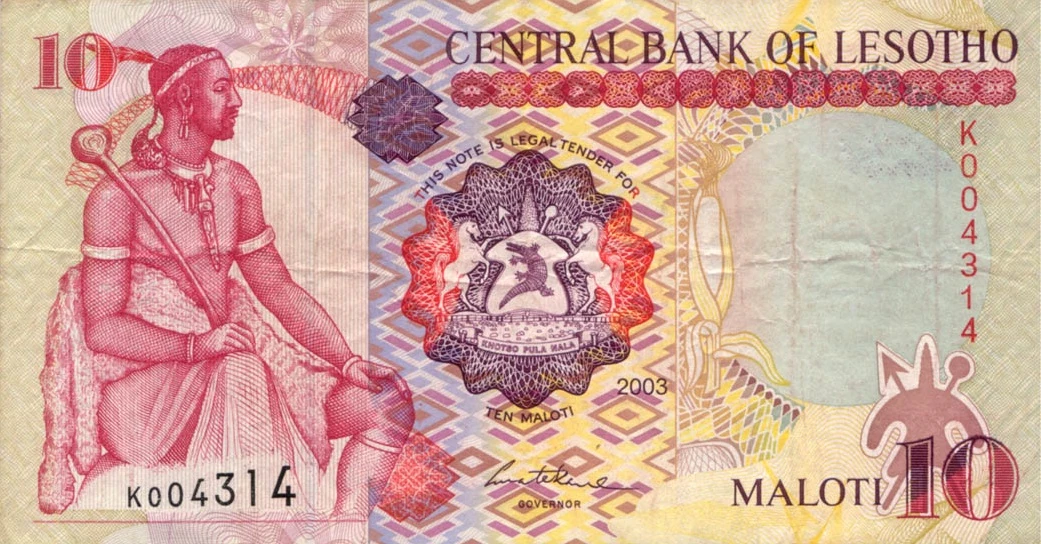
More imaginatively, some monetary units have geographical names, and refer either to their home country or to some notable feature therein. The loti of Lesotho, for instance, is named after the country’s Maloti Mountains. The Eritrean nakfa is named for the town of Nakfa that served as a based during the country’s fight for independence. And the kwanza, the unit of currency in four African countries, is thought to take its name from the River Cuanza that flows through Angola.
By far the most famous geographical name, however, is the dollar, which traces its name back to the tiny Bohemian spa town of Joachimstal, now in the Czech Republic: the high-quality silver that was mined there was once used to make coins known as joachimstaler, which quickly shorted to thaler, and finally ended up in the New World as dollar via the colonial Dutch and Spanish. Incidentally, because these early coins were originally quite weighty, the colonial dollar was nicknamed the gourde in the 18th century slang, a name derived from a French word meaning “stupid” or “dull”—it lives on in the name of the currency of Haiti.
Like the dollar, some currencies take their names from their component metal or their means of manufacture. Rubleis thought to come from a Russian word meaning “to chop” or “hew,” possibly because the coins once had to be hewn from solid blocks of metal. The piaster or piastre—1/100th of an Egyptian, Lebanese, Sudanese or Syrian pound—takes its name from an Italian word, piastra, for a thin piece of metal. The Indian rupee, Indonesian rupiah,and Ethiopian birr all have names meaning “silver,” while the Kyrgyzstani and Uzbekistani som take their name from local words meaning “pure”, as in “pure gold”.
Stamps of royal authority are behind the names of the Czech koruna and all the various Scandinavian krones and krónas, all of which take their name from local words meaning “crown”. The Brazilian real, the Mauritanian ariary,and the rial of Iran, Yemen and Oman likewise mean “royal.”
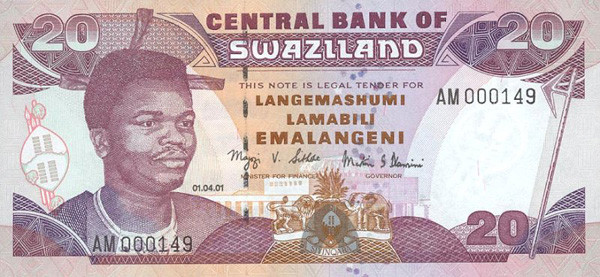
Many of the world’s krones and rials are stamped with crowns, and likewise some currencies take their names from the images that once decorated them. As well as the term sterling (literally a “little star”, a mark once stamped on pound-sterling coins) the Russian kopeck once bore a picture of a mounted knight, and derives from a Russian word meaning “lance”. The Hungarian forint (as well as the English and Dutch florin) derives from a coin once minted in Tuscany that was marked with a lily, and so was named for the Italian word for “little flower,” fiorino. The Bulagrian lev similarly means “lion,” and the Portuguese escudo (now replaced by the euro) means “shield”. Perhaps best of all in this category, however, is the Swaziland lilangeni, whose name simply means “a member of the royal family”.
Another currency replaced by the euro was the Greek drachma, whose name literally meant “handful”, or “as much as can be seized in one hand”. The dirham, used in both Morocco and the United Arab Emirates, is its etymological descendant. Along a similar path, the Georgian lari has a name literally meaning “hoard.” Former currencies are also name-checked in Ghana and the Pacific nation of Vanuatu, whose monetary units—the Ghanaian cedi and the Vanuatu vatu—mean “cowry shell” and “stone” respectively, both referring to items once used locally as money. (The cedi, incidentally, is divided into 100 pesewas, which literally means “a penny’s worth of gold dust”.) Similarly, the Guatemalan quetzal takes its name from the fact that the feathers of the tropical quetzal bird were also once so prized that they were used locally as money.
The lek also isn’t the only currency named in honour of someone. The Costa Rican colón, for instance, is named after Christopher Columbus. The Honduran lempira is said to take its name from a native local chief. The Tajikistani somoni is named in honour of the country’s founder, Ismail Samani, and the Venezuelan bolivar is named after Simón Bolívar.
Lastly, amongst the best of the world’s currency etymologies, are the dobra of São Tomé, which takes its name from a Portuguese word meaning “to fold” (which gives a whole new meaning to “folding money”), and the Zambian kwacha, which has a local Nyanja name meaning “dawn”—a reference to a former slogan of Zambian nationalism that promised a “new dawn of freedom.” In turn, it’s divided into 100 subunits called ngwee, which literally means “bright”.
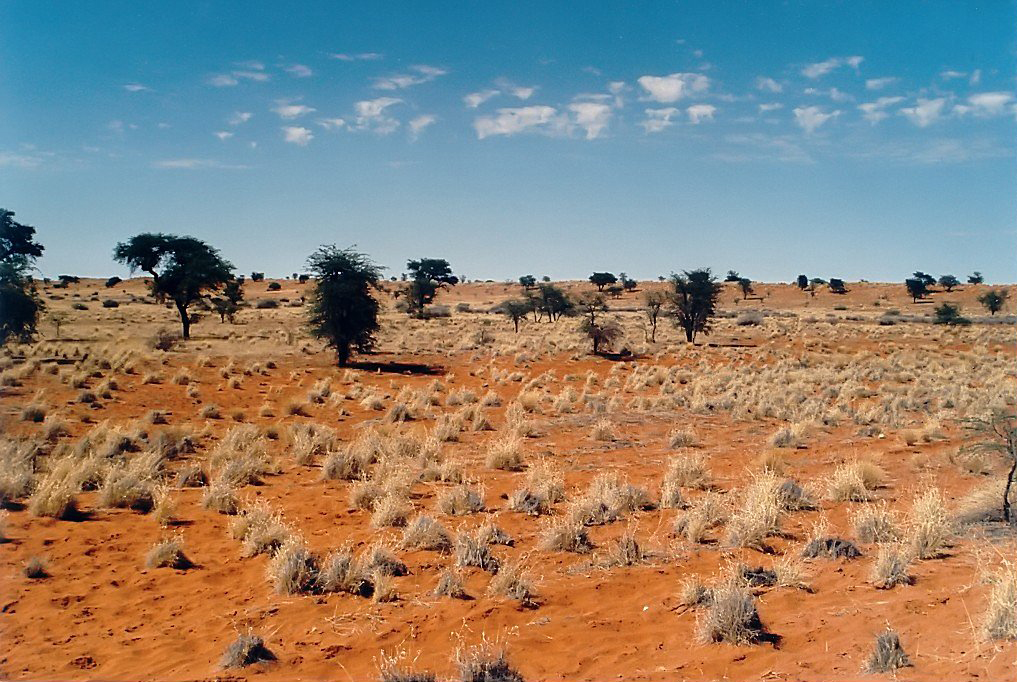
Best of all however, is the Botswana pula, whose name was chosen by a public contest and literally means “rain” in the local Setswana language—in a country in which the Kalahari Desert accounts for 70% of the available land, rain, it seems, is just as valuable as money.
This is actually (shameless plug #1) one of the choicer entries cherry-picked from the Haggard Hawks fact book, Word Drops. And although (shameless plug #2) you can find out more about it (shameless plug #3) in the award-nominated book, maybe all this deserves a bit more explanation here.
On a global scale, the etymologies of country names are a bit of mixed bag. Some are so straightforward that they require no explanation at all (we’re looking at you, United Kingdom). Some are named after their inhabitants (France = “the land of the Franks”), or their colonists or conquerors (Philippines = “islands of Philip II of Spain”). Some are more descriptive (Bahamas = “the shallows”, Bahrain = “two seas”), or more poetic (Luxembourg = “little castle”, Zimbabwe = “land of stones”). And some are just plain weird (Cameroon = “land of shrimp”).
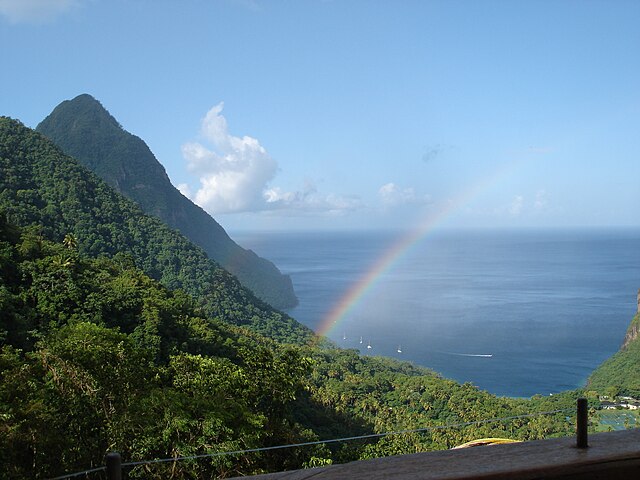
St Lucia takes its name from Lucy of Syracuse, a third-century Italian saint (the patron saint of blindness and throat infections, no less) who was martyred during the Roman Emperor Diocletian’s persecution of the Christians in AD 304. Although the reasoning behind the name is unclear, we nevertheless know that it was chosen by the island’s first European explorers and settlers, the French, who arrived there in the early 1600s—although rumour has it that the island was being used as a base by French pirates long before then.
But according to the US Department of State, as of 2015 there are 195 countries (defined as “a people politically organized into a sovereign state with a definite territory recognized as independent”) in the world. Is it really true that only 0.51% of them are named after women? Unfortunately, yes—although there are a couple of very close calls.
One of the most famous almost-but-not-quites is the Republic of Ireland. Both Ireland and its Irish equivalent Éire derive from Eiru, the name of a goddess of the land and sovereignty in Celtic mythology. On a similar theme, one theory claims that Tunisia takes its name from Tanith, a Phoenician goddess of the moon who, with her husband Baal-Hammon, was the principal deity of the ancient city of Carthage.
But as far as eponymous women on our list of 195 countries go, that really is it: if we exclude all the ancient mythological and supernatural beings, St Lucia really is the only country named after a woman. Although, as a handful of astute followers noted, there is one final possibility:
St Helena is a tiny 50 square-mile volcanic island in the South Atlantic, home to around 4,500 people. It takes its name from St Helena of Constantinople (the patron saint of difficult marriages, should you need one), who was the wife of Constantinus Chlorus, ruler of the Western Roman Empire from AD 293-306. Can we add St Helena to our list? Well, the problem here is that St Helena is officially classed as just one-third of a British Overseas Territory known as St Helena, Ascension and Tristan da Cuhna—the collective name for a clutch of British-controlled islands in the South Atlantic Ocean. And so long as we’re limiting our list to independent countries, St Helena just doesn’t fit the bill.
So it seems St Lucia it seems really is the only country in the world named after a woman. But, hey—it could be worse:
For once, the main word here wasn’t the problem. Instead, what seems to have caused the most head-scratching was the inclusion of the word jeep as an example of an acronym:
Quite right too, it is a brand name. But as far as most etymological theories are concerned, it’s also an acronym. As well as an anacronym. With a reference to an obscure cartoon character thrown in for good measure. Confused? You’re not the only one...
So, first things first: how exactly is jeep an acronym? Well, the most likely theory is that the wordjeep developed from an approximate pronunciation of the letters “GP”, an old military designation standing for “general purpose”. Ultimately, it’s thought that when it first appeared in American army slang in the early 1930s, the nickname jeep was originally applied to any item of widely-used military equipment, including various gadgets and gizmos, weaponry, cars, trucks, helicopters, and even early flight simulators.
If this theory is correct, then jeep is an example of what is known as a “respelled initialism”, an acronym whose letters have been spelled out phonetically to form a whole new word. Linguistically these “respelled” acronyms—also known as “vocologues”—comprise a fairly rare class of words, but understandably so: after all, acronyms are motivated by brevity, so there’s little point in making them any longer than they need to be. Nevertheless, a handful of examples have emerged over the years, including emcee (from MC, a “master of ceremonies”), deejay (from DJ, a “disc jockey”), the brand name Esso (from SO, “Standard Oil”), and, most familiar of all, okay.
In the case of jeep, of course, the final –ee sound of “GP” (or “gee pee”) isn’t pronounced, which makes itan example of an even rarer class of words known as “clipped initialisms”—namely, acronyms that have been respelled phonetically, then shorted again. Veep, as a nickname for the Vice President, and Beeb, as a nickname for the BBC, both likewise fall into this category, but examples of this particular linguistic phenomenon are unsurprisingly few and far between.
There are a handful of other competing theories of the origin of jeep (at least one of which is outlined here), but most etymologists tend now to sign up to this “GP” explanation. However, many also agree that this particular story doesn’t end there, and that jeep was, somewhere along the line, influenced by something else—something, it’s fair to say, rather unexpected.
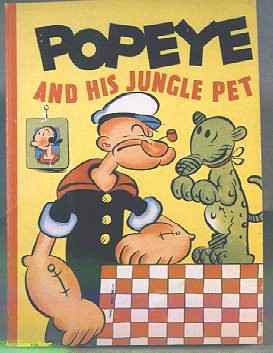
On 17 January 1929, Popeye The Sailor Man made his first appearance in print in the Thimble Theatre comic strip. Created by the US cartoonist EC Segar, as the series became increasingly popular more and more characters were introduced to the storyline, including Popeye’s mooching companion Wimpy, his bullying nemesis Bluto, and his stridewallop girlfriend Olive Oyl (who had already made her first appearance in a different comic series ten years earlier). Popeye and Olive eventually adopted a son, Swee’Pea, tracked down Popeye’s estranged father, Poopdeck Pappy, and in 1936 encountered “a mysterious strange animal” called Eugene the Jeep.
Eugene was introduced to the Popeye series when Olive Oyl was given a “jeep”—a highly intelligent dog-like animal with bright yellow fur and a large red nose—as a gift from her uncle. Puzzled by the creature’s appearance, in one edition Popeye calls in an expert, who enthusiastically explains that a “jeep” is “an animal living in a three-dimensional world … but really belonging to a fourth dimensional world.” Throughout several subsequent episodes and escapades, Eugene is ultimately shown being able to travel through time, walk through walls and doors, and teleport effortlessly from one place to another. Put another way, the “jeep” could go wherever he wanted, whenever he wanted to.
Not long after Eugene made his first appearance in 1936, the Willys-Overland Motor Company in Toledo began manufacturing its model MB Army Truck. Powerful and robust, and able to cross practically any terrain, the MB seemed to embody all of Eugene’s most impressive capabilities. As a result, it soon became known as the “jeep”—a nickname partly inspired by the earlier military slang term “GP”, and partly inspired by Popeye’s bizarre teleporting pet.
As a representative of Willys-Overland explained in a letter in 1944:
We feel that the word [jeep] originated with Segar, King Features cartoonist, who until his recent death wrote the Popeye strips. You will recall that in this feature there was a character called “Jeep” which lived on orchids and could go anywhere and do anything. It is our contention that the boys in the service picked this name up from Segar and applied it to the Willys vehicle which has many of the “go-anywhere, do anything” characteristics of the Popeye character.
After the outbreak of the Second World War, the MB became the focus of numerous public demonstrations, all of which helped to popularize the word jeep outside of military slang: as early as February 1941, a publicity stunt was organised in which a Willys truck was driven up the steps of the Capitol Building in Washington DC, with a local newspaper report noting that “the Army’s new scout cars” were already “known as ‘jeeps’”.
Soon, all earlier uses of the word had vanished, and the name jeep had established itself as a standard nickname for any relatively small, yet still relatively powerful, truck.
Today marks the seventy-first anniversary of the Normandy Landings—perhaps better known as D-Day. Etymologically, there’s a longstanding myth that the D of D-Day stands for something along the lines of “disembarkation”, “decision”, or “deployment”, or even “Deutschland” or “Doomsday”, but in fact:
So if the D doesn’t standing for anything, why is it there at all?
The fact is that while military operations are being planned, it’s not always clear from the outset when they’ll actually take place. As a result, their future start date—whenever that may be—is simply referred to as “D-Day”, and this title acts as a placeholder until a specific date can be finalized. (Shameless plug: there’s more on this in the new book.) If anything, the D of D-Day could be said to derivefrom the word ‘day’ (indeed the French equivalent is J-Jour, and the exact time an operation takes place is known as H-Hour) but it certainly can’t be said to stand for it.
Not only that, but the term D-Day is also a lot older than most people think. The earliest record we have of its use dates not from the Second World War, but from the First, and an American military order sent out on 7 September 1918:
The First Army will attack at H-Hour on D-Day with the object of forcing the evacuation of St. Mihiel salient.
Saint-Mihiel is a small town in the Meuse department of north-eastern France, that for three days in September 1918 was the site of one of the most important United States military operations of the entire First World War. Under the command of US Army General John Pershing, an enormous body of American Expeditionary troops—including thousands from the newly-formed United States Army Air Service, now the US Air Force—secured a decisive Allied victory over an ill-prepared and chaotic German contingent.
The Battle of Saint-Mihiel lasted from 12-15 September, during which more than half a million US soldiers, alongside 110,000 French troops, fought to secure the strategically significant Saint-Mihiel “salient”—a technical term for a narrow, isolated strip of land projecting from one region into another—in the hope of eventually recapturing the larger French city of Metz. As it happens, the attack on Metz was never realized, and as the German forces continued to crumble the War came to an end just weeks later, on 11 November 1918.
The term D-Day continued to be used intermittently throughout the 1920s and 30s, until it became all but permanently attached to “Operation Neptune”—the military codename of the decisive Normandy Landings—on 6 June 1944.
So zed is British and zee is American, yes? Well, that might be the case today, but once
upon a time things were quite different...
Historically,
both zed and zee were used pretty much interchangeably in both British and American English, alongside a whole host of other more
outlandish names for the last (or rather,
second last) letter of the alphabet, like izzard, uzzard, zad, shard
and, our personal favourite, ezod. Of the two
we’re talking about here, however, zed it
by far the oldest, and takes its name via French and Latin from that of its
Greek equivalent, zeta. Zed first
appeared in print in the early 1400s, in a Middle English document that fairly straightforwardly
described it as “þe laste lettre of þe a b c”—which is considerably nicer than what
William Shakespeare had to say about it.
Zee, on
the other hand, first appeared in print in a British language textbook—Thomas Lye’sNew Spelling-book—in 1677. The name zee itself is
thought to have originated as nothing more than a dialect variation of zed,probably influenced by the regular bee,
cee, dee, ee pattern of much
of the rest of the alphabet. But precisely how or why it became the predominant
form in American English is unclear.
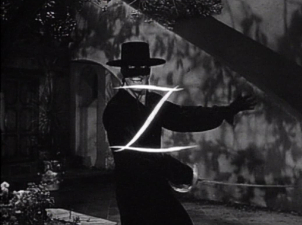
Thanks to his new calling card, everyone knew where Zubin Mehta had been
One
widely-held theory is that because zed,
as the older of the two, was the most widespread variation amongst British
English speakers, during the Revolutionary War American English speakers looking to distance themselves from anything even vaguely British simply adopted the zee
version as their own to make a stand—no matter how small it
might seem—against British control. Alternatively, there mightn’t have been any
political reasoning behind it at all, and the name might simply have come to the forefront
as American English was forced to adapt and simplify as more and more colonists—coming
from ever more distant countries, and speaking an ever more varied array of
languages—began arriving in the New World.
Whatever
the motivation might have been, by the mid-nineteenth century zee had become the standard form of the
letter Z in the United States, and has remained so ever since.
Though the
campaign to resurrect ezod begins here...