_
Showing posts with label colours. Show all posts

5 August 2016

10 Rhymable Unrhymable Words - 500 Words Ep. 30


A little while ago, this fact cropped up on the HH Twitter feed:


It ended up sparking quite a debate about whether carpet actually did have a rhyme, with everything from trumpet to market thrown into the mix. But, no. Seriously. Nothing rhymes with carpet. And nor does nothing, for that matter. In fact nothing rhymes with nothing either (depending on your accent, of course), but at the risk of tumbling into existential vortex, let’s just move on. 

Rhymes—and in particular words that purport not have any rhymes but actually do—are the focus of this week’s YouTube video, the 30th in the 500 Words series we’re running every week this year:


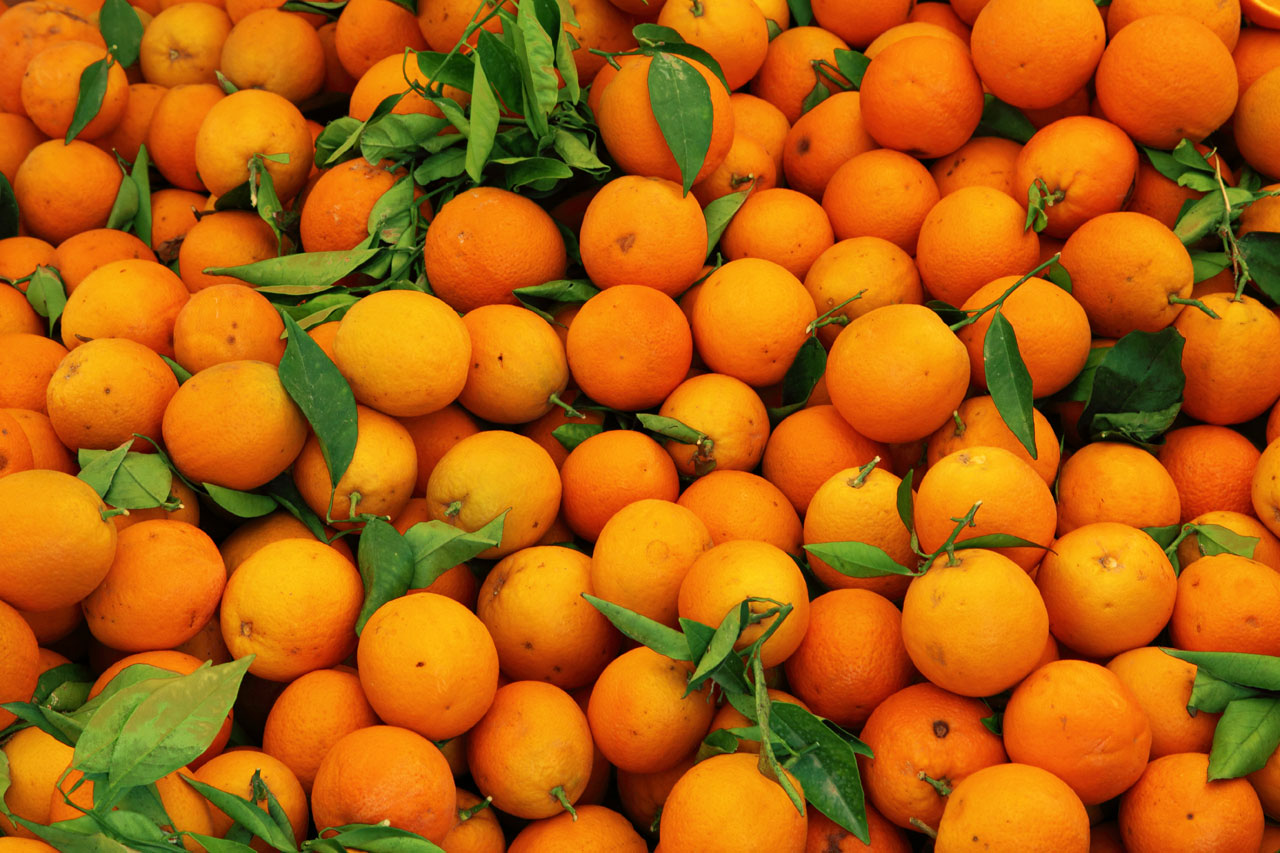
But following on both from this week’s episode, and from the misnomers episode from a couple of weeks back, one question we want to answer: what came first, orange or oranges? (Shameless plug: there’s more on this in the HH factbook, Word Drops—which is now available Stateside too…)

Chicken-and-egg language questions like this crop up on HH every so often (case in point below), but what about orange vs. oranges?


Well, the fact is that there was no word for the colour orange in the English language until oranges first began to be imported into England with any regularity in the early Middle Ages. Before then, anything orange coloured simply had to be described in terms of red and yellow, as in this description of a fox from Chaucer’s Nun’s Priest’s Tale:

His colour was bitwixe yelow and reed, 
And tipped was his tayl and both his eeris 

[His colour was between yellow and red, 
and tipped was his tail and both ears.]

The earliest record of the word orange—which derives at length from the Sanskrit word for the orange tree, naranga—comes from the Sinonoma Bartholomei, a fourteenth century Latin herbal, which listed all the plants known to have medical applications. And there, on page 15, “orenge” was listed as the English equivalent of the Latin “Citrangulum pomum”, or “citrus fruit”.

The colour orange didn’t appear until around a century and a half later. In 1557, orange cloth was listed in a legal document, collected in the so-called Statutes at Large in the late sixteenth century, that prohibited the selling of all fabrics except those of a certain set of colours:

And moreover, be it enacted by the authority aforesaid that no person nor persons … shall sell or put to sale within the realm of England any coloured cloth of any other colour or colours than are hereafter mentioned, that is to say, scarlet, red, crimson, morrey, violet, pewke, brown, blue, black, green, yellow, blue, orange, tawny, russet, marble grey, sad new colour, azure watchet, sheeps colour, lion colour, motly, iron grey, friers grey, crane colour, purple, and old medley colour, most commonly used to be made above and before twenty years past.

Thank goodness “sheeps colour” made the final cut, frankly. And same goes for the “sad new colour”, otherwise I’d have nothing left to wear. But Chaucer’s foxes and sartorial rules and regulations aside, it’s clear that in this particular chicken-and-egg situation, it was the chicken that came first: the bright orange fruits gave the colour orange its name, not vice versa

All in all, it’s a colourful little story. 


23 July 2016

10 Misnomers - 500 Words Ep. 28


Looking back through the HH archives the other day, we happened across this little gem of information:


The Pont Neuf, then, is a misnomer—its name really doesn’t (or, at least, no longer) fits it. 

And from strawberries to the Big Bang Theory, this week on the Haggard Hawks YouTube channel we’re looking at 10 misnomers precisely like this one:


In fact the dictionary is so full of examples like these that cutting our list down to just 10 here was a brutal business. Koala bears, for instance, aren’t bears. Irish moss is a marine algae. Chinese chequers aren’t Chinese. Fireflies aren’t flies. Peanuts aren’t nuts. Thousand Island dressing takes its name from an archipelago of 1,864 islands. And let’s not get started on the Hundred Years War

But as misnomers go, this one will forever be one of the best:


So how the dickens did that happen?

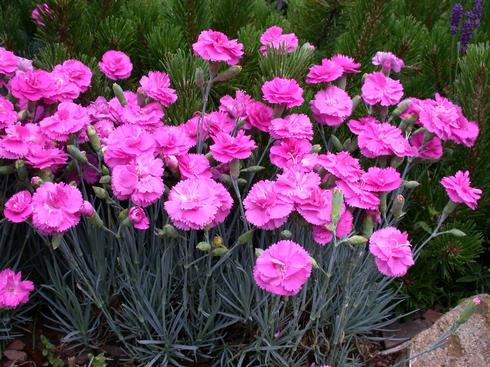
The colour pink as we know it today takes its name from the Dianthus flowers known as “pinks”. They in turn are thought to take their name either from the use of pink as a verb, meaning “to perforate” or “to give an ornate trim”, or else from the even older use of pink as an adjective, meaning “half-closed” or “winking” (which was, at the risk of making this discussion even more complicated, the original meaning of pink-eye). If that’s the case, then pink probably has its roots in Dutch, and might even be a distant relative of blink.

The “pink” in French pink is something of a mystery, but one very plausible theory claims that it derives from an old German word, pinkeln, literally meaning “to pee” (hence its yellowy colour). This murky-yellow shade of pink is actually the oldest recorded use of the word pink in Englishand remains in use in artistic contexts—but nowadays the pale red version has all but taken its place.

Why? Well, no one is entirely sure, but one popular theory is that the use of pink to refer to pale red derives from the popularity of Dianthus flowers in Elizabethan England. According to the story, pinks were one of Queen Elizabeth I’s favourite flowers and so were grown and sold all across England in the sixteenth century. That helped to establish their name, pink, with their pale fuchsia colour, and it’s that colour that the word has remained attached to ever since. 


8 June 2016

10 Colour Names

A few weeks ago, this intriguing factoid popped up on the HH Twitter feed:


It’s an interesting story, which we touched on again in this week’s YouTube video, all to do with the names and etymologies of 10 colours—including the perfect word to describe the perfect colour of a perfectly ripe banana (spoiler alert: it’s not yellow), to the reason why magenta is called magenta, and what connects a Tudor folk dance to a bowl of porridge and to a pile of goose droppings. Truly, it’s an embarrassment of riches.


But back to oranges. Yes, that fact above is completely true: the earliest record of an orange in the English language comes from the early 1400s; the earliest record of something being described as orange in colour, dates from as relatively recently as 1557. But things have been orange coloured since—well, forever. 

Take foxes, for instance. They and their orangey-brown fur have been around ever so slightly longer than the English language (a few hundred thousand years, give or take), which meant that writers in pre-orange-importing times had to get creative when it came to describing what colour they were. As in this line, from Chaucer’s Nun’s Priest’s Tale:

His colour was bitwixe yelow and reed,
And tipped was his tayl and both his eeris 
With blak, unlyk the remenant of hise heeris;
His snowte smal, with glowynge eyen tweye.
 
  
[His colour was between yellow and red,
And tipped was his tail and both his ears
With black, unlike the remainder of his hair;
His snout small, with two glowing eyes.]
With no word for the colour orange, Chaucer—writing in the 1390s—had to resort to describing the fox in terms of yellow and red. And things stayed like that for another century-and-a-half, until a connection between the colour orange and it’s corresponding fruit was made, and the English language finally gained a separate name for the second colour of the rainbow. (Shameless plug #4,229: there’s more on this in the HH factbook, Word Drops.)

So that’s that. But, just when you think English and it’s colours are all sorted, you find out this:


27 May 2016

Auburn


Earlier today, this peculiar etymological twist cropped up on the HH Twitter feed:


And so here’s a bit more about it.

Although nowadays auburn refers to red hair, the word itself is rooted in the Latin word albus, meaning “white”. That’s also where the word albinism comes from, as well as album (which originally referred to a white stone tablet on which Roman edicts would be displayed), albedo (the amount of light reflected by a surface), a cleric’s alb, and the albumen or white of an egg.

Then of course there’s this:


But we won’t go into all that now. So what about auburn?

Well, the Latin word albus led to a derivative alburnus, that was used to mean “nearly white” or “off-white”. That in turn drifted into Old French as alborne, which was brought across the Channel to England as aborne or auborne in the mid-fifteenth century.

On it’s earliest appearance in English, aborne was used to refer to a yellowish-white or brown-white colour, probably equivalent to what we’d call beige or buff today. But it didn’t take long for aborne to be confused with brown, which in the Middle English period was still called broune, or browne. This similarity eventually led the meaning of auburn to change from “yellowish-white” to “reddish-brown”, and it’s this meaning that’s remained in place ever since.


28 April 2016

Penguin


You might have seen this frankly brilliant fact pop up on the @HaggardHawks Twitter feed this week:


Poor old penguins. It can’t be much fun humpling around in sub-zero temperatures avoiding being eaten by seals all day. But then along comes Oliver Goldsmith—whose seven-volume History of the Earth and Animated Nature is the source of that quote—to tell us that eighteenth century sailors called them arse-feet. It’s just not fair really, is it?

Not that it was only the penguins, though. The nickname arse-feet dates back to the sixteenth century, when it was originally another name for the little grebe, and over the centuries it’s been used in reference to a whole host of other species, all of which had one thing in common—the position of their feet noticeably close to their derrieres. Frankly, it gives a whole new meaning to having a boot up the arse. (Shameless plug: there’s more on all this in the HH factbook, Word Drops.)

But if that’s the history of arse-feet, what about penguin?

Well, the word penguin also dates back to the sixteenth century, with the earliest record we know about coming from the logbook of Sir Francis Drake’s Golden Hind. According to Drake’s admiral, Francis Fletcher, as he sailed through the Magellan Strait in 1577: 

[20 August 1577] In these Islands we found great reliefe and plenty of good victualls, for infinite were the number of fowle, which the Welsh men named Pengwin … [The birds] breed and lodge at land, and in the day tyme goe downe to the sea to feed, being soe fatt that they can but goe, and their skins cannot be taken from their bodyes without tearing off the flesh, because of their exceeding fatnes.
Yep, not only did the penguins have to contend with waddling around in sub-zero temperatures and being called arse-feet, but Drake and his crew decided to announce their presence in the Southern Ocean by eating every penguin they could lay their hands on.

But then there’s this:
New found land is in a temperate Climate… There are Sea Guls, Murres, Duckes, wild Geese, and many other kinds of birdes store, too long to write, especially at one Island named Penguin, where wee may driue them on a planke into our ship as many as shall lade her. These birdes are also called Penguins, and cannot flie.
If you know anything about natural history, that quote might strike you as a little odd—penguins are only found in the Southern Hemisphere, so what the dickens were they doing in Newfoundland?

Well, that second quote isn’t from Drake’s logbook, but from a letter, written on 13 November 1778, by a Bristol merchant sailor named Anthony Parkhurst to the famed English geographer Richard Hakluyt. And the penguins Parkhurst is talking about aren’t the same penguins we know today—in fact, the penguins he’s talking about haven’t been seen by anybody for 150 years.

Parkhurst’s Newfoundland penguins were in actual fact great auks—tall, flightless, black-and-white seabirds (whose arses were just as close to their feet) that were once native to much of the North Atlantic. Although the great auk is now extinct (and the story of its slow demise makes for a sobering read, alas) in Drake and Fletcher’s day they were still widely abundant—so abundant, in fact, that as Parkhurst points out they could be driven in huge numbers from “Penguin Island”, along a plank, and onto a ship to provide food for the crew.


Well, this is aukward...

Fletcher’s quote might predate Parkhurst’s by over a year, but it’s thought that the birds Parkhurst wrote about were the original “penguins”—after all, for there to be a place called “Penguin Island” in 1578, we can presume the word penguin was in use in reference to the great auk long before then. Drake’s crew, meanwhile, would have presumably been familiar with the sea birds they knew from back home, and so when they saw remarkably similar flightless black-and-white birds in the equally freezing cold waters of the Southern Ocean in 1577, they either mistook them for the great auks they knew from home, or simply referred to them by the same name, penguin, because they were so similar.

That’s all well and good, of course, but what does the word penguin actually mean? Well, Fletcher’s reference to the birds’ “exceeding fatness” points to one possible theory: that penguin might derive from a Latin word, pinguis, meaning “plump”, “dense”, “fatty”—or pinguid. But a more likely explanation lies with Fletcher’s “Welsh men”. Penguin is thought to derive from pen gwyn, the Welsh for “white head”, and sure enough the great auk had a noticeably bright white patch of plumage between its bill and its eyes. 

So all that means that the original “penguins” weren’t actually penguins, and weren’t from the Antarctic. But their feet were close to their arses...