_
Showing posts with label Asia. Show all posts

2 July 2016

10 Words To Do With Halves - 500 Words Ep. 25

Ah, how the time flies. It seems like only yesterday HaggardHawks embarked on a series of fifty Top 10 YouTube videos, back when David Cameron was Prime Minister and the UK wasn’t being laughed at by everyone, but here we are! How. The time. Flies.

Unbelievably, we’re already at the halfway point in our series, as this week’s video—looking, appropriately enough, at the meanings and origins of 10 Words To Do With Halves—is the 25th of the 50 in the series. Ladies and gentlemen, we’re officially embarking on the home stretch...


Out of all the halves in the video, however, one word that nearly-but-didn’t make the final cut was Laodicean, a synonym (as Thomas Hardy fans will doubtless know) for half-heartedness or apathy, or else a byword for someone who is indifferent or uninterested in important matters.

The word derives from Laodicea, a city and region of Ancient Greece now located in modern-day Turkey, whose inhabitants were notorious for their religious indifference. In the Book of Revelation, the Laodiceans were one of seven ancient peoples or Christian churches—alongside those of Ephesus, Smyrna, Pergamum, Thyateira, Sardis and Philadelphia (no, not that Philadelphia)—to whom messages were to be sent to stir them from their apathy. And in his letter to the Laodiceans, the author of the Book of Revelation John of Patmos accused them of being “neither cold not hot.”
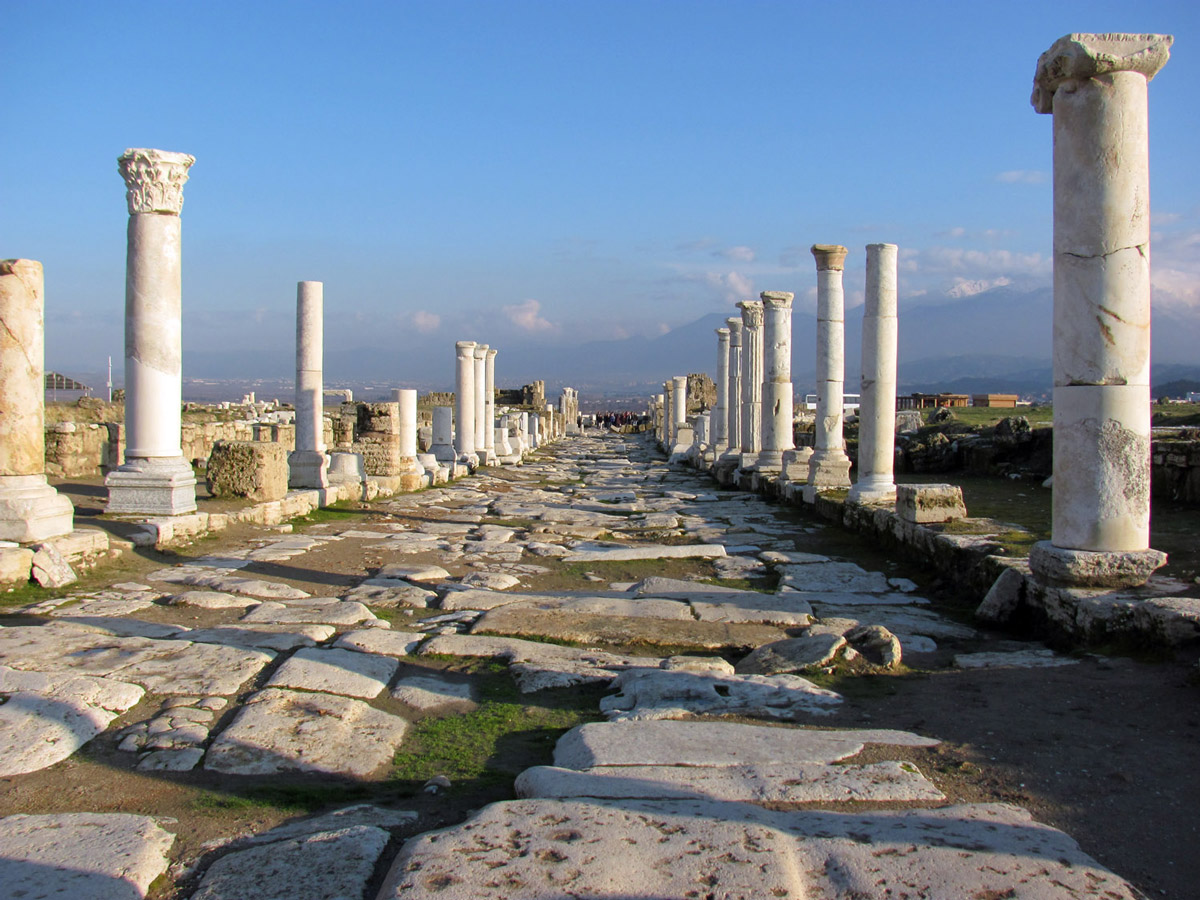


“I would thou wert cold or hot,” he exclaimed, “so, then because thou are lukewarm, and neither hot nor cold, I will spew thee out of my mouth”. Good old John of Patmos, such a way with words.

It’s this image of someone or something being “neither cold not hot” in their opinions that led to the adjective Loadicean appearing in English in the early 1600s, as another word for a lukewarm disinterest, or apathy regarding important issues like politics and religion. Likewise, Laodiceanism is another word for unconcern or indifference—one thing John of Patmos certainly couldn’t be accused of. 


28 February 2015

Serendipity

When we say that something is serendipitous, we mean that it’s a happy accident. Like finding some money you forgot about in a old coat. Or bumping into a friend somewhere you never normally go. Or, you know, discovering a copy of the Declaration of Independence hidden in the back of a $4 picture frame.

The word serendipity itself was coined by the English author and historian Horace Walpole, in a letter written to his friend (and distant cousin) Horace Mann on 28 January 1754. Mann had recently sent Walpole a much-prized portrait of Bianca Cappello, a sixteenth century Italian noblewomen who had married into the Medici dynasty, and while waiting for the picture to arrive Walpole had stumbled across the Cappello coat of arms in an old book. “This discovery, indeed,” he wrote, “is almost of that kind which I call Serendipity.”

But Walpole hadn’t just made the word up from thin air. Instead, he had taken it from “a silly fairy tale” he had read called The Three Princes of Serendip, whose title characters, he explained, “were always making discoveries, by accidents and sagacity, of things which they were not in quest of.” 

But neither had the fourteenth century writers of Walpole’s “silly fairy tale” invented the name Serendip. In fact, it’s an old name for Sri Lanka, and probably comes from some ancient Sanskrit word meaning “dwelling-place of lions” (although there are several rival explanations).

But if serendipity is a happy accident, what, then, can you call an unhappy accident? Like finding a spider in your old coat pocket. Or bumping into a boring workmate somewhere you never normally go. Or, you know, getting hit by a meteorite while you’re casually napping on the couch

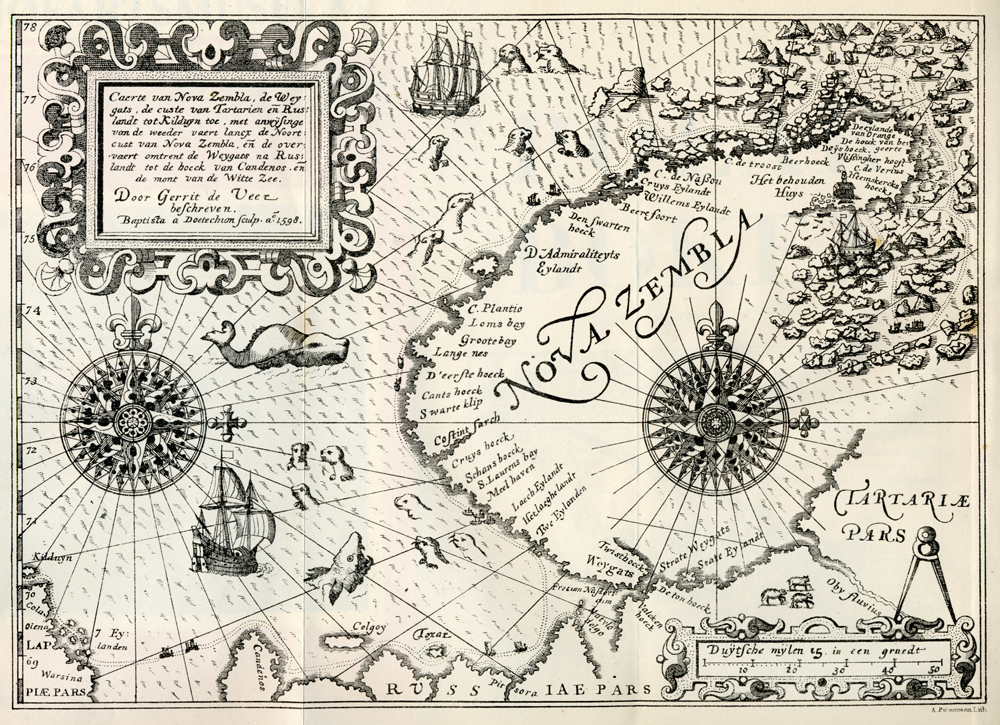
For that, we turn to the English writer William Boyd, who coined the fantastic antonym zemblanity in his 2001 novel Armadillo. Describing the practice of “making unhappy, unlucky and expected discoveries,” Boyd took the word zemblanity from the name of Novaya Zemlya, a bleak and barren Arctic archipelago in the far north of Russia that was once used as a Soviet nuclear testing site—in other words, about as far removed from a tropical island as it’s possible to be.

Novaya Zemlya. So cold even the sea monsters keep their distance.