_
Showing posts with label American history. Show all posts

11 August 2016

10 Words Borrowed From Other Languages - 500 Words Ep. 31


A long, long time ago over on HaggardHawks, this little fact popped up:


In retrospect, that’s a little disingenuous (not least because linguists can’t really decide what actually constitutes a word), but regardless of the parameters involved, studies of etymology tend to agree that anywhere from one-quarter to one-third of the English language has been borrowed directly into English from French.

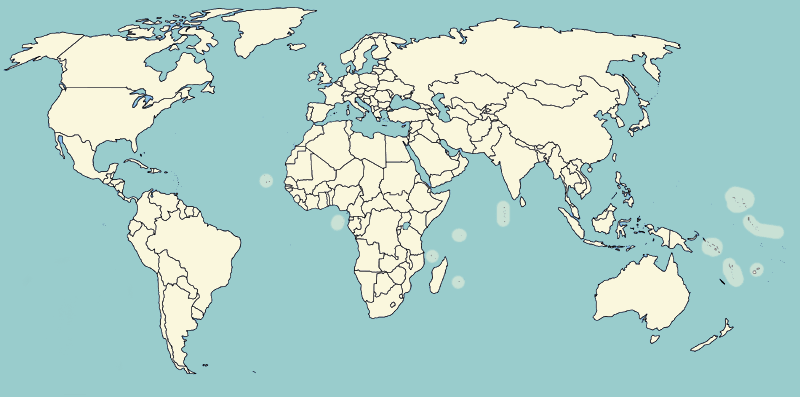
Elsewhere in the dictionary, things get increasingly far-flung: besides the likes of German, Spanish and Italian, English has adopted words from practically every major European language, including Norwegian (slalom), Finnish (sauna), and Czech (robot), as well as a number of global big-hitters like Russian (vodka), Arabic (almanac), the Chinese (lychee) and Japanese (karate) languages, and Hindi (juggernaut), Bengali (jute), Urdu (cummerbund) and all the other languages of the Indian subcontinent.

And it’s borrowed words and the languages we have taken them from that are up for discussion in this week’s HH video:


We might owe the humble word tattoo to (SPOILER ALERT if you haven’t seen the video) one of the furthest of the far-flung languages of the south Pacific, but it is by no means alone. 

Other somewhat surprising languages to have provided words to English include Tamil, another Indian language and the official language of both Sri Lanka and Singapore, which is the origin of the likes of catamaran, cheroot and pariah. Javanese, the most widely spoken language in Indonesia, is the origin of batik and lahar, another name for a volcanic mudflow. 

The native Aboriginal languages of Australia have given us billabong, budgerigar and dingo. When you run amok, you’re using a Malay word (borrowed into English via Portuguese) meaning “attacking frenziedly”. The boondocks take their name from a Tagalog word meaning “remote place”. And over in the Caribbean, the Taíno language is responsible for a number of very familiar words adopted into English via Spanish Caribbean colonists, including tobacco, hurricane, potato, canoe and even Caribbean itself. But these words, and several others like them, are almost all that remains of the Taíno civilization.

An indigenous Arawak people, the Taíno were once the most numerous people in the entire Caribbean. As such were the first Native Americans that Christopher Columbus came into contact with when he arrived in the Americas in the late 1400s; Columbus’s misinterpretation of the Carib people’s word for themselves, Caniba (as well his misapprehension that they were anthropophagous) even gave us the word cannibalism.


But as more Europeans arrived in the Caribbean, the Taíno population collapsed as its people contracted diseases for which they had no natural immunity, most notably smallpox. Within three decades, their numbers had dwindled by as much as 90%; according to some accounts, by the mid 1500s there were fewer than 500 individual Taíno people alive in the world. 

Although the population understandably never recovered, pockets of Taíno people survive across North America today. But their culture and language suffered so terrifically in the aftermath of Columbus’s arrival that the handful of Taíno words to have survived in English offer an extraordinary and tantalizingly rare glimpse of a long-lost civilization... 


6 July 2016

10 Words Derived From Places In America - 500 Words Ep. 26


It seems we’re always late to the party here at HaggardHawks. Yes, it was July 4 last Monday but, hey—what can you do? 

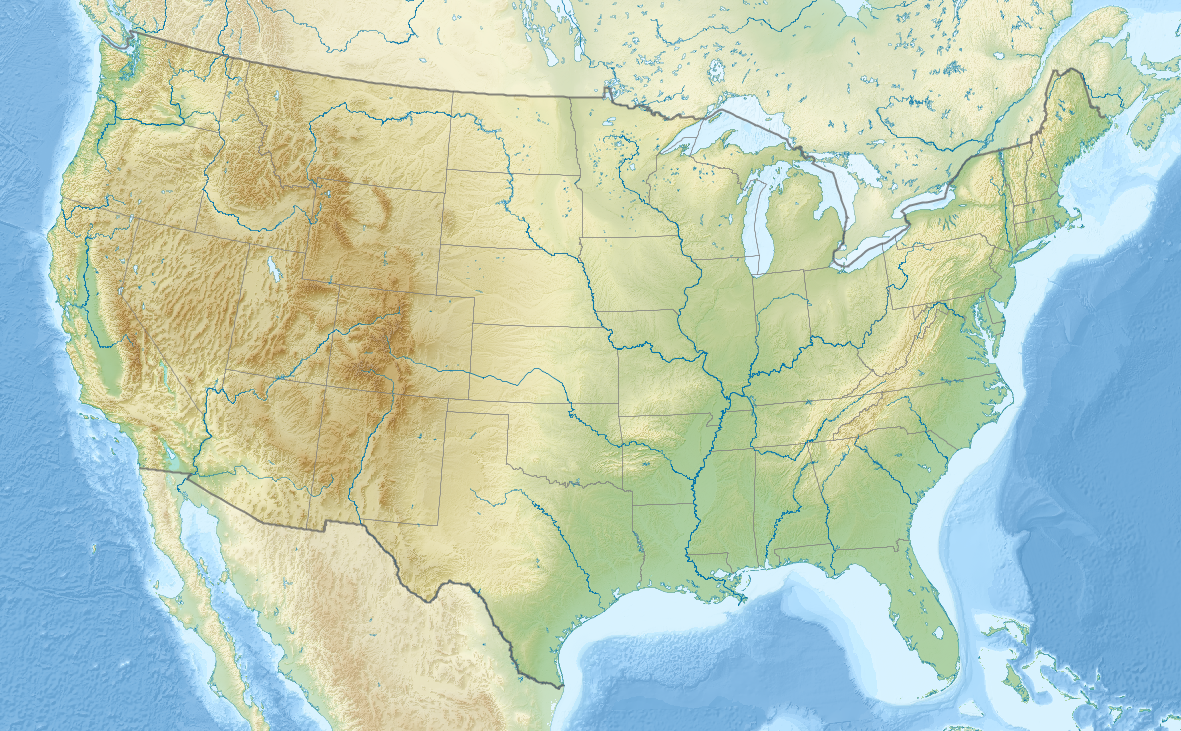
So. A very belated Happy Independence Day to anyone reading this over in the States, and in honour (or rather honor) of your celebrations, this week on the HH YouTube channel we’re looking at 10 places in the United States that somehow ended up in the dictionary. Dinner jackets. Outdoor symposiums. Endless, mind-numbing political speeches. Frankly, it’s all here.


One little bit of linguistic Americana that didn’t make the final cut this week, however, is hooch.

As a slang term for alcohol—and in particular homemade or rough quality alcohol—the word hooch first appeared in the language in the late nineteenth century. It derives from the name of the Hoochinoo, a tribe of Tlingit Native Americans based on Admiralty Island in the far southeast of Alaska. And as they knew all too well, if there’s one thing guaranteed to keep you warm on a cold southeast Alaskan night, it’s home-brewed alcohol. Apparently. 

The Hoochinoo had long manufactured their own liquor, but when the Klondike Gold Rush brought 100,000 prospectors to the region in mid-1890s, they realised they had the perfect captive audience. Before long, they were making a considerable profit selling their alcoholic beverages to the prospectors hoping to strike it rich in the Yukon—and to the prospectors, the name Hoochinoo, and eventually the reduced form hooch, came to be their byword of choice for potent, homebrewed booze. (Booze, incidentally, is another story for another day…)

As for the Hoochinoo themselves, they took their name from a local Tlingit word, Hutsnuwu, literally meaning “grizzly bear fort”, thought to be either the name of one of the tribe’s settlements on the island, or else a local name for the island itself. All of which makes hooch the perfect geographical accompaniment to your tuxedo, your Denver boots and, of course, absolute bunkum


27 May 2016

10 Portmanteau Words

If you follow the HaggardHawks Twitter feed, you might have spotted the word insinuendo the other day, meaning “an insinuated remark”. According to the late Oxford English Dictionary editor Robert Burchfield, insinuendo is a “tasteless word.” Well, there’s no accounting for taste, of course, but as well as being “tasteless”, insinuendo is also a portmanteau—a blended word that brings together two existing words to form a new one. 

And it’s 10 of those we’re looking at in this week’s YouTube video.


As mentioned in the video, the term portmanteau was first used to describe “blended” words like these by Lewis Carroll, who took the name of a type of suitcase with two separate compartments, and applied it to terms in which “there are two meanings packed up into one word”.

Although Carroll was writing in 1871, it’s tempting to think of portmanteau words as a much more modern phenomenon. It’s certainly true that “blending” words together to form (albeit often fairly clumsy) new ones is still a very fruitful word-forming process today—you can take your pick from any number of recent examples, like fandom, bromancemocktail, cosplay, metrosexual, guyliner, Brangelina, Twitterati, edutainment, frappuccino, snowmaggedon, favicon, chillax, rockumentary and mockumentary.

But despite their modern appearances, a lot of portmanteau are much older than they first appear—even insinuendo dates back to 1885.

Take a word like newscast, for example. Despite it’s relatively modern feel, its earliest appearance in the language dates from 1928, when it cropped up in an edition of Time magazine. The first motorcade drove through Rockford, Illinois, back in 1910. People have been eating with sporks since 1909, and enjoying brunch for even longer—it’s earliest record comes from an 1896 edition of the satirical magazine Punch that called it “an excellent portmanteau word … indicating a combined breakfast and lunch”. Unfortunately, another word the magazine tried to champion didn’t catch on:
At Oxford, however, two years ago, an important distinction was drawn. The combination-meal, when nearer the usual breakfast hour, is ‘brunch’, and when nearer luncheon, is ‘blunch’.
Another early portmanteau—which sadly didn’t make the final cut in our video—is gerrymander. (Shameless plug #495: there’s more on this in the HH factbook, Word Drops—which is now out in the USA!)

Gerrymander derives from the name of American politician and diplomat Elbridge Gerry. Gerry was serving as a Governor of Massachusetts when in 1812 he signed a bill that redrew the boundaries of Massachusetts’ state senate electoral districts so that they would most benefit his Democratic-Republican Party. This practice was certainly nothing new (the Anti-Federalist leader Patrick Henry had tried the same trick in Virginia back in 1788), but it nevertheless soon became known as gerrymandering—a combination Gerry’s surname and the word salamander.

Why a salamander? Well, an article in the Boston Globe on 26 March 1812 happened to liken the shape of one of Gerry’s redrawn districts to that of a salamander, a lizard-like amphibian:


Frankly, that’s the most un-salamandery salamander I’ve ever seen, but nevertheless the name stuck.

But did Gerry’s gerrymandering work? It certainly did. At the 1812 election, the senate remained in his party’s hands. Gerry himself, however, lost his seat—but went on to serve as Vice President under James Madison the following year.


6 June 2015

D-Day

Today marks the seventy-first anniversary of the Normandy Landings—perhaps better known as D-Day. Etymologically, there’s a longstanding myth that the D of D-Day stands for something along the lines of “disembarkation”, “decision”, or “deployment”, or even “Deutschland” or “Doomsday”, but in fact:
So if the D doesn’t standing for anything, why is it there at all?

The fact is that while military operations are being planned, it’s not always clear from the outset when they’ll actually take place. As a result, their future start date—whenever that may be—is simply referred to as “D-Day”, and this title acts as a placeholder until a specific date can be finalized. (Shameless plug: there’s more on this in the new book.) 

If anything, the D of D-Day could be said to derive from the word ‘day’ (indeed the French equivalent is J-Jour, and the exact time an operation takes place is known as H-Hour) but it certainly can’t be said to stand for it.

Not only that, but the term D-Day is also a lot older than most people think. The earliest record we have of its use dates not from the Second World War, but from the First, and an American military order sent out on 7 September 1918:
The First Army will attack at H-Hour on D-Day with the object of forcing the evacuation of St. Mihiel salient.
Saint-Mihiel is a small town in the Meuse department of north-eastern France, that for three days in September 1918 was the site of one of the most important United States military operations of the entire First World War. Under the command of US Army General John Pershing, an enormous body of American Expeditionary troops—including thousands from the newly-formed United States Army Air Service, now the US Air Force—secured a decisive Allied victory over an ill-prepared and chaotic German contingent.

The Battle of Saint-Mihiel lasted from 12-15 September, during which more than half a million US soldiers, alongside 110,000 French troops, fought to secure the strategically significant Saint-Mihiel “salient”—a technical term for a narrow, isolated strip of land projecting from one region into another—in the hope of eventually recapturing the larger French city of Metz. As it happens, the attack on Metz was never realized, and as the German forces continued to crumble the War came to an end just weeks later, on 11 November 1918.

The term D-Day continued to be used intermittently throughout the 1920s and 30s, until it became all but permanently attached to “Operation Neptune”—the military codename of the decisive Normandy Landings—on 6 June 1944. 


31 March 2015

Zed

So zed is British and zee is American, yes? Well, that might be the case today, but once upon a time things were quite different...

Historically, both zed and zee were used pretty much interchangeably in both British and American English, alongside a whole host of other more outlandish names for the last (or rather, second last) letter of the alphabet, like izzard, uzzard, zad, shard and, our personal favourite, ezod. Of the two we’re talking about here, however, zed it by far the oldest, and takes its name via French and Latin from that of its Greek equivalent, zeta. Zed first appeared in print in the early 1400s, in a Middle English document that fairly straightforwardly described it as “þe laste lettre of þe a b c”—which is considerably nicer than what William Shakespeare had to say about it.

Zee, on the other hand, first appeared in print in a British language textbook—Thomas Lye’s New Spelling-book—in 1677. The name zee itself is thought to have originated as nothing more than a dialect variation of zed, probably influenced by the regular bee, cee, dee, ee pattern of much of the rest of the alphabet. But precisely how or why it became the predominant form in American English is unclear.

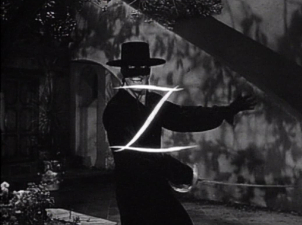
Thanks to his new calling card, everyone knew where Zubin Mehta had been

One widely-held theory is that because zed, as the older of the two, was the most widespread variation amongst British English speakers, during the Revolutionary War American English speakers looking to distance themselves from anything even vaguely British simply adopted the zee version as their own to make a stand—no matter how small it might seem—against British control. Alternatively, there mightn’t have been any political reasoning behind it at all, and the name might simply have come to the forefront as American English was forced to adapt and simplify as more and more colonists—coming from ever more distant countries, and speaking an ever more varied array of languages—began arriving in the New World.

Whatever the motivation might have been, by the mid-nineteenth century zee had become the standard form of the letter Z in the United States, and has remained so ever since. 

Though the campaign to resurrect ezod begins here...


4 March 2015

Poppycock

Something smells a bit iffy about poppycock.

People have been using it to mean “nonsense” or “useless blather” since the early 1800s, when it first began to appear in the colloquial English of the northeast United States. But how did it get there in the first place? 

According to several online sources—including the Merriam-Webster Dictionarypoppycock is a corruption of the Dutch word pappekak, a compound of pap, meaning “soft, chewed up food”, and kak, meaning, well, “cack”. Put together, pappekak, as the Oxford English Dictionary so eloquently explains, means something along the lines of “excrement as soft as porridge”. And on that basis it’s easy to see how the word came to describe something of little value.

Might be worth considering a rebrand...

But as the OED also points out, “no such word appears to be attested in Dutch”. That is to say, pappekak is a linguistic conjecture, a word only presumed to exist by keen etymologists clutching for possible origins of poppycock. So if porridgey poop isn’t quite right (which it isn’t in more ways than one, certainly), then what is?

Bizarrely, a more plausible explanation is that poppycock comes from the Dutch poppekak, meaning “doll excrement”. As odd as that might sound, poppekak is actually a genuine Dutch word attested in an old idiomatic phrase—zo fijn als gemalen poppekak, or “as fine as powdered doll’s excrement”—once used to describe someone showing what the OED calls “excessive religious zeal.”

So we can only presume that Dutch immigrants arriving in America in the early 1800s brought this peculiar expression with them. There, poppekak eventually morphed into poppycock and, perhaps through association with the pulpit-thumping preachers of the time, ultimately came to mean “empty prattle”, “claptrap”, and “nonsense”.


27 February 2015

Bunkum

The fact that there’s any kind of etymological connection between politics and long-winded speeches (or, for that matter, between politics and a word meaning “complete nonsense”) might come as little surprise. But the fact is that bunkum owes its existence to a tediously lengthy political speech delivered by US Congressman Felix Walker in 1820.

Born in Virginia in 1753, Walker was elected to Congress in 1817 as representative for Buncombe County, North Carolina. He spent a total of six years in the House, during which time Congress was tasked with debating the so-called Missouri Question—namely, whether the territory of Missouri should be admitted into the Union as a free or a slave state—in late 1819.

The debate rumbled on for several inconclusive months, until finally, just before the decisive vote was due to be taken, Congressman Walker stood to address the house on 25 February 1820. 

He went on to deliver a lengthy, rambling, and largely irrelevant 5,000-word speech—which, thanks to the wonders of the Internet, you can now torture yourself with here; to put that into perspective, Walker’s speech is around 1,000 words longer than the entire role of Hamlet. 


Felix Walker, inventor of the cure for insomnia

Walker’s speech went on and on and on. And on. And on. His exasperated colleagues repeatedly shouted him down and yelled at him to desist, but, undeterred, he continued talking and proudly explained that he was not, “speaking to the House, but to Buncombe.” 

Out of everything that he said that day, it was this pithy explanation that proved to be the most significant. Soon, saying or doing something “for Buncombe” slipped into American slang to mean “doing something purely to please other people”, and the mid-1800s, it was being so widely used that its original spelling Buncombe was lost, and it was the newly-simplified bunkum that ultimately became a byword for political claptrap, empty promises, and eventually utter nonsense. 

The clipped form bunk followed in the early 1900s, and we’ve been debunking things since 1923. 

Felix Walker, meanwhile, is now commemorated on a plaque in his home county of Buncombe for, quite rightly, giving a “new meaning to the word.”