_
Showing posts with label London. Show all posts

12 May 2016

London


A few weeks ago over on the HaggardHawks YouTube channel, we looked at the origins of 10 city names, covering everywhere from Chicago (“a place to grow wild onions”) to Funafuri, the capital of Tuvalu (“banana-woman”).


But one city that didn’t make the final cut was the largest city in the UK and the second largest city in Europe. The home of Britain’s smallest police station. The world’s oldest underground network. Two of the world’s best universities. And a woman with a pig’s face. Yep, we’re talking about London. 

So why—to resurrect our occasional series of Questions About The Language You Never Even Thought About—is London called “London?”

In terms of etymology (or rather toponymy, to give the study of place names its proper name), London is something of a mystery. Actually, that’s putting it mildly—over the past few hundred years, a number of linguists, scholars and geographers have put their heads together and come up with little more than a mutual discrediting of each other’s theories and one gigantic Buckingham Palace-sized question mark. Why is London called “London”? The short answer at least is that no one really knows.

That’s partly to do with a lack of written evidence. It’s also partly to do with the fact that we’re dealing with exceptionally old words and word elements, the barest bare bones of the language. And partly it’s because London is such a unique name—it really just doesn’t look like any other ancient word or word element that we know about, which makes working out what it might mean an especially tricky business. But just because we don’t have a definitive answer, doesn’t mean that we don’t have any answer at all.

By far the oldest explanation on record is that of the twelfth century Welsh scholar and historian Geoffrey of Monmouth. In his History of the Kings of Britain (c.1135), Monmouth claimed that London was founded by and named in honour of a pre-Roman king of Britain named Lud, who built the city on the site of an even more ancient city called “New Troy” that had been founded by Brutus, grandson of Aeneas, in 1100BC. It’s a nice story alright. It’s just a shame it’s complete rubbish.


Geoffrey of Monmouth probably based his mythical tale of King Lud on that of a legendary figure from Welsh folklore called Lludd Llaw Eraint, or “Lud Silver-Hand”, who is said to have saved Wales from a plague of dragons and a magical giant who had the power to send people to sleep by playing music; to escape the giant’s soporific tunes, Lud dipped his head in a bucket of water. 

Oddly enough, it’s likely that none of that ever actually happened, which makes the idea that London is named after a dragon-slaying monarch with his head in a bucket somewhat implausible. Oh, and linguistically it’s highly unlikely that a word like Lud would morph into something like “Lond”. But still—dragons and giants. That’s probably all the proof you need there.
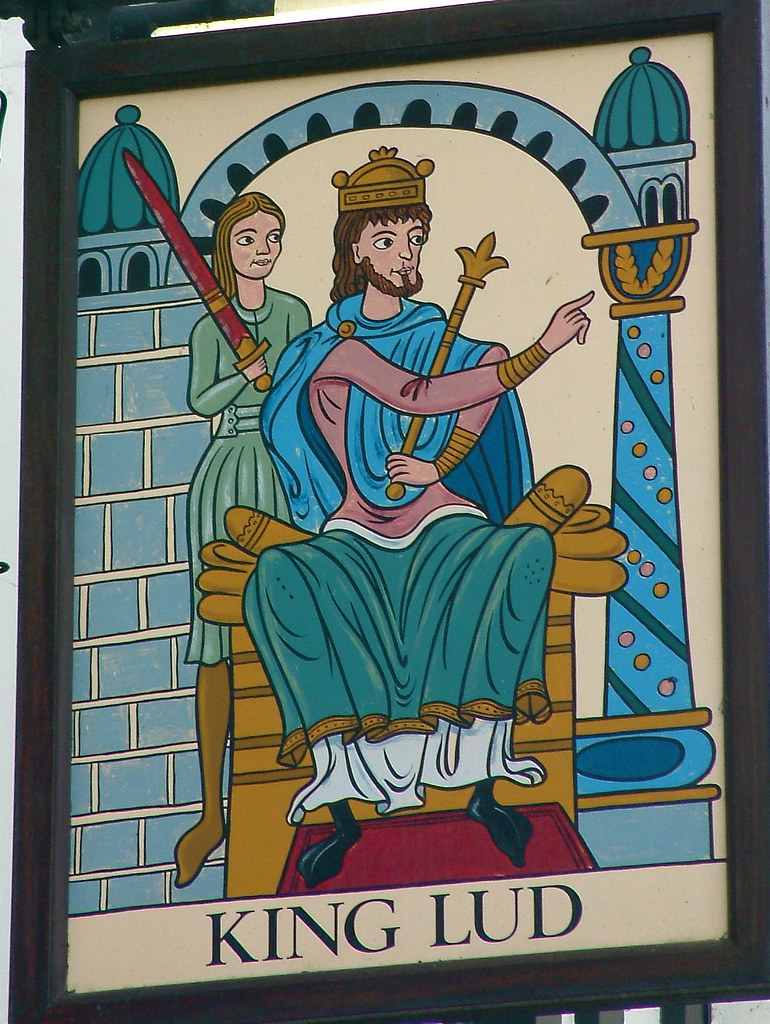

“...and over there is the bucket I put my head in.”

As unlikely as Geoffrey of Monmouth’s theory might be, he nevertheless might’ve been onto something by suggesting that London was named after or in honour of someone—but precisely who that “someone” was is another question.

For a while, one popular theory was that London was founded by or named in honour of someone called Londino or Londinos, a hypothetical name supposed to derive from an old Celtic word meaning “wild” or “fierce”. But there’s no historical precedent for that name whatsoever, and (without getting into too much detail) phonologists tend to agree that a Celtic word beginning lond– would give you a modern English word pronounced something like “loaned”, not like the “lund” of London. So despite being more than century old, this theory is now widely discredited. 

Alternatively it might not be the Lond– part of London that’s taken from someone’s name, but rather the –don. It’s been suggested that London might once have been called Lunadin, Luandan or Lan Dain, an ancient name meaning something like “moon temple of the goddess Diana”. Sir Christopher Wren certainly believed that he had unearthed a Roman temple dedicated to Diana when he rebuilt St Paul’s Cathedral, but again the linguistic and historical evidence just isn’t there to back this theory up.


So if it’s not an honorific name, how about a geographical one? 

Another theory is that London was originally llyn din, or llyn dain, both Welsh-inspired names literally meaning “lake-fort” or “pool of the river” respectively (the “lake” and “pool” in question possibly being the widening, deepening part of the river Thames). They’re both plausible theories, but linguistically a word like llyn would be expected to produce a modern name like Lindon-with-an-I, not London-with-an-O. 

And London has almost always been London-with-an-O: the earliest records we have of it are all from ancient Roman Latin documents and inscriptions that refer to it as Londinium or Londinion. The people of London themselves were the Londiniensi—a word taken from a stone tablet dating from around AD 150 that was unearthed at an archaeological dig in Southwark in 2002, and which provides us with the earliest known evidence of the name “London” that we have. And for the Romans to have spelled their “London” with an O (or a U, as they sometimes did) casts doubt on those Welsh-origin theories. 

Instead, we might have to look even further back in time.


Bring on the wall!

In 1998, Professor Richard Coates—then President of the English Place-Name Society—put forward perhaps the most convincing argument for the origin of the word London yet: Plowonida. If you think Plowonida sounds more like something you’d use to treat athlete’s foot rather than the origin of one of the most famous cities in the world, you’ve got a point. But the reason this looks so unfamiliar—and so unlike the modern name “London”—is because we’re dealing with impossibly old pre-Celtic language.

In Coates’ theory, Plowonida would have started life as a hydronym (a river name) referring to the part of the Thames on which London was founded. It combines (brace yourselves, we’re going even further back in time here) two Proto-Indo-European word roots meaning “to flow”, plew– and nejd–, whose descendants are found in river names all across Europe. In combination, it’s theorized that these two elements might have referred to the first noticeably deep, fast-flowing part of the Thames, where it was impossible to ford or cross on horseback.

Knowing what we know about pre-Celtic language, calling the river itself Plowonida would have given the town or village that stood on the banks of the river the name Plowonidonjon, which over centuries of simplification and alteration would have become a Celtic name along the lines of Lūndonjon, then the Latin name Londinium, and ultimately the modern English name “London”. If Coates’ theory is correct, that would mean the name “London” could be interpreted as something like “the town at the unfordable part of the river”—which is a considerably better theory that “the town of the king who put his head in a bucket”.


10 March 2016

Histriomastix

Late on Monday night (or early on Tuesday morning, depending on where you’re reading this…) a brilliant word quietly crept onto the @HaggardHawks Twitter feed:


…and I thought you might like to know a bit more about it.

A histriomastix is indeed a theatre critic (or a “severe critic of playwrights” as this dictionary defines it), but that’s putting it lightly: the word histriomastix literally means “scourge of actors”, and the suffix –mastix derives from an Ancient Greek word for a horsewhip. There’s a reason why this word has such abrasive connotations, however: it was invented by someone who really, really, hated actors. 

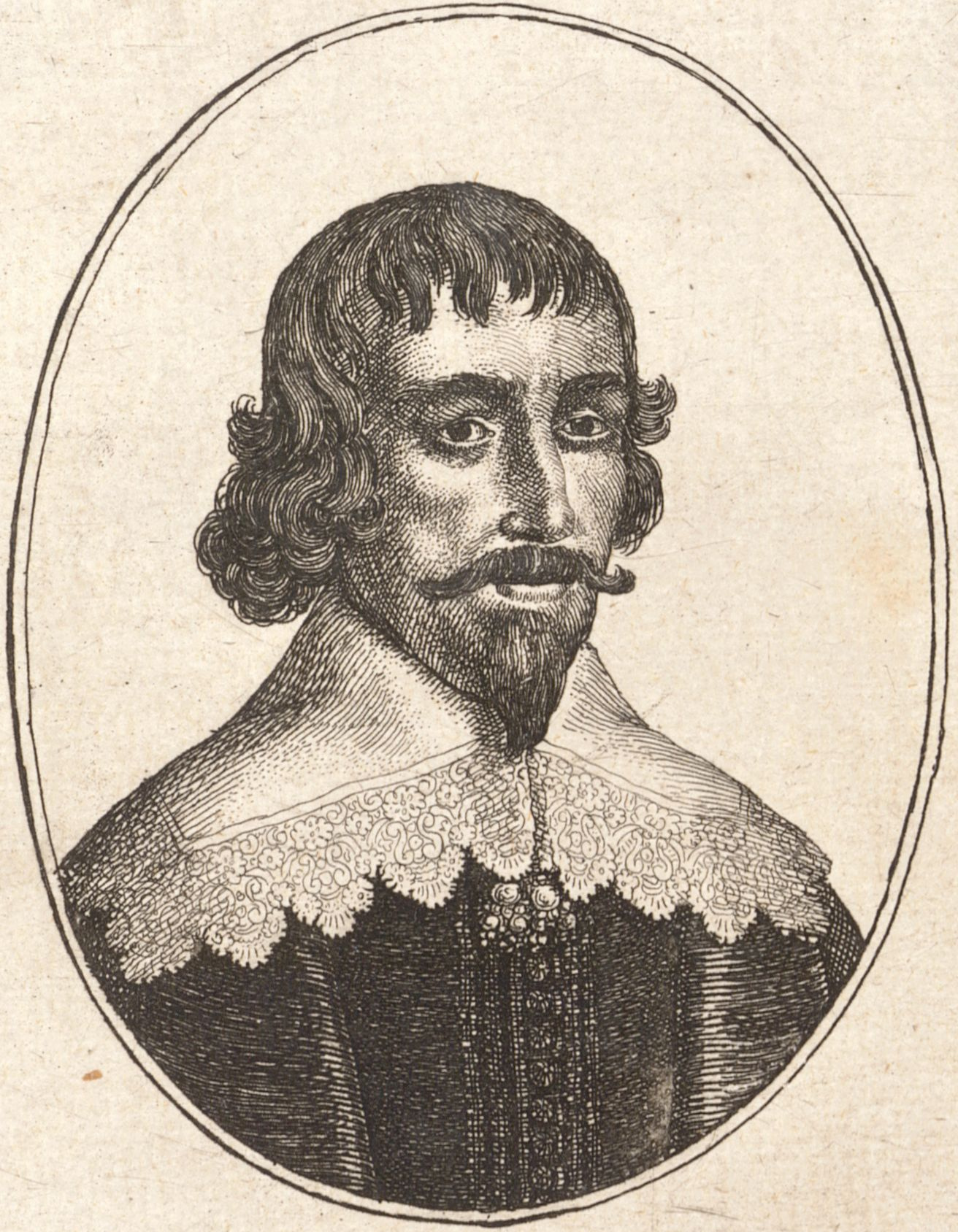
His name was William Prynne, a seventeenth century English lawyer, pamphleteer, and notoriously hard-nosed Puritan. Born in Somerset in 1600 and educated at Oxford, it’s thought that Prynne was first introduced to Puritanism during his training to become a barrister at London’s Lincoln Inn in the mid-1620s; he published his first Puritanical literature the year before he was called to the Bar in 1628.

Over the next four decades, Prynne published more than 200 books and pamphlets, the majority of which outlined his stringent views on everything from Christian redemption (some people were predestined never to be redeemed by Christ’s atonement on the Cross, he believed) to the length of a person’s hair (men’s hair should be kept short, women’s should be kept long, and anything in between was “unseemly and unlawful to Christians”). 

Like all Puritans, he railed against any form of celebration or revelry, and so out went singing, dancing, music, and Christmas, which was dismissed as derivative of the Roman Bacchanalia, a fact that “should cause all pious Christians eternally to abominate [it]”. But as unpopular and uncompromising as Prynne’s opinions were, none landed him in as much trouble as when he turned his reproachful attention to one group in particular: actors.

Prynne saw acting and masquerading as no different from any other kind of revelry, and in 1632 published a rambling 1,000-page essay of unadulterated condemnation to explain his stance. Entitled Histriomastix: The Player’s Scourge or Actor’s Tragedy, in it Prynne attacked almost every facet of the theatre, from the actors themselves (“sinful, heathenish, lewd, ungodly spectacles”, “pernicious corruptions”, “intolerable mischiefs to churches, to republics, to the manners, minds, and souls of men”) to their costumes (“a confluence of all whorish, immodest, lust-provoking attires … sufficient to excite a very hell of noisome lusts in the most mortified actors’ and spectators’ bowels”). 

Shakespeare’s trick of having men and boys dressing as women to play female characters—“representing the persons of lewd notorious strumpets”, according to Prynne—was “undoubtedly sinful, yea, utterly unlawful to Christians”. The plays themselves were written off as “deceitful fictions, which would quickly teach men to cheat, to steal, to play hypocrites and dissemblers”. And the “obscene, lascivious lust-provoking songs and poems” performed in them were “abominable unto Christians” as they risked “enflaming the outrageous lusts” of the audience, who are “transported by them to a Mahometan paradise or ecstasy of uncleanness”. Well, quite.

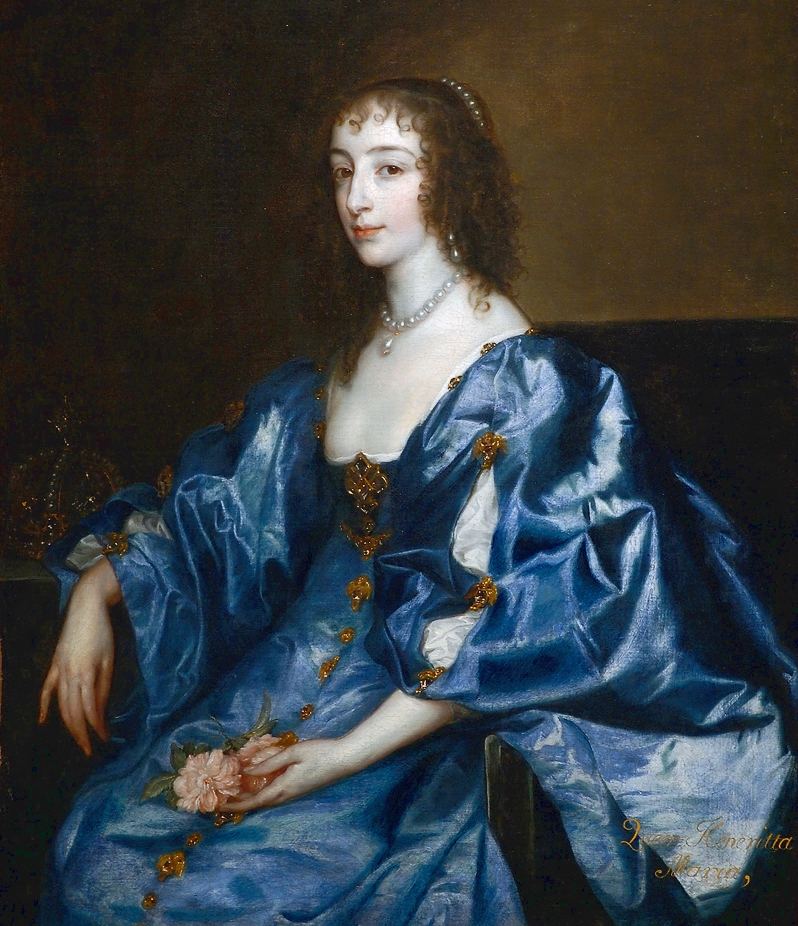
Each to their own, of course, but in this instance there was one small problem with Prynne’s vitriol: alongside her duties as queen consort, the reigning King Charles I’s wife Henrietta Maria liked nothing better than donning something from her confluence of all whorish attires and performing in a good old deceitful fiction. Put another way, she was an actress.

Consequently, Prynne’s Histriomastix soon attracted the attention of the royal household, and his outspoken opinions on the theatre were soon being spun as a less-than-subtle slight on Queen Henrietta herself. The Archbishop of Canterbury, William Laud, and the Attorney-General, William Noy, had Prynne arrested and thrown in the Tower of London, and on 17 February 1634 he was sentenced to life imprisonment, fined an eye-watering £5,000 (equivalent to £400,000 today), stripped of his Oxford degree, and, just when things could scarcely get any worse, ordered to be pilloried and have both his ears cut off. The case understandably caused a sensation—and amid all the brouhaha, the English language earned a new word for a harsh and uncompromising theatrical critic. 

But not even that insane catalogue of punishments was enough to stop Prynne. Thrown back into the Tower, he continued his writing, this time turning his attention away from the theatre and towards the moderate anti-Puritan clergy who had landed him in jail. In 1637, he found himself again in hot water after publishing an attack on the Bishop of Norwich. For a second time he was handed a life sentence, fined another £5,000, pilloried and, for what it was worth, sentenced to have what little remained of his ears again cut off. This time around he was also branded on both sides of his face with the letters “SL”, which according to the courts was to show everyone that he was “seditious libeller” —but Prynne preferred to tell people that it stood for stigmata laudus, or “the marks of praise”. 

Remarkably, Prynne’s luck suddenly changed in 1640, when the Long Parliament—convened by King Charles to fund his on-going battles against rebellion in Scotland—overturned his conviction, released him from the Tower, and reinstated all his legal qualifications (which he soon put to good work prosecuting Archbishop Laud when he was later arrested and tried for treason; Laud was eventually executed in 1645). Prynne also continued his pamphleteering, but as Charles I’s monarchy collapsed and England was thrown into Civil War, his condemnatory attention soon turned to Oliver Cromwell.

Although Cromwell himself was a Puritan, Prynne took exception to his and his supporters’ interpretation of radical Puritanism. He despised those championing the king’s execution, was suspicious of Cromwell’s republican army, and ultimately found himself supporting the Royalist cause. After Cromwell’s downfall and the Restoration of the monarchy in 1660, Prynne’s stance was rewarded by Charles II with a seat in Parliament—and, ironically, the position of Keeper of the Records of the Tower of London. 

He died in 1669, his hatred of actors and his invention of the word histriomastix earning him a place in the dictionary. It’s quite a life story, though—and would make a great play. Kickstarter, anyone? 


10 February 2016

Uranus

Before we begin, let’s get a few things out of the way. The noxious atmosphere around Uranus could kill a man. Uranus has a circumference of 100,000 miles. Scientists are looking at a black hole near Uranus. What are those two circular objects either side of Uranus? Ass-teroids, of course. If you got through that without laughing, then we’re good to go.

So. The other day, one of those stop-you-in-your-tracks facts cropped up on the @HaggardHawks Twitter feed:


But this really is too bizarre a fact to leave unexplained:


…so your wish is my command.

The discovery of Uranus (stop sniggering, you at the back) is credited to the German-born English astronomer William Herschel in 1781. Although it had been observed by scientists and astronomers for centuries, Uranus had always been mistaken for a star, and right up to Herschel’s discovery it was still being classed as 34 Tauri, a minor star in the constellation Taurus. Even Herschel himself initially believed he had spotted a comet rather than a planet, after noting that an object he had been looking at from his observatory in Bath had changed position in the sky over a series of nights.

Herschel announced his discovery in March 1781. As word of his new “comet” spread, astronomers all across Europe began to take note and observe it themselves. Soon, enough data had been compiled to plot its apparent trajectory—which, to everyone’s surprise, appeared to be an almost perfect circular orbit around the Sun. Herschel’s discovery was no comet.

Full colour photo of Uranus. Stop laughing.

By 1783, it had become universally acknowledged that Herschel’s discovery must surely be a planet—moreover, it was the first planet ever discovered by telescope, and the first new planet added to our Solar System in modern history. It was a truly monumental discovery, and one that earned Herschel an annual salary of £200 (equivalent to £27,000/$40,000 today) from King George III (on the condition that he move his observatory from Bath to Windsor, to be closer to the royal household), as well as the never-to-be-repeated title of Court Astronomer to The King.

But with the existence of a new planet confirmed, a pressing question soon emerged: what on Earth should it be called?

The Astronomer Royal, Nevil Maskelyne, wrote to Herschel asking him “to do the astronomical world the favour” and “give a name to your planet,” which, he continued, “is entirely your own, [and] which we are so much obliged to you for the discovery of.” In honour of his new financial patron, Herschel plumped for the only name he saw fit: Georgium Sidus, or “George’s Star.” He wrote to the Royal Society:

In the fabulous ages of ancient times the appellations of Mercury, Venus, Mars, Jupiter and Saturn were given to the Planets, as being the names of their principal heroes and divinities… The first consideration of any particular event, or remarkable incident, seems to be its chronology: if in any future age it should be asked, when this last-found Planet was discovered? It would be a very satisfactory answer to say, “In the reign of King George the Third”.

The seventh planet from the Sun, ultimately, was to be called George. But the response to Herschel’s suggestion was far from encouraging.

Outside of Europe, astronomers were wary of using a such an explicitly “British” name, especially given that it had taken an international collaboration to prove its status as a planet. Consequently, despite Maskelyne specifying that Herschel’s discovery and his choice of name were “entirely his own”, George failed to gain any widespread use or permanency. The name Georgium Sidus effectively became a placeholder, and over the years that followed astronomers across Europe began utilising and pitching their own choices and suggestions.

One popular choice was simply Herschel, a name honouring its discoverer. The Swedish astronomer Erik Prosperin ironically opted for Neptune (now the name of the eighth planet, discovered in 1846). But eventually a clear choice emerged—namely the German astronomer Johann Elert Bode’s suggestion, Uranus.

Bode had been one of the European astronomers who had calculated Uranus’ orbit, lending weight to the idea that Herschel’s discovery was a planet not a star. He suggested the name Uranus as it not only maintained the classical and mythological theme set out by the other six planets, but fittingly Uranus was the Greek god of the sky. Moreover, just as Saturn had been the father of Jupiter, Uranus was the father of Saturn, thereby creating a mythological family tree in the heavens.

Bose’s choice quickly gained momentum, and was reinforced by the German chemist Martin Klaproth in 1789, who named his famous discovery—the chemical element uranium—in support of Bose’s suggestion.

Out of deference to Herschel, however, it took another 60 years for the name Uranus to be universally acknowledged by the scientific community, when, in 1850, the official astronomical almanac published by the Royal Greenwich Observatory in London finally abandoned Herschel’s Georgium Sidus and in favour of Uranus.


13 August 2015

Ananym

A few days ago over on @HaggardHawks, I posted this:
Which raised this perfectly appropriate question:
The short answer is, yes, there is. But the long answer is—well, much more interesting than that.

So, first things first: the ana– of ananym is the Ancient Greek word ana, which was variously used to mean “back”, “up”, “on”, “around”, “towards”, “throughout”, and just about every other preposition you can imagine. It’s the same root we find in words like anagram, analogy, and analysis, as well as in less obvious places like Anabaptist (literally “one who baptizes again”) and Anastasia (which means “resurrection”).

The suffix –nym comes from the Greek word for “name”, onyma, which is same the root as in much more familiar words like synonym, acronym, pseudonym and anonymous. So put together, an ananym is literally a “back-name”—a word formed by reversing another.

That’s all well and good, of course, but what about examples?

Well, admittedly the majority of ananyms in use today tend either to be proper nouns or fictional inventions: think of Oprah Winfrey’s Harpo Corporation, Samuel Butler’s Erewhon (a partially-reversed “nowhere”), or Dylan Thomas’s Under Milk Wood, which was set in the fictitious Welsh town of “Llareggub” (you can work that one out yourself).

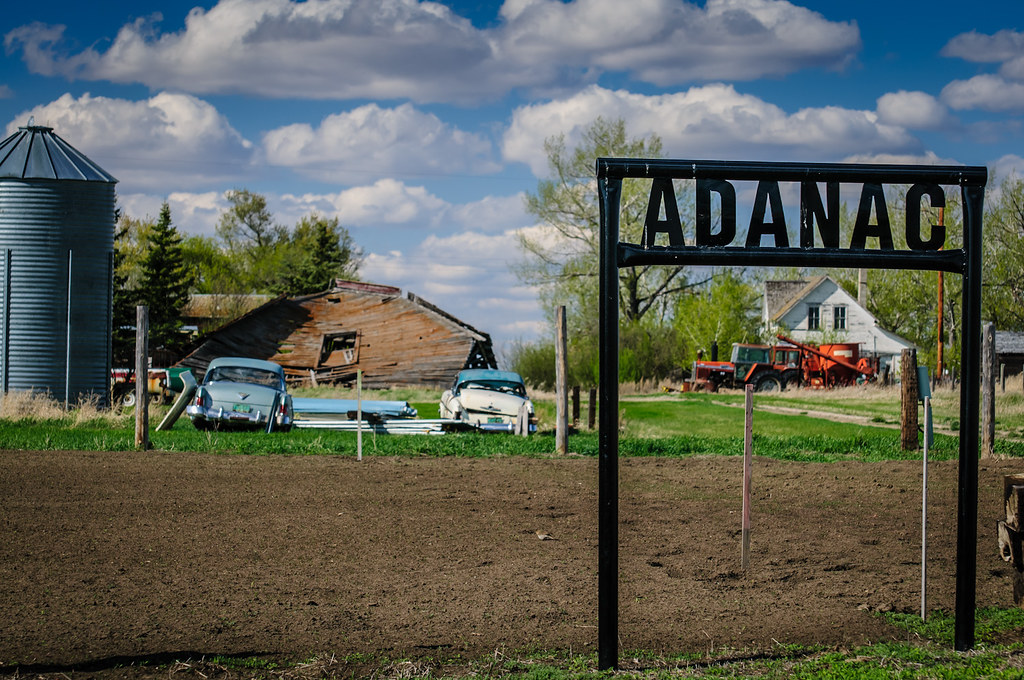
There are towns called Adanac in Canada, and Saxet in Texas. The girls’ names Segna and Nevaeh are “Agnes” and “heaven” spelled backwards. Dioretsa is the fantastically fitting name of an asteroid with an appropriately retrograde orbit. And if you’ve ever thought searching the Internet was too straightforward, why not try searching for everything backwards over on elgooG?

None of those will find its way into a dictionary any time soon, of course, but that’s not to say that a handful of ananyms haven’t already done so. Mho, for instance, is the name of a unit of electrical conductance, coined in opposition to the ohm, a unit of resistance. Along similar lines, physicists have at their disposal units called the yrneh (a unit of inverse electrical inductance, derived from the henry) and the daraf (a measure of electric elastance, as opposed to the farad, a measure of electrical capacitance). And not wanting to be outdone by the Michael Faradays of this world, in 1921 the US engineer Frank Bunker Gilbreth invented the therblig, a unit of work in a time-and-motion study. (Shameless plug—there’s more about these in the HaggardHawks fact book…)

By far the most familiar example of an ananymic word, however, is yob, which has been in use since the mid-nineteenth century to refer to what might otherwise be called a hooligan or a ruffian. It’s earliest record comes from a Dictionary of Modern Slang, Cant, and Vulgar Words, compiled by the English lexicographer John Camden Hotton in 1859.

The full title of Hotton’s dictionary (which is way too long to reproduce here) goes on to explain that it contains “glossaries of two secret languages spoken by the wandering tribes of London”: the two “languages” in question are Cockney rhyming slang and “back slang”, a much less familiar variety of Victorian English slang that, as its name suggests, involved reversing the letters of everyday words and phrases to form an entirely new (and fairly unintelligible) vocabulary. In other words, back slang it was a language of ananyms.

Like rhyming slang, back slang is thought to have first emerged in the early 1800s. In his dictionary, Hotton describes it as “the secret language of the costermongers”, suggesting that it probably originated among London street traders as a means of communicating exclusively with one another, presumably to the bewilderment of their customers.

So in London back slang, a cabbage was an edgabac, an orange was an edgenaro, and pinurt pots were turnip tops. An exis-yeneps was sixpence, a rouf-yeneps was fourpence, and earth gens was three shillings. After a good day’s trading, one seller might comment that he’d made a doogheno hit, or a “good hit” (“implying that he did well at market, or sold out with good profit,” according to Hotton), after which he might treat himself to a top o’reeb (a “pot of beer”), if not a track (a “quart”)—and end up quite kennurd (“drunk”), or at least flatch kennurd (“half-drunk”).

And second from last on Hotton’s list is yob, listed as Victorian back slang for “boy”:


Although linguistic techniques like back slang have remained in use ever since (and are by no means exclusive to English), aside from yob you’d be hard-pushed to find anyone who still uses any of the other entries on Hotton’s list, or to find any similar terms listed in a modern dictionary. 

Contrast that with rhyming slang, which has contributed considerably more to our language than meets the mince-pies: if you’ve ever used your loaf (loaf of bread = “bead”), 86ed something (eighty-six = “nix”), took the mickey out of someone (Mickey Bliss = “take the piss”), or called them a berk (Berkley Hunt = look that one up yourself), then you’ve used rhyming slang, whether you’ve realized it or not.

Os smynana thgim eb erar, tub er’yeht yb on snaem tcnitxe.


15 July 2015

Hooligan

Last week, we tweeted this:
It’s a great word, and given its meaning it seems plausible that it should have a much more familiar etymological cousin:
A nice idea—but unfortunately the two are unrelated. Hoolybuss is an old Cornish word, dating back to the eighteenth century at least, while the first hooligans didn’t emerge until the late 1890s, more than 250 miles away in Victorian London.

Like a lot of dialect words, a lack of early written evidence of hoolybuss makes it hard to pin down its exact etymology, but a reasonable guess would be that the hool– is probably a local pronunciation of hurl. This would make hoolybuss a distant cousin of hurly-burly, perhaps alongside other hool– words like hooloch (an old Scots word for a rockfall) and hooley (an old Irish-English word for a boisterous party). As for the –buss, that might come from bussa, another old Cornish word for an “empty-brained person”, but with so little evidence to go on, it really is difficult to say anything with any certainty.

So what about hooligan? Well, the OED’s earliest record of a hooligan comes from an 1898 article in The London Daily News, which condemned “the Hooligan gangs” now being “bred in these vile, miasmic byways”. By crikey, those Victorians really knew how to string a sentence together. 

As, apparently, originally the name of a gang, some etymologists have suggested that hooligan might derive from the surname of some notorious crook or dimber-damber, in which case it could be a slang corruption of “Houlihan”, or even the phrase “Hooley’s Gang”. It’s a neat theory, and certainly a plausible one—but as always with this kind of thing, there’s more to this story than meets the eye. For example, take a look at this:


That’s the front cover of an edition of a Victorian humour magazine called Nuggets, dating back to 1897. It depicts some of the magazine’s most popular recurring characters, namely a wacky family of Irish country-bumpkins called “The Hooligans”. In this edition, the Hooligans have cobbled together their own makeshift caravan (towed by their pet goat, of course) in which they intend to “travel ’round the country with ease and elegance”. Other editions saw them celebrating Queen Victoria’s diamond jubilee with their own ramshackle royal procession, and trying, albeit unsuccessfully, to join the Klondike gold rush. It’s all very heavily stereotyped stuff (and would undoubtedly fall foul of the censors today) but the Victorians loved it.

They also, however, loved this:


That’s a selection of theatrical reviews—taken from an 1892 edition of The Era, an old stage newspaper—for a show at the Theatre Royal in Hull, performed by a pair of Irish comedians called Jim O’Connor and Charles Brady. The duo’s act, as a number of the reviews mention, included a hugely popular musical number about a rowdy Irish family called The Hooligans:

Oh, The Hooligans!
Always on the riot, 
Cannot keep them quiet,
Oh, The Hooligans!
They are the boys
To make a noise
In our back yard!

O’Connor and Brady’s show transferred to the Elephant and Castle Theatre in central London shortly afterward, and soon proved just as big successful there as it had been elsewhere. Their Hooligans song likewise proved a roaring success in London’s music halls—speaking of which:


Stepping even further back in time, that’s the lyric sheet to an old comic broadside called Miss Hooligan’s Christmas Cake, thought to have been published in Scotland sometime around 1880. The song recounts the fictional story of a bungling Irish cook who bakes a gigantic Christmas cake that makes everyone ill:

There was plums and prunes and cherries,
And citron and raisins and cinnamon too,
There was nutmeg, cloves and berries,
And the crust it was nailed on with glue.
There was carraway seeds in abundance,
Sure ’twould build up a fine stomachache,
’Twould kill a man twice, after eating a slice,
Of Miss Hooligan’s Christmas cake.

Again, it’s all very unfairly stereotyped, but nevertheless Miss Hooligan’s nonsense musical tale proved hugely popular at the time. As did, finally, this:


That’s the opening scene of a theatrical farce called More Blunders Than One, or The Irish Valet, written way back in 1824 by the dramatist (and former manager of London’s Adelphi Theatre) Thomas G Rodwell. And one of the characters in the play, as this extract shows, was a “Mr Larry Hoolagan”. 


So. Theatrical farces. Irish comedians. Victorian cartoons. Toxic cake. Where does all this leave us?

Well, both the play and the Scottish broadside seem to prove that hooligan is indeed derived from an Irish surname—presumably, as the OED rightly suggests, “Houlihan”. It in turn derives from the old Irish Gaelic surname O’hUallachain, the –ch– of which, in its original Irish, would have been pronounced like a softer version of the ch in Bach or loch (a voiceless velar fricative, if you want to get technical). 

That ch sound isn’t normally used in English, so it’s not too much of a leap to presume that it could morph into an easier g sound among British English speakers, which explains the early uses and spellings of the name Hooligan in both the farce and the broadside. But they have nothing to do with riotous criminal behaviour—so for that, we need to head back to the early 1890s. 


Jim O’Connor and Charles Brady apparently chose the same surname, Hooligan, for the riotous characters in their 1892 song. And when their show transferred to London the following year, its enormous success—and the success of the music hall number it incorporated—seems to have led to a whole new word for rioting, boisterous troublemakers being adopted into the street slang of the capital. 


Soon, members of London’s criminal gangs were proudly referring to themselves as Hooligans, and when they began to fall foul of the law, the name was quickly picked up and popularized by the press: an early account of a “Hooligan boy” being arrested in 1894 has since been discovered, predating the OED’s earliest evidence by four years, and aligning the word more closely with O’Connor and Brady’s arrival in London the previous year. 


So is that the end of the story? Predictably, no. Despite all this early evidence, many etymologists still adhere to the idea that hooligan derives from the name of some notorious Victorian criminal or underworld figure, with some theories even name-checking a legendary “Patrick Hooligan”, or the disgraced politician and financier ET Hooley. Just as with hoolybuss then, it seems that until more conclusive evidence comes to light, this is yet another etymological mystery that refuses to be solved.