_
Showing posts with label Word Drops. Show all posts

5 August 2016

10 Rhymable Unrhymable Words - 500 Words Ep. 30


A little while ago, this fact cropped up on the HH Twitter feed:


It ended up sparking quite a debate about whether carpet actually did have a rhyme, with everything from trumpet to market thrown into the mix. But, no. Seriously. Nothing rhymes with carpet. And nor does nothing, for that matter. In fact nothing rhymes with nothing either (depending on your accent, of course), but at the risk of tumbling into existential vortex, let’s just move on. 

Rhymes—and in particular words that purport not have any rhymes but actually do—are the focus of this week’s YouTube video, the 30th in the 500 Words series we’re running every week this year:


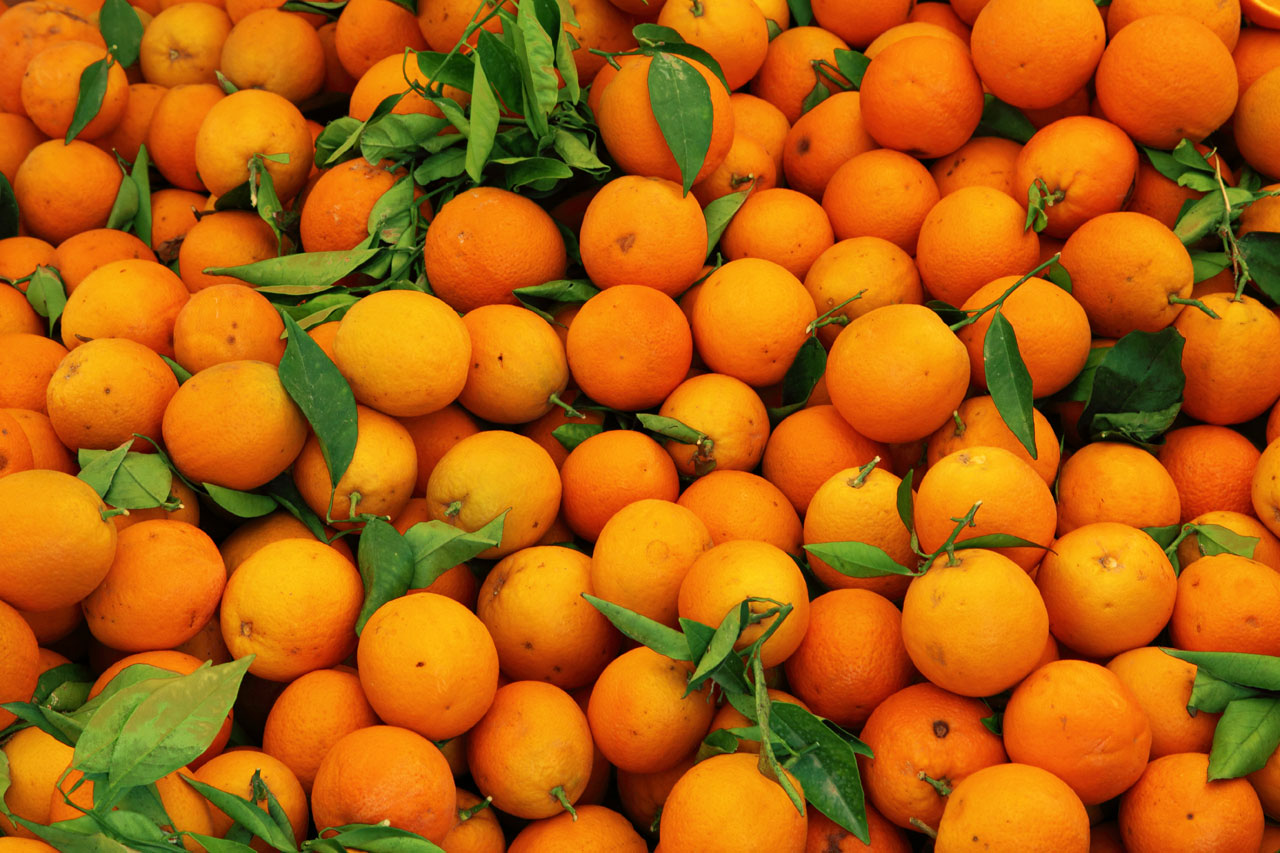
But following on both from this week’s episode, and from the misnomers episode from a couple of weeks back, one question we want to answer: what came first, orange or oranges? (Shameless plug: there’s more on this in the HH factbook, Word Drops—which is now available Stateside too…)

Chicken-and-egg language questions like this crop up on HH every so often (case in point below), but what about orange vs. oranges?


Well, the fact is that there was no word for the colour orange in the English language until oranges first began to be imported into England with any regularity in the early Middle Ages. Before then, anything orange coloured simply had to be described in terms of red and yellow, as in this description of a fox from Chaucer’s Nun’s Priest’s Tale:

His colour was bitwixe yelow and reed, 
And tipped was his tayl and both his eeris 

[His colour was between yellow and red, 
and tipped was his tail and both ears.]

The earliest record of the word orange—which derives at length from the Sanskrit word for the orange tree, naranga—comes from the Sinonoma Bartholomei, a fourteenth century Latin herbal, which listed all the plants known to have medical applications. And there, on page 15, “orenge” was listed as the English equivalent of the Latin “Citrangulum pomum”, or “citrus fruit”.

The colour orange didn’t appear until around a century and a half later. In 1557, orange cloth was listed in a legal document, collected in the so-called Statutes at Large in the late sixteenth century, that prohibited the selling of all fabrics except those of a certain set of colours:

And moreover, be it enacted by the authority aforesaid that no person nor persons … shall sell or put to sale within the realm of England any coloured cloth of any other colour or colours than are hereafter mentioned, that is to say, scarlet, red, crimson, morrey, violet, pewke, brown, blue, black, green, yellow, blue, orange, tawny, russet, marble grey, sad new colour, azure watchet, sheeps colour, lion colour, motly, iron grey, friers grey, crane colour, purple, and old medley colour, most commonly used to be made above and before twenty years past.

Thank goodness “sheeps colour” made the final cut, frankly. And same goes for the “sad new colour”, otherwise I’d have nothing left to wear. But Chaucer’s foxes and sartorial rules and regulations aside, it’s clear that in this particular chicken-and-egg situation, it was the chicken that came first: the bright orange fruits gave the colour orange its name, not vice versa

All in all, it’s a colourful little story. 


19 June 2016

10 Fossil Words


A while ago on the HH blog, we looked at the history of time immemorial—an expression now used to mean “time beyond memory” or “time out of mind”, but which began life as a legal term in mediaeval England referring to anything that happened before the coronation of Richard I, on 6 July 1189.


And that’s just one of 10 so-called “fossil” words that we’re looking at in this week’s YouTube video.


Fossils, or “fossilized” words, are words—like the immemorial of time immemorial, the shrift of short shrift, and the lurch of left in the lurch—that survive in the language only in one stock phrase or expression.

It’s fair to say that words like these are often hiding in plain sight: the phrases they appear in are so familiar that the obscurity of the word or words they contain slips by unnoticed. So you might not know what a caboodle is (it’s actually an alteration of boedel, an Old Dutch word for a person’s belongings), but you’ll know precisely what someone means when they talk about the whole kit and caboodle. You might not know that a pale is a wooden picket fence, but if someone or something is beyond the pale you’ll know it’s outside the accepted standards. And if we agree to let bygones be bygones, we let go of earlier contentious issues or disagreements. But what exactly is a bygone?

Well, back in the fifteenth century, bygone was an adjective rather than a noun, essentially meaning “former”, “elapsed”, or “that has gone by”—Shakespeare spoke of “the by-gone-day” in A Winter’s Tale in 1611. From there, the word came to describe anything dead or departed, and later obsolete or anachronistic—Dickens spoke of “the byegone old Assembly Rooms” in a letter dated 1869. But for bygones to be plural, it has to be a noun. So when did that happen?

Well, based on the original meaning of the word, back in the mid-sixteenth bygone came to be used not merely to describe something that has gone by or expired, but essentially as a placeholder name for it itself. Soon everything from overdue payments and financial arrears to a criminals’ previous convictions were being labelled bygones, before what we might call the modern meaning of the word—that is, “any past incident or event”—began to emerge in the mid-1600s. According to the OED, the earliest record of the phrase bygones be bygones itself dates from 1648. 


8 June 2016

10 Colour Names

A few weeks ago, this intriguing factoid popped up on the HH Twitter feed:


It’s an interesting story, which we touched on again in this week’s YouTube video, all to do with the names and etymologies of 10 colours—including the perfect word to describe the perfect colour of a perfectly ripe banana (spoiler alert: it’s not yellow), to the reason why magenta is called magenta, and what connects a Tudor folk dance to a bowl of porridge and to a pile of goose droppings. Truly, it’s an embarrassment of riches.


But back to oranges. Yes, that fact above is completely true: the earliest record of an orange in the English language comes from the early 1400s; the earliest record of something being described as orange in colour, dates from as relatively recently as 1557. But things have been orange coloured since—well, forever. 

Take foxes, for instance. They and their orangey-brown fur have been around ever so slightly longer than the English language (a few hundred thousand years, give or take), which meant that writers in pre-orange-importing times had to get creative when it came to describing what colour they were. As in this line, from Chaucer’s Nun’s Priest’s Tale:

His colour was bitwixe yelow and reed,
And tipped was his tayl and both his eeris 
With blak, unlyk the remenant of hise heeris;
His snowte smal, with glowynge eyen tweye.
 
  
[His colour was between yellow and red,
And tipped was his tail and both his ears
With black, unlike the remainder of his hair;
His snout small, with two glowing eyes.]
With no word for the colour orange, Chaucer—writing in the 1390s—had to resort to describing the fox in terms of yellow and red. And things stayed like that for another century-and-a-half, until a connection between the colour orange and it’s corresponding fruit was made, and the English language finally gained a separate name for the second colour of the rainbow. (Shameless plug #4,229: there’s more on this in the HH factbook, Word Drops.)

So that’s that. But, just when you think English and it’s colours are all sorted, you find out this:


3 June 2016

10 Useful Scrabble Words


Chances are that if you like words, you’ll like Scrabble. It’s just so much fun, isn’t it? Waiting the entire game for the letter Q to come up so you can play jonquils and score 500 points, only for your opponent to get it first and play qi on a triple word square and score 501. So. Much. FUN.

Scrabble-related facts crop up on the HH Twitter feed every so often (and there’s a darn sight more where that came from in the fact book Word Drops):

And it’s Scrabble that’s the focus of this week’s HaggardHawks YouTube video—10 indispensably useful Scrabble words, from aa to oxyphenbutazone. Good luck slipping that one into your next game...


One fiendishly useful Scrabble word that didn’t make the final cut here however is euouae. According to the Guinnes Book of Records, that’s the longest vowel-only word in the English language, and is well worth remembering if you’re looking to ditch a superfluity of vowels midway through a game. That being said, there’s some contention over whether or not euouae should actually be permissible in Scrabble play—not to mention whether or not it’s actually a word or not.

The word euouae (pronounced “you-oo-ee”) is an abbreviation used to memorize the pattern of syllables forming the cadence of a Gregorian chant known as the Gloria Patri, “Glory Be to the Father”. The Gloria Patri ends with the line, “In saecula saeculorum, Amen”, literally meaning “in a century of centuries”, or “forever and ever”. Euouae refers to the pattern of tones corresponding to the last six syllables of this line: saeculorum amen.


So strictly speaking, euouae is an abbreviation of a Latin phrase used as a mnemonic device. Does that make it a “word” in the strictest (Scrabble-playing) sense? It’s a tough call, and it’s certainly true that not every dictionary—and not every Scrabble word-list—has admitted it to its pages thus far. 

But when you’re sat in front of a rack of seven vowels, you’ve really got to take what you can get…


27 May 2016

10 Portmanteau Words

If you follow the HaggardHawks Twitter feed, you might have spotted the word insinuendo the other day, meaning “an insinuated remark”. According to the late Oxford English Dictionary editor Robert Burchfield, insinuendo is a “tasteless word.” Well, there’s no accounting for taste, of course, but as well as being “tasteless”, insinuendo is also a portmanteau—a blended word that brings together two existing words to form a new one. 

And it’s 10 of those we’re looking at in this week’s YouTube video.


As mentioned in the video, the term portmanteau was first used to describe “blended” words like these by Lewis Carroll, who took the name of a type of suitcase with two separate compartments, and applied it to terms in which “there are two meanings packed up into one word”.

Although Carroll was writing in 1871, it’s tempting to think of portmanteau words as a much more modern phenomenon. It’s certainly true that “blending” words together to form (albeit often fairly clumsy) new ones is still a very fruitful word-forming process today—you can take your pick from any number of recent examples, like fandom, bromancemocktail, cosplay, metrosexual, guyliner, Brangelina, Twitterati, edutainment, frappuccino, snowmaggedon, favicon, chillax, rockumentary and mockumentary.

But despite their modern appearances, a lot of portmanteau are much older than they first appear—even insinuendo dates back to 1885.

Take a word like newscast, for example. Despite it’s relatively modern feel, its earliest appearance in the language dates from 1928, when it cropped up in an edition of Time magazine. The first motorcade drove through Rockford, Illinois, back in 1910. People have been eating with sporks since 1909, and enjoying brunch for even longer—it’s earliest record comes from an 1896 edition of the satirical magazine Punch that called it “an excellent portmanteau word … indicating a combined breakfast and lunch”. Unfortunately, another word the magazine tried to champion didn’t catch on:
At Oxford, however, two years ago, an important distinction was drawn. The combination-meal, when nearer the usual breakfast hour, is ‘brunch’, and when nearer luncheon, is ‘blunch’.
Another early portmanteau—which sadly didn’t make the final cut in our video—is gerrymander. (Shameless plug #495: there’s more on this in the HH factbook, Word Drops—which is now out in the USA!)

Gerrymander derives from the name of American politician and diplomat Elbridge Gerry. Gerry was serving as a Governor of Massachusetts when in 1812 he signed a bill that redrew the boundaries of Massachusetts’ state senate electoral districts so that they would most benefit his Democratic-Republican Party. This practice was certainly nothing new (the Anti-Federalist leader Patrick Henry had tried the same trick in Virginia back in 1788), but it nevertheless soon became known as gerrymandering—a combination Gerry’s surname and the word salamander.

Why a salamander? Well, an article in the Boston Globe on 26 March 1812 happened to liken the shape of one of Gerry’s redrawn districts to that of a salamander, a lizard-like amphibian:


Frankly, that’s the most un-salamandery salamander I’ve ever seen, but nevertheless the name stuck.

But did Gerry’s gerrymandering work? It certainly did. At the 1812 election, the senate remained in his party’s hands. Gerry himself, however, lost his seat—but went on to serve as Vice President under James Madison the following year.