_
Showing posts with label theatre. Show all posts

25 April 2016

#Shakespeare400


You probably noticed a bit of a hoo-hah at the weekend surrounding the 400th deathiversary of someone called William Shakespeare. We marked the day with a video about 10 unsolved Shakespearean terms over on YouTube and a missing words quiz here on the HH blog, while over on Twitter we were ridiculously busy bombarding you with half-hourly tweets about the great man himself all day Saturday. And apologies to all non-Shakespeare fans out there, but we’re going to do the same again now.

There were quite a few calls over on Twitter for us to collate all our Shakespeare facts in one place. And as ever, your wish is our command. So from a Shakespearean shipwreck to a man extinguishing his trousers with beer, here is our #Shakespeare400 list in full:

23 April 2016

10 Words Shakespeare Used That No One Can Work Out


In honour of the #Shakespeare400 anniversary on 23 April 2016, this week’s HaggardHawks YouTube video is looking at a part of Shakespeare’s writing that isn’t dealt with all too often.

Everybody knows Shakespeare invented a considerable number of the 31,534 words he used in his work—as many as 1 in every 20, if some statistics are to be believed—and alongside those, he transformed many pre-existing words into different parts of speech, a process known as anthimeria. So if you’ve ever grazed, squabbled with, elbowed, caked or ghosted someone, then you’ve got Shakespeare to thank for it: none of those had been used as verbs before he got hold of them...

All this linguistic playfulness, however (coupled with the obvious fact that his writing is four centuries old) can make Shakespeare’s work tough to navigate these days, and a little patience and background knowledge is often are needed to unlock some of his toughest lines. But even the best Shakespeare scholars have to admit that—well,  sometimes we just don’t know what the hell he’s talking about.

Armgaunt. Eftest. Pajock. In his buttons. The list of words and phrases that crop up in Shakespeare’s work that no one can quite decipher runs on and on. But just because we don’t know for sure what he meant doesn’t mean that we can’t have an educated guess. And it’s that that we’re looking at in this week’s video…


10 March 2016

Histriomastix

Late on Monday night (or early on Tuesday morning, depending on where you’re reading this…) a brilliant word quietly crept onto the @HaggardHawks Twitter feed:


…and I thought you might like to know a bit more about it.

A histriomastix is indeed a theatre critic (or a “severe critic of playwrights” as this dictionary defines it), but that’s putting it lightly: the word histriomastix literally means “scourge of actors”, and the suffix –mastix derives from an Ancient Greek word for a horsewhip. There’s a reason why this word has such abrasive connotations, however: it was invented by someone who really, really, hated actors. 

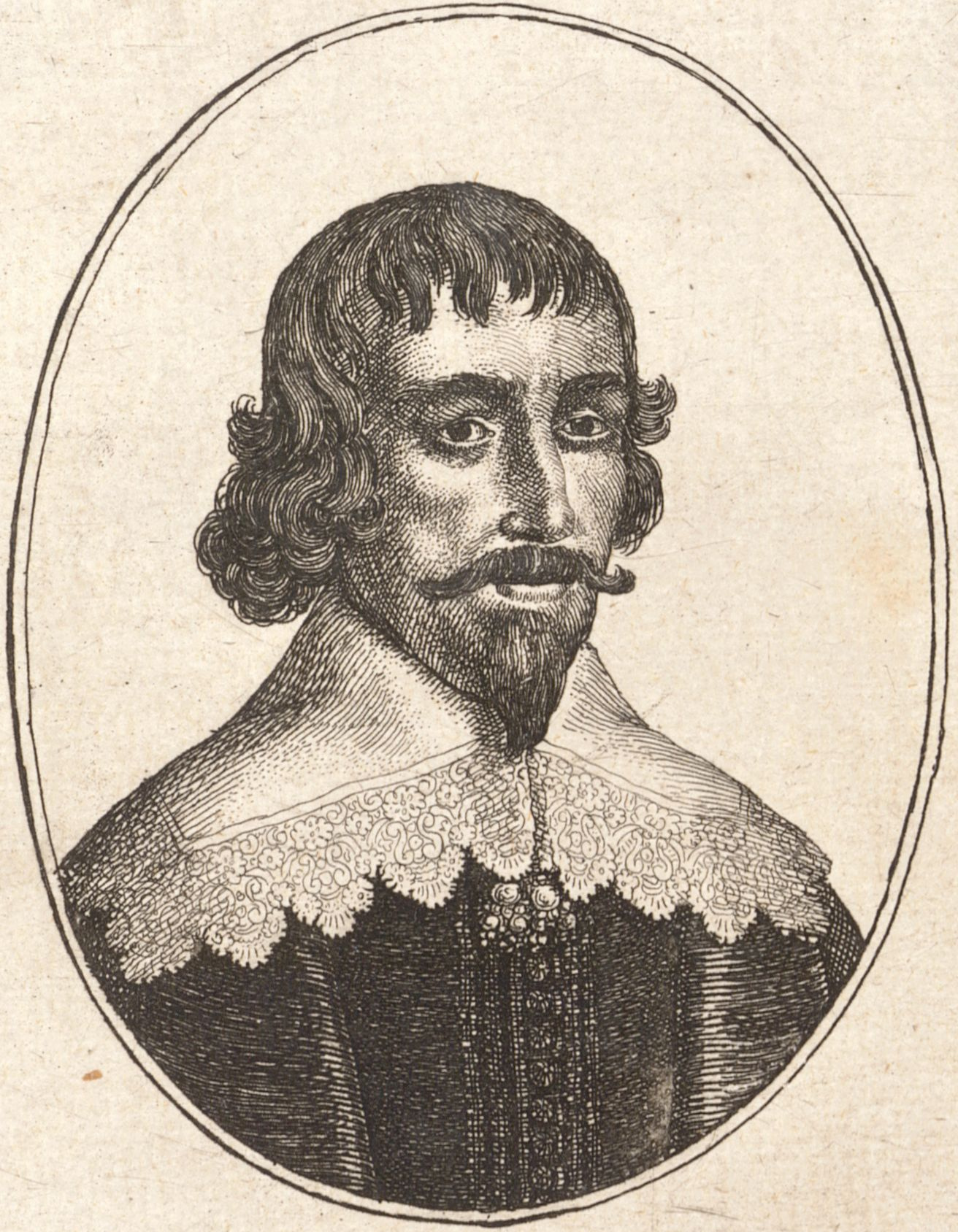
His name was William Prynne, a seventeenth century English lawyer, pamphleteer, and notoriously hard-nosed Puritan. Born in Somerset in 1600 and educated at Oxford, it’s thought that Prynne was first introduced to Puritanism during his training to become a barrister at London’s Lincoln Inn in the mid-1620s; he published his first Puritanical literature the year before he was called to the Bar in 1628.

Over the next four decades, Prynne published more than 200 books and pamphlets, the majority of which outlined his stringent views on everything from Christian redemption (some people were predestined never to be redeemed by Christ’s atonement on the Cross, he believed) to the length of a person’s hair (men’s hair should be kept short, women’s should be kept long, and anything in between was “unseemly and unlawful to Christians”). 

Like all Puritans, he railed against any form of celebration or revelry, and so out went singing, dancing, music, and Christmas, which was dismissed as derivative of the Roman Bacchanalia, a fact that “should cause all pious Christians eternally to abominate [it]”. But as unpopular and uncompromising as Prynne’s opinions were, none landed him in as much trouble as when he turned his reproachful attention to one group in particular: actors.

Prynne saw acting and masquerading as no different from any other kind of revelry, and in 1632 published a rambling 1,000-page essay of unadulterated condemnation to explain his stance. Entitled Histriomastix: The Player’s Scourge or Actor’s Tragedy, in it Prynne attacked almost every facet of the theatre, from the actors themselves (“sinful, heathenish, lewd, ungodly spectacles”, “pernicious corruptions”, “intolerable mischiefs to churches, to republics, to the manners, minds, and souls of men”) to their costumes (“a confluence of all whorish, immodest, lust-provoking attires … sufficient to excite a very hell of noisome lusts in the most mortified actors’ and spectators’ bowels”). 

Shakespeare’s trick of having men and boys dressing as women to play female characters—“representing the persons of lewd notorious strumpets”, according to Prynne—was “undoubtedly sinful, yea, utterly unlawful to Christians”. The plays themselves were written off as “deceitful fictions, which would quickly teach men to cheat, to steal, to play hypocrites and dissemblers”. And the “obscene, lascivious lust-provoking songs and poems” performed in them were “abominable unto Christians” as they risked “enflaming the outrageous lusts” of the audience, who are “transported by them to a Mahometan paradise or ecstasy of uncleanness”. Well, quite.

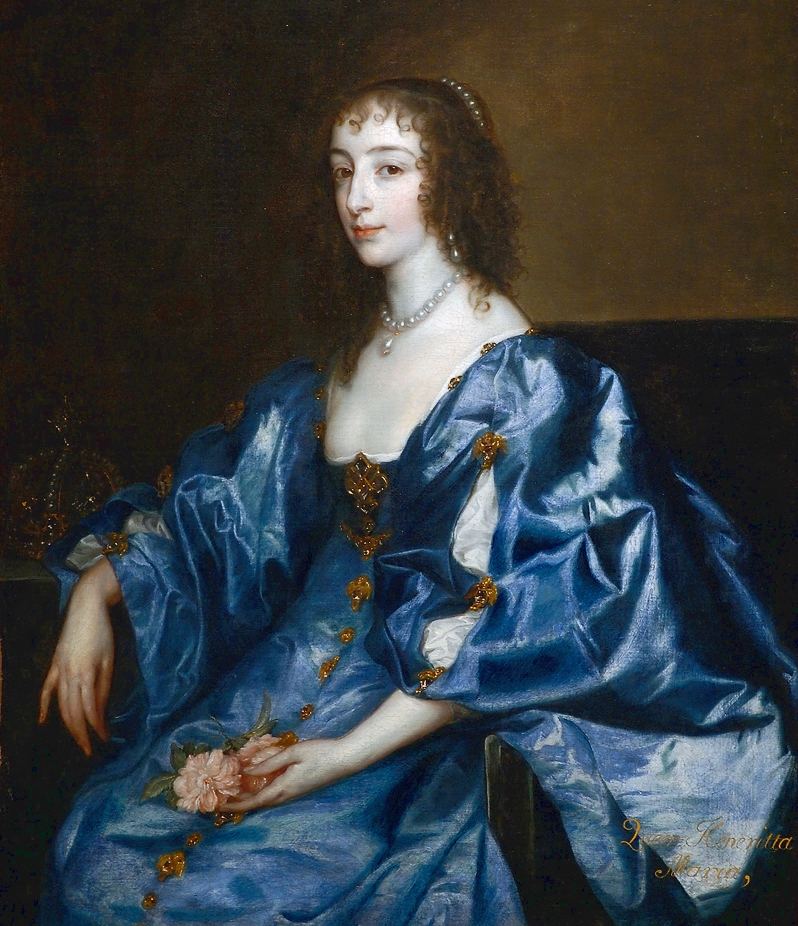
Each to their own, of course, but in this instance there was one small problem with Prynne’s vitriol: alongside her duties as queen consort, the reigning King Charles I’s wife Henrietta Maria liked nothing better than donning something from her confluence of all whorish attires and performing in a good old deceitful fiction. Put another way, she was an actress.

Consequently, Prynne’s Histriomastix soon attracted the attention of the royal household, and his outspoken opinions on the theatre were soon being spun as a less-than-subtle slight on Queen Henrietta herself. The Archbishop of Canterbury, William Laud, and the Attorney-General, William Noy, had Prynne arrested and thrown in the Tower of London, and on 17 February 1634 he was sentenced to life imprisonment, fined an eye-watering £5,000 (equivalent to £400,000 today), stripped of his Oxford degree, and, just when things could scarcely get any worse, ordered to be pilloried and have both his ears cut off. The case understandably caused a sensation—and amid all the brouhaha, the English language earned a new word for a harsh and uncompromising theatrical critic. 

But not even that insane catalogue of punishments was enough to stop Prynne. Thrown back into the Tower, he continued his writing, this time turning his attention away from the theatre and towards the moderate anti-Puritan clergy who had landed him in jail. In 1637, he found himself again in hot water after publishing an attack on the Bishop of Norwich. For a second time he was handed a life sentence, fined another £5,000, pilloried and, for what it was worth, sentenced to have what little remained of his ears again cut off. This time around he was also branded on both sides of his face with the letters “SL”, which according to the courts was to show everyone that he was “seditious libeller” —but Prynne preferred to tell people that it stood for stigmata laudus, or “the marks of praise”. 

Remarkably, Prynne’s luck suddenly changed in 1640, when the Long Parliament—convened by King Charles to fund his on-going battles against rebellion in Scotland—overturned his conviction, released him from the Tower, and reinstated all his legal qualifications (which he soon put to good work prosecuting Archbishop Laud when he was later arrested and tried for treason; Laud was eventually executed in 1645). Prynne also continued his pamphleteering, but as Charles I’s monarchy collapsed and England was thrown into Civil War, his condemnatory attention soon turned to Oliver Cromwell.

Although Cromwell himself was a Puritan, Prynne took exception to his and his supporters’ interpretation of radical Puritanism. He despised those championing the king’s execution, was suspicious of Cromwell’s republican army, and ultimately found himself supporting the Royalist cause. After Cromwell’s downfall and the Restoration of the monarchy in 1660, Prynne’s stance was rewarded by Charles II with a seat in Parliament—and, ironically, the position of Keeper of the Records of the Tower of London. 

He died in 1669, his hatred of actors and his invention of the word histriomastix earning him a place in the dictionary. It’s quite a life story, though—and would make a great play. Kickstarter, anyone? 


27 January 2016

Nose-wipe

This tweet nosed its way onto the @HaggardHawks feed yesterday:


And, in response to a quick query tagged onto it…


…here’s a quick history of nose-wiping—or rather, here’s a quick explanation of why nose-wipe means “to cheat someone”.

In this contextnose-wipe dates back to the early seventeenth century, but an all but identical expression, to wipe someone’s nose, had been in use in English since the late 1500s. Likewise, to play with someone’s nose was an Elizabethan expression meaning “to ridicule someone” or, as the OED eloquently puts, “to make a game of someone”.

Both phrases probably have their roots in Latin, which it’s worth knowing had a specific word for the process of wiping your nose: emungere. That’s an etymological relative of mucus, as well being the origin of a handful of unfamiliar and unsavoury English words like emunctory (“having the function of conveying waste”), emunction (“the act of clearing the bodily passages”), and emunct, a seventeenth century adjective meaning “keen” or “acute” (probably derived from blowing your nose to improve your sense of smell).

In Latin, however, the verb emungere could also be used in a figurative sense, to mean “to cheat” or “deceive”, and in particular “to cheat someone of their money”. It’s from there that the English nose-wipe in the tweet above eventually came from—but why or how did “wiping your nose” come to have lying, swindling connotations?

Well, the clue probably lies in the adjective emunct above: wiping or blowing your nose improves your sense of smell, making it keener or more acute (especially if you’re snottering). The comic writers of Ancient Rome are thought to have picked up on this implication and played on it, using nose-wiped to mean “taken advantage of” or “duped” in the sense that “wiping someone’s nose” would make them keener, more alert—and so less likely to be duped a second time. To have wiped someone’s nose ultimately meant that you had somehow taken advantage of them, but that they had learnt from their costly mistake and were now keen not to fall for the same trick twice…


15 July 2015

Hooligan

Last week, we tweeted this:
It’s a great word, and given its meaning it seems plausible that it should have a much more familiar etymological cousin:
A nice idea—but unfortunately the two are unrelated. Hoolybuss is an old Cornish word, dating back to the eighteenth century at least, while the first hooligans didn’t emerge until the late 1890s, more than 250 miles away in Victorian London.

Like a lot of dialect words, a lack of early written evidence of hoolybuss makes it hard to pin down its exact etymology, but a reasonable guess would be that the hool– is probably a local pronunciation of hurl. This would make hoolybuss a distant cousin of hurly-burly, perhaps alongside other hool– words like hooloch (an old Scots word for a rockfall) and hooley (an old Irish-English word for a boisterous party). As for the –buss, that might come from bussa, another old Cornish word for an “empty-brained person”, but with so little evidence to go on, it really is difficult to say anything with any certainty.

So what about hooligan? Well, the OED’s earliest record of a hooligan comes from an 1898 article in The London Daily News, which condemned “the Hooligan gangs” now being “bred in these vile, miasmic byways”. By crikey, those Victorians really knew how to string a sentence together. 

As, apparently, originally the name of a gang, some etymologists have suggested that hooligan might derive from the surname of some notorious crook or dimber-damber, in which case it could be a slang corruption of “Houlihan”, or even the phrase “Hooley’s Gang”. It’s a neat theory, and certainly a plausible one—but as always with this kind of thing, there’s more to this story than meets the eye. For example, take a look at this:


That’s the front cover of an edition of a Victorian humour magazine called Nuggets, dating back to 1897. It depicts some of the magazine’s most popular recurring characters, namely a wacky family of Irish country-bumpkins called “The Hooligans”. In this edition, the Hooligans have cobbled together their own makeshift caravan (towed by their pet goat, of course) in which they intend to “travel ’round the country with ease and elegance”. Other editions saw them celebrating Queen Victoria’s diamond jubilee with their own ramshackle royal procession, and trying, albeit unsuccessfully, to join the Klondike gold rush. It’s all very heavily stereotyped stuff (and would undoubtedly fall foul of the censors today) but the Victorians loved it.

They also, however, loved this:


That’s a selection of theatrical reviews—taken from an 1892 edition of The Eraan old stage newspaper—for a show at the Theatre Royal in Hull, performed by a pair of Irish comedians called Jim O’Connor and Charles Brady. The duo’s act, as a number of the reviews mention, included a hugely popular musical number about a rowdy Irish family called The Hooligans:

Oh, The Hooligans!
Always on the riot, 
Cannot keep them quiet,
Oh, The Hooligans!
They are the boys
To make a noise
In our back yard!

O’Connor and Brady’s show transferred to the Elephant and Castle Theatre in central London shortly afterward, and soon proved just as big successful there as it had been elsewhere. Their Hooligans song likewise proved a roaring success in London’s music halls—speaking of which:


Stepping even further back in time, that’s the lyric sheet to an old comic broadside called Miss Hooligan’s Christmas Cake, thought to have been published in Scotland sometime around 1880. The song recounts the fictional story of a bungling Irish cook who bakes a gigantic Christmas cake that makes everyone ill:

There was plums and prunes and cherries,
And citron and raisins and cinnamon too,
There was nutmeg, cloves and berries,
And the crust it was nailed on with glue.
There was carraway seeds in abundance,
Sure ’twould build up a fine stomachache,
’Twould kill a man twice, after eating a slice,
Of Miss Hooligan’s Christmas cake.

Again, it’s all very unfairly stereotyped, but nevertheless Miss Hooligan’s nonsense musical tale proved hugely popular at the time. As did, finally, this:


That’s the opening scene of a theatrical farce called More Blunders Than One, or The Irish Valet, written way back in 1824 by the dramatist (and former manager of London’s Adelphi Theatre) Thomas G Rodwell. And one of the characters in the play, as this extract shows, was a “Mr Larry Hoolagan”. 


So. Theatrical farces. Irish comedians. Victorian cartoons. Toxic cake. Where does all this leave us?

Well, both the play and the Scottish broadside seem to prove that hooligan is indeed derived from an Irish surname—presumably, as the OED rightly suggests, “Houlihan”. It in turn derives from the old Irish Gaelic surname O’hUallachain, the –ch– of which, in its original Irish, would have been pronounced like a softer version of the ch in Bach or loch (voiceless velar fricative, if you want to get technical)

That ch sound isn’t normally used in English, so it’s not too much of a leap to presume that it could morph into an easier g sound among British English speakers, which explains the early uses and spellings of the name Hooligan in both the farce and the broadside. But they have nothing to do with riotous criminal behaviour—so for that, we need to head back to the early 1890s. 


Jim O’Connor and Charles Brady apparently chose the same surname, Hooligan, for the riotous characters in their 1892 song. And when their show transferred to London the following year, its enormous success—and the success of the music hall number it incorporated—seems to have led to a whole new word for rioting, boisterous troublemakers being adopted into the street slang of the capital. 


Soon, members of London’s criminal gangs were proudly referring to themselves as Hooligans, and when they began to fall foul of the law, the name was quickly picked up and popularized by the press: an early account of a “Hooligan boy” being arrested in 1894 has since been discovered, predating the OED’s earliest evidence by four years, and aligning the word more closely with O’Connor and Brady’s arrival in London the previous year. 


So is that the end of the story? Predictably, no. Despite all this early evidence, many etymologists still adhere to the idea that hooligan derives from the name of some notorious Victorian criminal or underworld figure, with some theories even name-checking a legendary “Patrick Hooligan”, or the disgraced politician and financier ET Hooley. Just as with hoolybuss then, it seems that until more conclusive evidence comes to light, this is yet another etymological mystery that refuses to be solved.