_
Showing posts with label folk etymology. Show all posts

2 August 2016

10 Words For Other Words


If you’ve been keeping up with the HH “500 Words” YouTube series, you’ll so far have found out about 280 of the 500 words we’re going to look at this year. But this week, we’re turning things around. 

So from hypernyms and hyponyms to holonyms and holophrases, this week’s video is looking at 10 Words for Other Words.


(And for more words like those, then be sure to check out the HH article that inspired it over on Mental Floss.)

One word that didn’t make the final cut here, however, is backronym. We’ve discussed some backronyms on YouTube before—mainly in our 10 Word Origins Stories That Are Completely Untrue video—and it’s a myth-busting topic that’s always worth revisiting.

Backronyms are words or phrases that are widely and mistakenly believed purported to be acronyms. Posh, for instance, is often claimed to stand for “port out, starboard home”, a reference to moneyed cruise ship passengers paying for the best views on both the outward and homeward bound parts of their voyage. Golf too is said to stand for “gentlemen only, ladies forbidden” (or ladies do something else that begins with F). And the distress signal SOS is famously claimed to stand for “save our souls”, or “save our ship”.


“It says, ‘you may have been missold PPI.’”

None of these is true, of course. Posh is simply thought to come from an old slang word for cash or loose change. Golf is probably descended from an old Dutch word for a club, colf or kulf (albeit with perhaps some influence of a Scots word for a stout blow to the head). And the letter combination “SOS” was chosen as a distress signal for no other reason than that its rhythmic and symmetrical combination of dots and dashes [· · · – – – · · ·] is so immediately noticeable. Incidentally, precisely the same combination of dots and dashes could also be used to spell the letters “VTB” in Morse code, but the designation SOS was used because of its own symmetry and memorability.


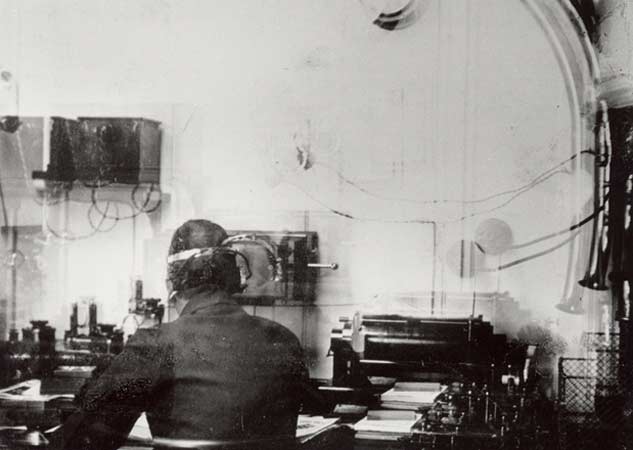
Before SOS was adopted in the early 1900s, however, the standard telegraph distress signal was “CQD” [– · – ·    – – · –    – · ·]. It’s fair to say that that’s hardly the most recognisable or memorable arrangement of dits and dahs on offer, so why pick that?

Well, on their own the letters “CQ” had long been used as a telegraphic distress signal as they sound identical to the French word “sécu”, an abbreviation of sécurité. The Marconi Telegraph Company simply added a letter D to this to make their first recommended distress signal, CQD. But just like SOS, CQD also fell foul of backronymy and before long myths had emerged claimed that it stood for “come quickly—danger!”, or “come quickly—drowning!”

Problems with interpreting the confusing set of letters “CQD” over a poor signal, however, eventually led to calls for a more immediately recognizable distress signal to be adopted, and so SOS was officially introduced in 1906. 


12 May 2016

10 Old Animal Nicknames

If there’s one subject that crops up fairly regularly on the HaggardHawks Twitter feed, it’s animal nicknames. You might have spotted this tweet about penguins—and the explanation behind it—over on Twitter the other day:


But it’s not just the penguins that have it bad: 


So this week over on the HH YouTube channel, we’re looking at the origins and meanings behind 10 Old Animal Nicknames.


One name that didn’t make the final cut here was mouldwarp, an old English word for a mole. The “mould” of mouldwarp has nothing to do with being mouldy (which is actually an entirely unrelated word), but is instead an ancient English word for loose earth or turned-over soil. Its etymological cousins are words like mull, meaning “ashes” or “crumbling dust”, and mool, the soil used to fill graves.

The “warp” of mouldwarp is a verb, meaning “to toss through the air”, or “to sprinkle”. You can also (should you ever need to) warp a door, which means to throw it open quickly; warp your clothes, which means to remove them equally quickly; and warp someone, which means to suddenly drop them in some kind of situation or scenario—so you could warp them into prison, into bankruptcy, or into peril. Presumably after you’ve closed the door and put your clothes on again, of course.

Put together, that means that mouldwarp literally means “earth-thrower”. Which seems like a perfectly reasonable name for a mole—and a much nicer one than this:


24 February 2016

10 Word Origin Stories That Are Completely Untrue

Often when the origin of a word isn’t known—and, just as often, even when it is—an entirely fictitious story emerges that purports to explain where the word in question came from. Typically, these stories provide neater, funnier, cleverer or more straightforward accounts than any real-life word etymology ever could, and so remain enduring popular—despite, however, being completely untrue… 

This week on the HaggardHawks YouTube channel, out #500Words project is turning its attention to debunking 10 of these word origin myths, from backronyms like posh, cabal and golf to a bird supposedly named for his nesting sites (that in fact takes its name from the colour of its behind) and a bird that Napoleon thought was only good for horse food (that in fact takes its name from a flatulent goblin). You have been warned—here are 10 Word Origins Stories That Are Completely Untrue


18 September 2015

Aluminium


This week over on @HaggardHawks, this intriguing little fact popped up: 
As a couple of diligent followers pointed out, yes, we’re only talking about English here. And yes, Q is also entirely absent from all 118 names. And, in case you’re wondering, there are Zs in zinc and zirconium, and Xs in xenon, oxygen and ununhexium (at least until it was renamed livermorium in 2012).

But with the New Scientist Twitter feed now seemingly muscling in on HaggardHawks’ patch (I can sense the geekiest showdown in internet history brewing already), now seems like the perfect time to spread our wings and try a little bit of science ourselves—albeit from a dictionary-orientated viewpoint.

So. All this talk of chemical elements raises an interesting question: why is it aluminium in Britain, and aluminum in America?

There’s an old story that claims a sizeable shipment of aluminium was once imported into the United States from Europe, but when it was recorded in the logbook of whatever port it arrived at, it was misspelled aluminum by the local harbourmaster (or harbormaster, as the case may be). It’s a neat story, but a fairly unrealistic one—would a mistake like this really be enough to alter the spelling of a word in an entire regional variety of English? It’s unlikely. Is this tall-tale probably a complete fabrication? That’s very likely. So what’s the truth?

Well, like a lot of the perceived differences between British and American English (we’re looking at you, zed vs. zee), things here haven’t always been as clear cut as they are today. Brace yourselves, then—here comes the science bit.


Minerals containing aluminium have been known and used since antiquity, but it wasn’t until the late eighteenth century that scientists began to realise that alums—naturally-occurring aluminium minerals, once used to do everything from dressing wounds to dyeing fabrics—all contained some kind of as-yet-undiscovered base metal. This metal was tentatively given the name alumine by the French chemist Guyton de Morveau in 1761, but it wasn’t until 1807 that the great Sir Humphrey Davy used his newly-refined process of electrolysis to try to isolate it from its mineral source.

Although he failed, in writing up his experiments Davy nevertheless discussed this tantalizingly unobtainable metal in English for the first time. As his paper, published in the Royal Society’s Philosophical Transactions the following year, explained:
Had I been so fortunate as to have obtained more certain evidences on this subject, and to have procured the metallic substances I was in search of, I should have proposed for them the names silicium, alumium, zirconium and glucium.
Confusingly, Davy’s list of the metals that eluded him—silicium (now silicon), alumium, zirconium and glucium (now beryllium)—means that the earliest written record we have of in English is neither spelled aluminium nor aluminum. At least that was until 1812, when Davy published a book cataloguing all of his discoveries to date, in which he stated:
This substance [alum] appears to contain a peculiar metal, but as yet Aluminum has not been obtained in a perfectly free state, though alloys of it with other metalline substances have been procured sufficiently distinct to indicate the probable nature of alumina.
This appears to give the American spelling aluminum the edge—but, confusing things even further, there’s this:
The result of this experiment is not wholly decisive as to the existence of what might be called aluminium and glucinium.
This final quote comes from an 1811 review of a lecture given by Davy at the Royal Society in London, two years earlier. Whether Davy himself had used the name aluminium in his lecture or whether it was merely the reviewer’s name of choice is impossible to tell, but one thing is clear: Davy, it seems, couldn’t make his mind up—and he was by no means alone.

While Davy’s original spelling alumium quickly dropped out of use, in the years that followed his experiments the names aluminium and aluminum were used interchangeably in both British and American literature, as well as by Davy himself. And all this confusion wasn’t helped by the fact that, because isolating aluminium was proving so problematic, the metal itself remained astonishingly scarce. In fact, for much of the nineteenth century aluminium was one of the rarest and most expensive metals in the world: in the 1850s, Emperor Napoleon III of France reportedly had a set of cutlery cast from aluminium that he reserved for only his most important guests, while everyone else had to make do merely with gold. The need to mention aluminium in print consequently remained small, and so a standardized form of the word failed to emerge.


Napoleon III: Expensive tastes, exceptional moustache

When Noah Webster published his American Dictionary of the English Language in 1828, however, the only spelling that made his final cut was aluminum; because aluminium was still so rare at the time, it’s possible that Webster’s preference for aluminum was an attempt to ally it more closely to  platinum, another equally rare and equally precious metal. Back in Europe meanwhile, the trend drifted the other way: the Latin-inspired –ium endings common to many of the other recently-discovered elements (including a number of those isolated by Davy’s more successful experiments) led to the spelling aluminium steadily gaining ground among classically-educated scholars in Britain. 

But the breaking point eventually came from the unlikeliest of places: behind a shed in the garden of a family home in northern Ohio.

In the early 1880s, an American chemist and inventor named Charles Martin Hall began experimenting with samples of alumina—solid aluminium oxide—to find a cheaper method of producing pure aluminium. Having constructed his own coal-powered furnace in his family’s garden in Oberlin, Ohio, Hall came up with a process in which alumina is dissolved in a bath of molten cryolite (a pale, quartz-like mineral), which is then electrolysed to produce a pool of pure molten aluminium at the bottom of the tank.

For the first time in history, Hall’s method—which was simultaneously discovered by the French chemist Paul Héroult, and is hence called the Hall-Héroult Process—allowed aluminium to be mass produced; within a matter of years of his process being patented in the United States, pure aluminium was reportedly 200 times cheaper than it had ever been before.

Although Hall used the spelling aluminium when filing the patent for his process, in his advertising and promotional material he opted for Webster’s spelling of aluminum. And as his business grew, and as his technique for producing pure aluminium became more widespread, this meant that aluminum steady established itself as the metal’s preferred spelling in North America, while the classical –ium ending remained in place back in Britain—a distinction that has remained in place ever since.


11 August 2015

Toad-eater

A few days ago, HaggardHawks tweeted this:
And, well, it’s all just a little too bizarre to leave unexplained... 

There’s an old language myth that claims toad-eater comes from the Spanish mi todita (literally “my little everything”), which is itself a diminutive of toda, the Spanish word for “all”. Todita, so the story goes, was once a jocular title used by well-to-do Spaniards for their closest and most servile assistants or aides, who were only too ready to help their masters out in whatever way necessary, hence the definition above. 

It’s a neat theory—but unfortunately it’s completely untrue. In fact, the true history of the toad-eater is much more interesting, much more literal, and considerably more revolting, than all that.

According to the OED, the earliest record we have of a toad-eater comes from a seventeenth-century diarist named John Rous. Rous kept a diary from 1625-43, during which time he was the Anglican vicar of the village of Santon Downham in Suffolk, England. He recorded a predictably eclectic mix of events from both home and abroad, ranging from the coronation of Charles I in 1625 (described as “very joyous to the well-affected, but to the Papists not very welcome”) to reports of a rebellion in Portugal, Spanish ships returning from the West Indies being attacked by Dutch pirates, and, inevitably, growing unrest across England in the lead-up to what would eventually become the Civil War.

Alongside all the headlines, however, Rous’s diary contains several accounts of local goings-on in and around his own parish—including, in 1629, this account of a conversation with a shopkeeper in the nearby village of Laxfield:
I inquired of him if William Utting the toade-eater … did not once keepe [i.e. stay] at Laxfield; he tould me yes, and said he had seen him eate a toade, nay two.
Rous goes on to explain how “the toade-eater” apparently went about his business:
The man in whose house he kept went to him and … tould him that a friend of his would give a groate [4 pence] to see him eate a toade (thus was the way to see it): he accepted the offer, and went and fetche in, from under blocks, ij toads … He swallowed them downe, but presently he cast them up into his hands, and after some pawse, “Nay,” sayeth he, “I will not loose my groate.” So taking that which came up last (saith he), “thou wentst in first before and shalte doe againe.” When both then were downe, his stomach held them, and he had his groate.
Seemingly, Utting somehow managed to swallow two toads whole (after having already vomited them up once), and thereby won himself the princely some of one groat—or just under £2 (or just over $3) in 2015. But how do we get from this fairly disgusting story to the considerably less disgusting meaning in the tweet above?

Well, back in Rous’s day, toads were widely believed to be incredibly poisonous. Not only that, but their warty skin, their fondness of dark, dank places, and their ability to survive both on land and in water led to an association with black magic and witchcraft; even the Devil’s coat of arms is traditionally said to be decorated with “three unclean spirits like frogs”. To even touch a toad was, frankly, to dice with death—and so to be able to eat one was quite some feat.

Can’t you two get a room?

Rous’s toad-eater, and the many more like him who worked the country fairs and fêtes of Georgian England, knew precisely that. They also presumably knew that toads—or, by any rate, the two species of toad native to Great Britain—aren’t really as poisonous as most people believed: they can secrete a foul-tasting “milk” from glands on their skin when disturbed that contains an impressive battery of unpleasant chemicals, but unless you’re an overly-inquisitive dog or cat, or unless you fully digest the toad and its toxic skin (which toad-eaters seldom did, opting instead to either rely or sleight of hand, or else regurgitate them later), the chances are you’ll escape unharmed. 

Nevertheless, if these toad-eaters could convince people that they were somehow immune to the toad’s toxicity—or, better yet, that they had invented some kind of all-curing antidote or medical procedure—then they could not only put on an impressive show, but make an equally impressive profit.

Based on this presumption, by the late 1600s, quack physicians and itinerant charlatans all across England had begun working with toad-eaters to come up with a brand new sting: in front of an enthralled (and presumably somewhat nauseated) crowd, they would have their assistant eat, or pretend to eat, a live toad, just as William Utting had. Although unharmed, the assistant would then promptly collapse to the floor in feigned agony, whereupon the quack could either make a great show of his miraculous healing powers, or else administer some kind of homemade concoction to his assistant, who would consequently stage an immediate and impressive recovery—leaving his quack associate to sell vials of their bogus cure-all to the assembled crowd.

The original seventeenth century “toad-eater”, ultimately, was nothing more than a con artist’s assistant, and it’s from there that the sense of “someone who corroborates a lie” came about. Over time, however, toad-eater came to be used more loosely for any assistant or subordinate, and in particular one who acts obsequiously or servilely and is only too happy to perform any duty required of him—no matter how unpleasant it might be. 


17 March 2015

Limerick


Look up the origin of the word limerick and there’s a good chance you’ll be pointed in the direction of the the English poet Edward Lear. Best known for writing The Owl and The Pussycat, in 1846 Lear published an aptly titled Book of Nonsense:

There was an Old Man who said, “Hush!
I perceive a young bird in this bush!”
When they said—“Is it small?”
He replied—“Not at all!
It is four times as big as the bush!”

Lear’s book contained more than 100 five-line poems just like this one, each of which relayed the consistently bizarre activities of a consistently bizarre parade of people, including “an Old Man of New York” (“who murdered himself with a fork”), “a Young Lady of Ryde” (“whose shoe-strings were seldom untied”), and “an Old Person of Ischia” (“whose conduct grew friskier and friskier”). The collection proved hugely popular, and soon Lear’s quirky five-line poems—with their jaunty rhythm and memorable AABBA rhyme scheme—soon became known as “Learic” verses.

King Lear
Over time the fairly clumsy word Learic drifted ever closer to one of its more easily pronounceable soundalikes—namely Limerick, a city and county in south-western Ireland—and eventually, this was this name that stuck. It’s a neat, if slightly flawed little story. The flaw being that it’s complete rubbish. 

For one thing, Lear didn’t invent the AABBA style of verse. That honour goes to the Italian Dominican friar and scholar Thomas Aquinas, who wrote this in the mid-thirteenth century:

Sit vitiorum meorum evacuatio
Concupiscentae et libidinis exterminatio,
Caritatis et patientiae,
Humilitatis et obedientiae,
Omniumque virtutum augmentatio.

Regrettably, Sit vitiorum meorum evacuatio is not the Latin for “There once was a girl from Nantucket”, as Aquinas’s poem was actually a prayer:

Let it be for the elimination for my sins,
For the expulsion of the desire and lust,
For the increase of charity and patience,
Humility and obedience,
As well as all virtue.

Aquinas didn’t call his poem a limerick of course—but then again, neither did Lear. Another problem with the “Learic” explanation is that, according to the Oxford English Dictionary, the word limerick didn’t appear in print until 1896, eight years after Lear’s death, when the author and artist Aubrey Beardsley wrote a letter to a friend to say that he had been trying “to amuse myself by writing limericks on my troubles”.

The limerick Beardsley came up with, inspired by a painting of St Rose of Lima, is far, FAR too indecent to reprint here. After all, there might be children reading this. But if you’re in the mood to be scandalized, you can read the original (alongside Beardsley’s accompanying illustration) here. Seriously—you have been warned...

But self-defiling Peruvian saints aside (you really want to know what that limerick says now, don’t you?) Beardsley tellingly used the word limerick in his letter without any accompanying explanation or context, suggesting the word was already well known by the time he came to use it. Could Learic have transformed into limerick in such a short period of time? It’s unlikely.

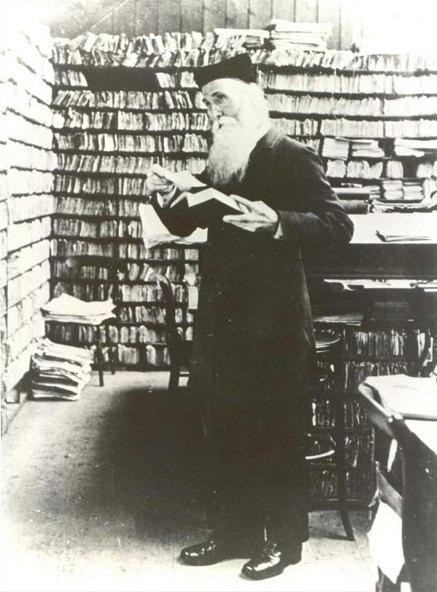
Sir James Murray: OED CEO
So where did the name come from? Well, according to Sir James Murray—founding editor of the OED, no less—the word actually derives from an old drinking song, once popular among troops in the British army, that apparently required all those taking part to make up their own verse, one person after another. Each verse was an improvised five-line poem, following an AABBA rhyme scheme, and was typically witty, nonsensical, satirical, or indecent in nature. And in between all of these spur-of-the-moment verses, the entire group would join together for the chorus, “Will you come up to Limerick?”. 

The game was probably based on an even earlier Irish jig called Will You Come Down To Limerick?, or Kitty Come Down To Limerick, which is still performed—albeit without the indecent lyrics—today. 

28 February 2015

Handicap

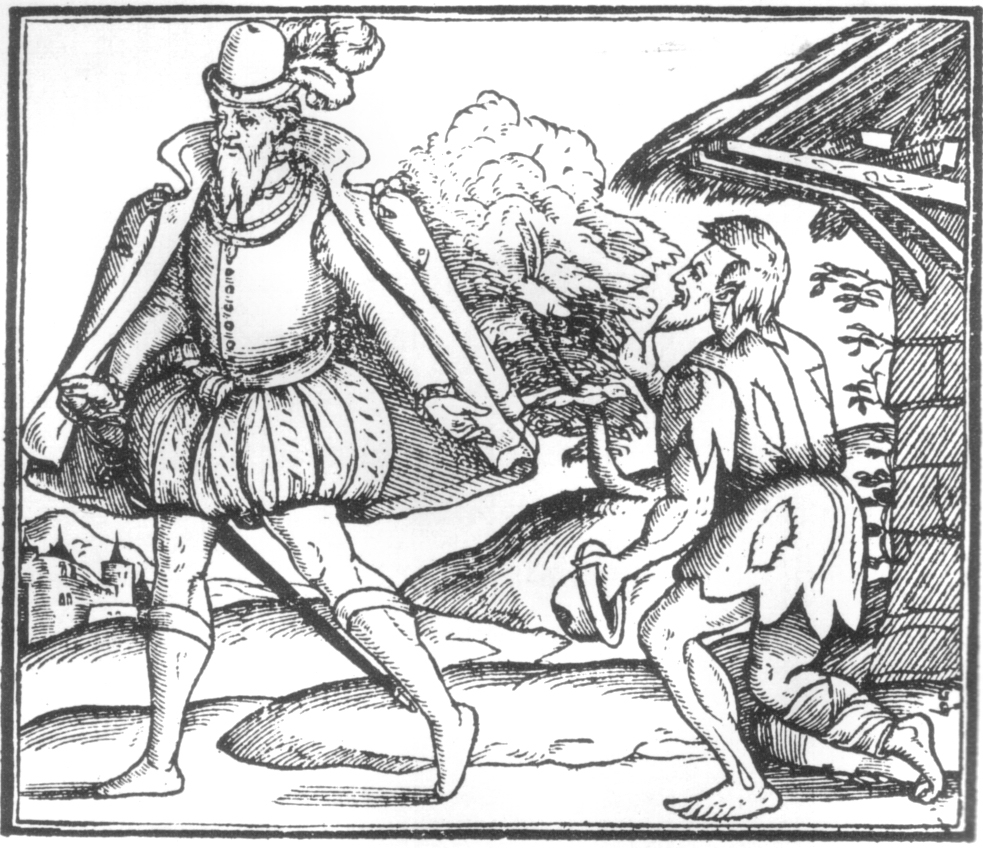
There’s an old story that claims the word handicap derives from wounded soldiers returning home from war with injuries preventing them from returning to their day jobs, and leaving them with no option other than to beg on the streets, their caps literally held in their hands to catch the pennies of passers-by.

Nothing says wealth and sophistication better than a puffball skirt

As ingenious a story as this is, it is of course completely untrue. (Not least because this would have likely given us the word “capihand” rather than handicap.) In fact the true origin of the word lies in an old method of trading goods called “hand-in-cap”, the origins of which date back as far as the fourteenth century at least.

Imagine there are two traders who want to exchange goods, but who are unsure about the relative value of the items they’re looking to swap. In a “hand-in-cap” trade, they would turn to a third party—essentially, a kind of umpire—who would take a look at the items up for exchange and assess their value. If he thought there were any kind of discrepancy between the two, he’d come up with a price (called the “odds”, or the “boot”) that the owner of the cheaper lot would then have to add into the exchange to make it fair.

Next, out comes the cap. The umpire, having given his assessment of the exchange, would then hold out his upturned cap. Both of the traders would take a few loose coins from their pockets, and go to drop them in it. If they agreed to the exchange, they’d drop their money into the cap, but if they didn’t, they’d keep it in their hands.

If both traders agreed, the exchange would go ahead as planned and the umpire would get to keep whatever change had been thrown in the cap as his fee. If neither of the traders agreed, the umpire would get nothing. And if only one agreed, he would get to retrieve his cash from the cap, the umpire would still get nothing, and no trade would go ahead. 

Whatever the outcome, the umpire was always incentivised to come up with as fair exchange as possible, and the trade would only go ahead once everyone was happy. 

So how does an obscure mediaeval trading system lead us to the word handicap as we have it today? Well, it was the idea of assessing the worth of something, just as the umpire did, that led to the idea of “handicap” horse races, in which an adjudicator is brought in to assess the quality of the horses taking part. Stronger horses would be laden down with weights to hamper their speed and make for a fairer race overall. And it’s this sense of something that hampers or encumbers an ordinary activity that we’ve retained in the language today.