_
Showing posts with label Tudor English. Show all posts

23 July 2016

10 Misnomers - 500 Words Ep. 28


Looking back through the HH archives the other day, we happened across this little gem of information:


The Pont Neuf, then, is a misnomer—its name really doesn’t (or, at least, no longer) fits it. 

And from strawberries to the Big Bang Theory, this week on the Haggard Hawks YouTube channel we’re looking at 10 misnomers precisely like this one:


In fact the dictionary is so full of examples like these that cutting our list down to just 10 here was a brutal business. Koala bears, for instance, aren’t bears. Irish moss is a marine algae. Chinese chequers aren’t Chinese. Fireflies aren’t flies. Peanuts aren’t nuts. Thousand Island dressing takes its name from an archipelago of 1,864 islands. And let’s not get started on the Hundred Years War

But as misnomers go, this one will forever be one of the best:


So how the dickens did that happen?

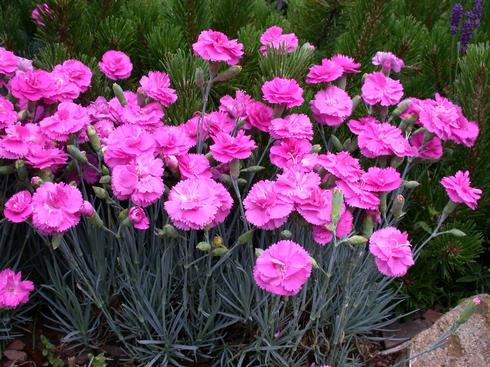
The colour pink as we know it today takes its name from the Dianthus flowers known as “pinks”. They in turn are thought to take their name either from the use of pink as a verb, meaning “to perforate” or “to give an ornate trim”, or else from the even older use of pink as an adjective, meaning “half-closed” or “winking” (which was, at the risk of making this discussion even more complicated, the original meaning of pink-eye). If that’s the case, then pink probably has its roots in Dutch, and might even be a distant relative of blink.

The “pink” in French pink is something of a mystery, but one very plausible theory claims that it derives from an old German word, pinkeln, literally meaning “to pee” (hence its yellowy colour). This murky-yellow shade of pink is actually the oldest recorded use of the word pink in Englishand remains in use in artistic contexts—but nowadays the pale red version has all but taken its place.

Why? Well, no one is entirely sure, but one popular theory is that the use of pink to refer to pale red derives from the popularity of Dianthus flowers in Elizabethan England. According to the story, pinks were one of Queen Elizabeth I’s favourite flowers and so were grown and sold all across England in the sixteenth century. That helped to establish their name, pink, with their pale fuchsia colour, and it’s that colour that the word has remained attached to ever since. 


8 June 2016

10 Colour Names

A few weeks ago, this intriguing factoid popped up on the HH Twitter feed:


It’s an interesting story, which we touched on again in this week’s YouTube video, all to do with the names and etymologies of 10 colours—including the perfect word to describe the perfect colour of a perfectly ripe banana (spoiler alert: it’s not yellow), to the reason why magenta is called magenta, and what connects a Tudor folk dance to a bowl of porridge and to a pile of goose droppings. Truly, it’s an embarrassment of riches.


But back to oranges. Yes, that fact above is completely true: the earliest record of an orange in the English language comes from the early 1400s; the earliest record of something being described as orange in colour, dates from as relatively recently as 1557. But things have been orange coloured since—well, forever. 

Take foxes, for instance. They and their orangey-brown fur have been around ever so slightly longer than the English language (a few hundred thousand years, give or take), which meant that writers in pre-orange-importing times had to get creative when it came to describing what colour they were. As in this line, from Chaucer’s Nun’s Priest’s Tale:

His colour was bitwixe yelow and reed,
And tipped was his tayl and both his eeris 
With blak, unlyk the remenant of hise heeris;
His snowte smal, with glowynge eyen tweye.
 
  
[His colour was between yellow and red,
And tipped was his tail and both his ears
With black, unlike the remainder of his hair;
His snout small, with two glowing eyes.]
With no word for the colour orange, Chaucer—writing in the 1390s—had to resort to describing the fox in terms of yellow and red. And things stayed like that for another century-and-a-half, until a connection between the colour orange and it’s corresponding fruit was made, and the English language finally gained a separate name for the second colour of the rainbow. (Shameless plug #4,229: there’s more on this in the HH factbook, Word Drops.)

So that’s that. But, just when you think English and it’s colours are all sorted, you find out this:


28 April 2016

Penguin


You might have seen this frankly brilliant fact pop up on the @HaggardHawks Twitter feed this week:


Poor old penguins. It can’t be much fun humpling around in sub-zero temperatures avoiding being eaten by seals all day. But then along comes Oliver Goldsmith—whose seven-volume History of the Earth and Animated Nature is the source of that quote—to tell us that eighteenth century sailors called them arse-feet. It’s just not fair really, is it?

Not that it was only the penguins, though. The nickname arse-feet dates back to the sixteenth century, when it was originally another name for the little grebe, and over the centuries it’s been used in reference to a whole host of other species, all of which had one thing in common—the position of their feet noticeably close to their derrieres. Frankly, it gives a whole new meaning to having a boot up the arse. (Shameless plug: there’s more on all this in the HH factbook, Word Drops.)

But if that’s the history of arse-feet, what about penguin?

Well, the word penguin also dates back to the sixteenth century, with the earliest record we know about coming from the logbook of Sir Francis Drake’s Golden Hind. According to Drake’s admiral, Francis Fletcher, as he sailed through the Magellan Strait in 1577: 

[20 August 1577] In these Islands we found great reliefe and plenty of good victualls, for infinite were the number of fowle, which the Welsh men named Pengwin … [The birds] breed and lodge at land, and in the day tyme goe downe to the sea to feed, being soe fatt that they can but goe, and their skins cannot be taken from their bodyes without tearing off the flesh, because of their exceeding fatnes.
Yep, not only did the penguins have to contend with waddling around in sub-zero temperatures and being called arse-feet, but Drake and his crew decided to announce their presence in the Southern Ocean by eating every penguin they could lay their hands on.

But then there’s this:
New found land is in a temperate Climate… There are Sea Guls, Murres, Duckes, wild Geese, and many other kinds of birdes store, too long to write, especially at one Island named Penguin, where wee may driue them on a planke into our ship as many as shall lade her. These birdes are also called Penguins, and cannot flie.
If you know anything about natural history, that quote might strike you as a little odd—penguins are only found in the Southern Hemisphere, so what the dickens were they doing in Newfoundland?

Well, that second quote isn’t from Drake’s logbook, but from a letter, written on 13 November 1778, by a Bristol merchant sailor named Anthony Parkhurst to the famed English geographer Richard Hakluyt. And the penguins Parkhurst is talking about aren’t the same penguins we know today—in fact, the penguins he’s talking about haven’t been seen by anybody for 150 years.

Parkhurst’s Newfoundland penguins were in actual fact great auks—tall, flightless, black-and-white seabirds (whose arses were just as close to their feet) that were once native to much of the North Atlantic. Although the great auk is now extinct (and the story of its slow demise makes for a sobering read, alas) in Drake and Fletcher’s day they were still widely abundant—so abundant, in fact, that as Parkhurst points out they could be driven in huge numbers from “Penguin Island”, along a plank, and onto a ship to provide food for the crew.


Well, this is aukward...

Fletcher’s quote might predate Parkhurst’s by over a year, but it’s thought that the birds Parkhurst wrote about were the original “penguins”—after all, for there to be a place called “Penguin Island” in 1578, we can presume the word penguin was in use in reference to the great auk long before then. Drake’s crew, meanwhile, would have presumably been familiar with the sea birds they knew from back home, and so when they saw remarkably similar flightless black-and-white birds in the equally freezing cold waters of the Southern Ocean in 1577, they either mistook them for the great auks they knew from home, or simply referred to them by the same name, penguin, because they were so similar.

That’s all well and good, of course, but what does the word penguin actually mean? Well, Fletcher’s reference to the birds’ “exceeding fatness” points to one possible theory: that penguin might derive from a Latin word, pinguis, meaning “plump”, “dense”, “fatty”—or pinguid. But a more likely explanation lies with Fletcher’s “Welsh men”. Penguin is thought to derive from pen gwyn, the Welsh for “white head”, and sure enough the great auk had a noticeably bright white patch of plumage between its bill and its eyes. 

So all that means that the original “penguins” weren’t actually penguins, and weren’t from the Antarctic. But their feet were close to their arses...


25 April 2016

#Shakespeare400


You probably noticed a bit of a hoo-hah at the weekend surrounding the 400th deathiversary of someone called William Shakespeare. We marked the day with a video about 10 unsolved Shakespearean terms over on YouTube and a missing words quiz here on the HH blog, while over on Twitter we were ridiculously busy bombarding you with half-hourly tweets about the great man himself all day Saturday. And apologies to all non-Shakespeare fans out there, but we’re going to do the same again now.

There were quite a few calls over on Twitter for us to collate all our Shakespeare facts in one place. And as ever, your wish is our command. So from a Shakespearean shipwreck to a man extinguishing his trousers with beer, here is our #Shakespeare400 list in full:

8 April 2016

Feague


If you’ve been keeping up with our new YouTube series, you might remember possibly the strangest word we’ve ever come across from our Words You Won’t Believe Exist video: the eighteenth century verb feague.


Feague, for those of you who don’t already know (or practise it), means “to put a piece of ginger up a horse’s anus,” with the somewhat predictable outcome of making him appear more lively. If you think that sounds impossibly cruel, then fear not—according to the 1811 edition of Francis Grose’s aptly titled Dictionary of the Vulgar Tongue, it was just as common to replace the ginger with a live eel. A much more sensible idea, I’m sure you’ll agree.

So why on earth—seriously, why? FOR THE LOVE OF GOD WHY?—would anyone want to spend even one microfortnight of their day forcing a piece of ginger up a horse’s arse? 


“You’re going to do WHAT?”

Well, as explained (though, alas, not demonstrated) in our video, if you were selling the horse, then it’s only natural that you would want it to look as frisky and as energetic as possible, to ensure that you got the best price for it. And if there’s one thing guaranteed to make a horse frisky, it’s shoving the spicy root of a herbaceous perennial up its ass. That makes feaguing essentially the 250-year-old equivalent of those tricks estate agents use when prospective buyers stop by. You know how it goes—a bouquet of freshly picked flowers on the table. A fresh pot of coffee brewing in the kitchen. A horse desperately trying to evacuate a live eel from its poop chute in the garden. 

Another fairly cruel means of improving the asking price of your horse incidentally was bishoping, which involved filing down its teeth. Because horse’s teeth continue to grow throughout their lives, shaving them down meant that even a worn out old carthorse could pass as a young colt, and in that sense bishoping was essentially the eighteenth-century equine equivalent of botox. Or six pints of Guinness.


But while bishoping was straightforwardly enough named after a crooked horse salesman named Mr Bishop, feaguing is more of an etymological mystery. 

One theory is that it comes from fake, which besides its more familiar meaning was used in nineteenth century slang to mean “to tamper with something in order to deceive.” That sounds exactly like our horse-enlivening ginger insertion, but the dates don’t match up—in fact, the OED suggests faking in this sense might derive from feaguing, not the other way around.

Another theory is that feague comes from an even earlier sixteenth century word, feak or fyke, meaning “to twitch” or “to be restless.” Twitching and restlessness certainly sounds along the lines of feaguing, but this theory stumbles because by the time feague first began to appear in the language, feak had morphed into a more figurative word, meaning “to be officiously busy,” or “to appear busy, yet accomplish little.” Hey, we’ve all been there.

But then there’s this:

’Slife, this She Devil will ruin me! Alas, madam, she’s merry, she drolls; but come, let’s dance and put these things out of our heads. Come in, Minnim and Crotchet, and fegue your violins away, fa, la, la, la!

That’s a line from The Humorist, a play written in 1671 by the English playwright Thomas Shadwell. Here, “Minnim and Crotchet” are the names of musicians, and when they’re called upon to “fegue their violins,” they’re not being told to put a piece of ginger inside them (nor, for that matter, to put their violins somewhere it’s anatomically unadvisable) but to start playing them, quickly and energetically. 

To feague away was a seventeenth century phrase basically meaning “to set in quick motion,” “to agitate,” or “to work flat out.” It’s thought that it derives from an even earlier sixteenth century word, feg or feagle, meaning “to beat” or “thrash,” which in turn probably comes from an even older German word, fegen, meaning “to clean” or “sweep”, or to busy yourself with housework. 

Feaguing away then seems to be the missing link: it’s easy to see how a word meaning “to busy yourself with housework” could give birth to a phrase meaning “to work quickly,” or “to agitate,” and ultimately “to enliven” or “to make energetic.” The ginger-inserting part, it seems, was just a bit of added spice.