_
Showing posts with label abbreviations. Show all posts

2 August 2016

10 Words For Other Words


If you’ve been keeping up with the HH “500 Words” YouTube series, you’ll so far have found out about 280 of the 500 words we’re going to look at this year. But this week, we’re turning things around. 

So from hypernyms and hyponyms to holonyms and holophrases, this week’s video is looking at 10 Words for Other Words.


(And for more words like those, then be sure to check out the HH article that inspired it over on Mental Floss.)

One word that didn’t make the final cut here, however, is backronym. We’ve discussed some backronyms on YouTube before—mainly in our 10 Word Origins Stories That Are Completely Untrue video—and it’s a myth-busting topic that’s always worth revisiting.

Backronyms are words or phrases that are widely and mistakenly believed purported to be acronyms. Posh, for instance, is often claimed to stand for “port out, starboard home”, a reference to moneyed cruise ship passengers paying for the best views on both the outward and homeward bound parts of their voyage. Golf too is said to stand for “gentlemen only, ladies forbidden” (or ladies do something else that begins with F). And the distress signal SOS is famously claimed to stand for “save our souls”, or “save our ship”.


“It says, ‘you may have been missold PPI.’”

None of these is true, of course. Posh is simply thought to come from an old slang word for cash or loose change. Golf is probably descended from an old Dutch word for a club, colf or kulf (albeit with perhaps some influence of a Scots word for a stout blow to the head). And the letter combination “SOS” was chosen as a distress signal for no other reason than that its rhythmic and symmetrical combination of dots and dashes [· · · – – – · · ·] is so immediately noticeable. Incidentally, precisely the same combination of dots and dashes could also be used to spell the letters “VTB” in Morse code, but the designation SOS was used because of its own symmetry and memorability.


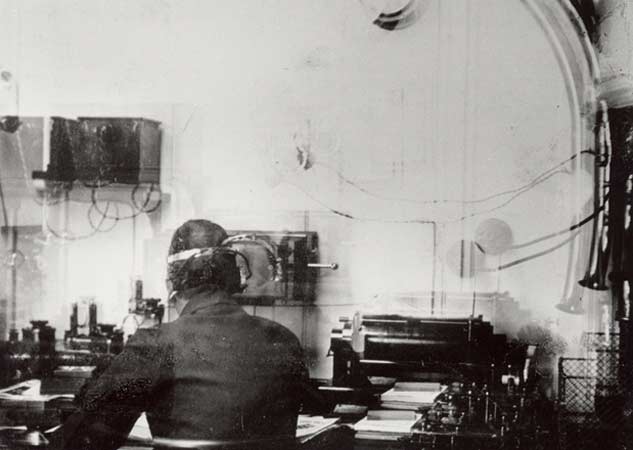
Before SOS was adopted in the early 1900s, however, the standard telegraph distress signal was “CQD” [– · – ·    – – · –    – · ·]. It’s fair to say that that’s hardly the most recognisable or memorable arrangement of dits and dahs on offer, so why pick that?

Well, on their own the letters “CQ” had long been used as a telegraphic distress signal as they sound identical to the French word “sécu”, an abbreviation of sécurité. The Marconi Telegraph Company simply added a letter D to this to make their first recommended distress signal, CQD. But just like SOS, CQD also fell foul of backronymy and before long myths had emerged claimed that it stood for “come quickly—danger!”, or “come quickly—drowning!”

Problems with interpreting the confusing set of letters “CQD” over a poor signal, however, eventually led to calls for a more immediately recognizable distress signal to be adopted, and so SOS was officially introduced in 1906. 


3 June 2016

10 Useful Scrabble Words


Chances are that if you like words, you’ll like Scrabble. It’s just so much fun, isn’t it? Waiting the entire game for the letter Q to come up so you can play jonquils and score 500 points, only for your opponent to get it first and play qi on a triple word square and score 501. So. Much. FUN.

Scrabble-related facts crop up on the HH Twitter feed every so often (and there’s a darn sight more where that came from in the fact book Word Drops):

And it’s Scrabble that’s the focus of this week’s HaggardHawks YouTube video—10 indispensably useful Scrabble words, from aa to oxyphenbutazone. Good luck slipping that one into your next game...


One fiendishly useful Scrabble word that didn’t make the final cut here however is euouae. According to the Guinnes Book of Records, that’s the longest vowel-only word in the English language, and is well worth remembering if you’re looking to ditch a superfluity of vowels midway through a game. That being said, there’s some contention over whether or not euouae should actually be permissible in Scrabble play—not to mention whether or not it’s actually a word or not.

The word euouae (pronounced “you-oo-ee”) is an abbreviation used to memorize the pattern of syllables forming the cadence of a Gregorian chant known as the Gloria Patri, “Glory Be to the Father”. The Gloria Patri ends with the line, “In saecula saeculorum, Amen”, literally meaning “in a century of centuries”, or “forever and ever”. Euouae refers to the pattern of tones corresponding to the last six syllables of this line: saeculorum amen.


So strictly speaking, euouae is an abbreviation of a Latin phrase used as a mnemonic device. Does that make it a “word” in the strictest (Scrabble-playing) sense? It’s a tough call, and it’s certainly true that not every dictionary—and not every Scrabble word-list—has admitted it to its pages thus far. 

But when you’re sat in front of a rack of seven vowels, you’ve really got to take what you can get…


6 June 2015

D-Day

Today marks the seventy-first anniversary of the Normandy Landings—perhaps better known as D-Day. Etymologically, there’s a longstanding myth that the D of D-Day stands for something along the lines of “disembarkation”, “decision”, or “deployment”, or even “Deutschland” or “Doomsday”, but in fact:
So if the D doesn’t standing for anything, why is it there at all?

The fact is that while military operations are being planned, it’s not always clear from the outset when they’ll actually take place. As a result, their future start date—whenever that may be—is simply referred to as “D-Day”, and this title acts as a placeholder until a specific date can be finalized. (Shameless plug: there’s more on this in the new book.) 

If anything, the D of D-Day could be said to derive from the word ‘day’ (indeed the French equivalent is J-Jour, and the exact time an operation takes place is known as H-Hour) but it certainly can’t be said to stand for it.

Not only that, but the term D-Day is also a lot older than most people think. The earliest record we have of its use dates not from the Second World War, but from the First, and an American military order sent out on 7 September 1918:
The First Army will attack at H-Hour on D-Day with the object of forcing the evacuation of St. Mihiel salient.
Saint-Mihiel is a small town in the Meuse department of north-eastern France, that for three days in September 1918 was the site of one of the most important United States military operations of the entire First World War. Under the command of US Army General John Pershing, an enormous body of American Expeditionary troops—including thousands from the newly-formed United States Army Air Service, now the US Air Force—secured a decisive Allied victory over an ill-prepared and chaotic German contingent.

The Battle of Saint-Mihiel lasted from 12-15 September, during which more than half a million US soldiers, alongside 110,000 French troops, fought to secure the strategically significant Saint-Mihiel “salient”—a technical term for a narrow, isolated strip of land projecting from one region into another—in the hope of eventually recapturing the larger French city of Metz. As it happens, the attack on Metz was never realized, and as the German forces continued to crumble the War came to an end just weeks later, on 11 November 1918.

The term D-Day continued to be used intermittently throughout the 1920s and 30s, until it became all but permanently attached to “Operation Neptune”—the military codename of the decisive Normandy Landings—on 6 June 1944.