_
Showing posts with label Elizabeth I. Show all posts

23 July 2016

10 Misnomers - 500 Words Ep. 28


Looking back through the HH archives the other day, we happened across this little gem of information:


The Pont Neuf, then, is a misnomer—its name really doesn’t (or, at least, no longer) fits it. 

And from strawberries to the Big Bang Theory, this week on the Haggard Hawks YouTube channel we’re looking at 10 misnomers precisely like this one:


In fact the dictionary is so full of examples like these that cutting our list down to just 10 here was a brutal business. Koala bears, for instance, aren’t bears. Irish moss is a marine algae. Chinese chequers aren’t Chinese. Fireflies aren’t flies. Peanuts aren’t nuts. Thousand Island dressing takes its name from an archipelago of 1,864 islands. And let’s not get started on the Hundred Years War

But as misnomers go, this one will forever be one of the best:


So how the dickens did that happen?

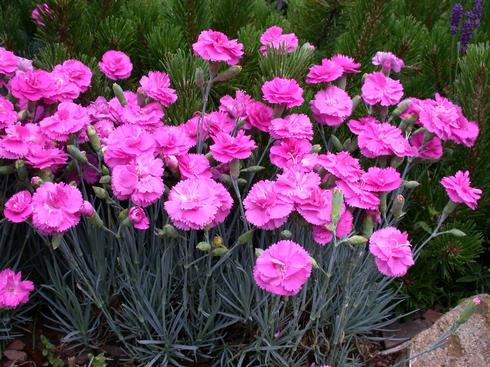
The colour pink as we know it today takes its name from the Dianthus flowers known as “pinks”. They in turn are thought to take their name either from the use of pink as a verb, meaning “to perforate” or “to give an ornate trim”, or else from the even older use of pink as an adjective, meaning “half-closed” or “winking” (which was, at the risk of making this discussion even more complicated, the original meaning of pink-eye). If that’s the case, then pink probably has its roots in Dutch, and might even be a distant relative of blink.

The “pink” in French pink is something of a mystery, but one very plausible theory claims that it derives from an old German word, pinkeln, literally meaning “to pee” (hence its yellowy colour). This murky-yellow shade of pink is actually the oldest recorded use of the word pink in Englishand remains in use in artistic contexts—but nowadays the pale red version has all but taken its place.

Why? Well, no one is entirely sure, but one popular theory is that the use of pink to refer to pale red derives from the popularity of Dianthus flowers in Elizabethan England. According to the story, pinks were one of Queen Elizabeth I’s favourite flowers and so were grown and sold all across England in the sixteenth century. That helped to establish their name, pink, with their pale fuchsia colour, and it’s that colour that the word has remained attached to ever since. 


25 April 2016

#Shakespeare400


You probably noticed a bit of a hoo-hah at the weekend surrounding the 400th deathiversary of someone called William Shakespeare. We marked the day with a video about 10 unsolved Shakespearean terms over on YouTube and a missing words quiz here on the HH blog, while over on Twitter we were ridiculously busy bombarding you with half-hourly tweets about the great man himself all day Saturday. And apologies to all non-Shakespeare fans out there, but we’re going to do the same again now.

There were quite a few calls over on Twitter for us to collate all our Shakespeare facts in one place. And as ever, your wish is our command. So from a Shakespearean shipwreck to a man extinguishing his trousers with beer, here is our #Shakespeare400 list in full:

1 April 2016

Cacafuego


There’s really no nice way of putting this, but the fact is that poop crops up more often than it duly should on this blog. And thanks to a tweet from the HH feed the other day, we’re going back down that way again now:


There’s no denying that cacafuego is a brilliant (and unavoidably usefulword, but is it really genuine? Or, to put it another way:


Wow, imagine if that were true. A plot twist to put M Night Shyamalan to shame. But let’s not get bogged down in piss halfway through a blog about shit, so to speak.

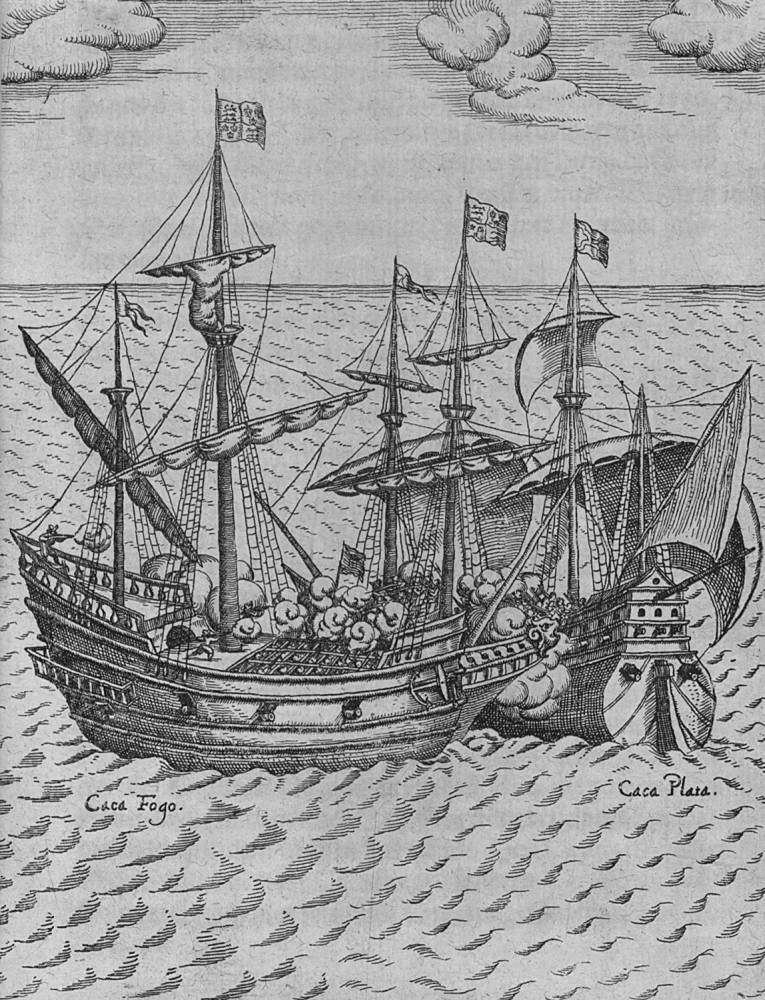
No prizes for guessing that cacafuego was borrowed into English from Spanish, and combines the verb cacar (modern Spanish cagar, “to void excrement”) with fuego, “fire”. It first appeared in English as another word for a blustering braggart in the early 1600s, but we can be fairly sure that it was in use before then thanks to the somewhat unlikely-sounding involvement of Sir Francis Drake.


Sir Francis Drake: looking a little ruff
In 1578, part-way through his circumnavigation of the Earth, Drake rounded Cape Horn and entered the Pacific Ocean, hot on the heels of a 120-tonne Spanish galleon called the Nuestra Señora that he had heard was laden with a rich cargo of silver and jewels from the Spanish colonies. And he wanted it.

Sailing up the Pacific coast of South America, Drake’s Golden Hind caught up with the Nuestra Señora off the coast of Ecuador. Knowing that an attack made under the cover of darkness was his best bet, he slowed his progress by tying some of his ship’s store of wine to the stern and throwing it overboard, so that by the time the Hind reached the Nuestra Señora it was the middle of the night. The Spanish crew were taken by surprise, and after a brief skirmish they surrendered, allowing Drake and his men to take control of the ship.


Drake sailed both the Nuestra Señora and the Golden Hind back to the South American coast to unload her treasure. Knowing just how substantial a prize he had secured for England he treated the Spanish crew well, inviting the officers to join him for a grand banquet and giving every crewmember a parting gift and a letter of safe conduct, ensuring as safe a journey home to Europe as possible. Drake himself continued on his journey, and having completed his circumnavigation arrived back in Plymouth on 26 November 1580.

So where does all the flaming poop come into this? Well, Drake’s captured galleon might have been officially known as the Nuestra Señora de la Concepción, or “Our Lady of the Immaculate Conception”, but to her crew she was the Cacafuego, or “fire-shitter”. That might seem like an odd (and fairly uncomplimentary) nickname for—well, anything really, but just like the Spitfire centuries after her, it was probably intended to be a reference to her impressive weaponry and blazing cannon fire, or else to her speed through the water and her “fiery” temperament. 

And just as spitfire was once a nickname for an irascible, hot-tempered person, in the seventeenth century cacafuego became a byword for a blustering, swaggering braggart—a meaning perhaps influenced by the fact that, despite her impressive armoury, the Cacafuego had proved no match for Drake. 


4 April 2015

Lottery

All this talk of competitions in the last few days got us thinking about lotteries.

The word lottery is a derivative of the Italian lotto adopted into English in the mid-sixteenth century. Lotto literally means a “lot” or portion of something in Italian—and so the entrants in a lottery are literally playing for their “lot” of the prize. 

It’s fair to say that this hardly ranks amongst the most surprising of etymologies, but a little more digging around in the origin of lottery nevertheless unearthed a bizarre tale from English history—and the surprising origin of an everyday expression.

According to the OED, the earliest record of the word lottery in English comes from 1567—when Queen Elizabeth I organised the English-speaking world’s first ever state lottery to raise funds for the “strength of the Realm and towards such other good publick works”. At the time, England was looking to expand its overseas trade, but in order to do that, ships, ports and harbours all needed to be built and upgraded. The cost of the project was understandably immense, but instead of raising taxes Elizabeth decided to organise a national lottery.


Hundreds of advertisements like the one above were printed and distributed across England, explaining that a total of 400,000 tickets were now on sale at the staggering price of ten shillings each—equivalent to more than £80 ($120) today. First prize, however, was a cool £5,000—or almost £1,200,000 ($1.8m) in 2015. 

As the leaflets explained, the prize was to be paid partly in cash, partly in gold and silver plate, and partly in other “sorts of merchaundizes”, including tapestries, wall hangings, and “good linnen cloth”. It was essentially an Elizabethan Prize Is Right, except that as an extra incentive everyone who bought a ticket was also given one week’s immunity from arrest for any crime barring murder, piracy or treason. Bob Barker never gave anybody that. 

Crucially, however, the leaflets also explained that Queen Elizabeth’s lottery was “without any blanckes”—and it’s this that leads us down another etymological path. 

At the time, it was standard practice when holding raffles and tombolas to have two “lot-pots”, one containing all the entrants’ tickets and the other containing a mixture of tickets bearing the prizes and a great deal more blank tickets, with nothing written on them at all. When the time came, one ticket would be drawn from each pot, but if your name was drawn along with a blank ticket you wouldn’t win anything—you would, quite literally, have drawn a blank. Elizabeth’s lottery temptingly did away with these frustrating “blanks”, so that whoever’s ticket was drawn first was guaranteed a prize. 

Over time, the phrase to draw a blank slipped into everyday use in English and gained the more general meaning of “to be unsuccessful” or “to search for something in vain”, and has remained in use in English ever since.

But all of this leaves one question unanswered: who won Elizabeth’s lottery? Sadly, the identity of the £5,000 winner is today unknown, but it’s fair to say that at the time it would have been a truly life changing prize. It makes giving away a few books seem pretty boring really... 


Elizabeth I: Never knowingly underdressed