_
Showing posts with label P. Show all posts

23 July 2016

10 Misnomers - 500 Words Ep. 28


Looking back through the HH archives the other day, we happened across this little gem of information:


The Pont Neuf, then, is a misnomer—its name really doesn’t (or, at least, no longer) fits it. 

And from strawberries to the Big Bang Theory, this week on the Haggard Hawks YouTube channel we’re looking at 10 misnomers precisely like this one:


In fact the dictionary is so full of examples like these that cutting our list down to just 10 here was a brutal business. Koala bears, for instance, aren’t bears. Irish moss is a marine algae. Chinese chequers aren’t Chinese. Fireflies aren’t flies. Peanuts aren’t nuts. Thousand Island dressing takes its name from an archipelago of 1,864 islands. And let’s not get started on the Hundred Years War

But as misnomers go, this one will forever be one of the best:


So how the dickens did that happen?

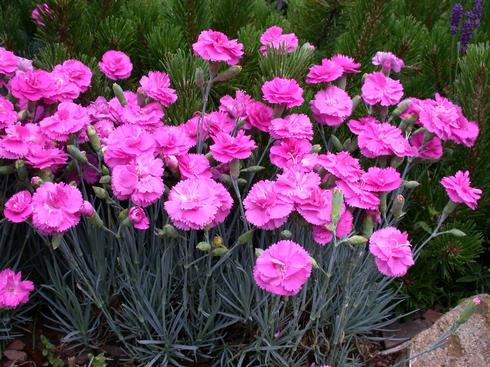
The colour pink as we know it today takes its name from the Dianthus flowers known as “pinks”. They in turn are thought to take their name either from the use of pink as a verb, meaning “to perforate” or “to give an ornate trim”, or else from the even older use of pink as an adjective, meaning “half-closed” or “winking” (which was, at the risk of making this discussion even more complicated, the original meaning of pink-eye). If that’s the case, then pink probably has its roots in Dutch, and might even be a distant relative of blink.

The “pink” in French pink is something of a mystery, but one very plausible theory claims that it derives from an old German word, pinkeln, literally meaning “to pee” (hence its yellowy colour). This murky-yellow shade of pink is actually the oldest recorded use of the word pink in Englishand remains in use in artistic contexts—but nowadays the pale red version has all but taken its place.

Why? Well, no one is entirely sure, but one popular theory is that the use of pink to refer to pale red derives from the popularity of Dianthus flowers in Elizabethan England. According to the story, pinks were one of Queen Elizabeth I’s favourite flowers and so were grown and sold all across England in the sixteenth century. That helped to establish their name, pink, with their pale fuchsia colour, and it’s that colour that the word has remained attached to ever since. 


28 April 2016

Penguin


You might have seen this frankly brilliant fact pop up on the @HaggardHawks Twitter feed this week:


Poor old penguins. It can’t be much fun humpling around in sub-zero temperatures avoiding being eaten by seals all day. But then along comes Oliver Goldsmith—whose seven-volume History of the Earth and Animated Nature is the source of that quote—to tell us that eighteenth century sailors called them arse-feet. It’s just not fair really, is it?

Not that it was only the penguins, though. The nickname arse-feet dates back to the sixteenth century, when it was originally another name for the little grebe, and over the centuries it’s been used in reference to a whole host of other species, all of which had one thing in common—the position of their feet noticeably close to their derrieres. Frankly, it gives a whole new meaning to having a boot up the arse. (Shameless plug: there’s more on all this in the HH factbook, Word Drops.)

But if that’s the history of arse-feet, what about penguin?

Well, the word penguin also dates back to the sixteenth century, with the earliest record we know about coming from the logbook of Sir Francis Drake’s Golden Hind. According to Drake’s admiral, Francis Fletcher, as he sailed through the Magellan Strait in 1577: 

[20 August 1577] In these Islands we found great reliefe and plenty of good victualls, for infinite were the number of fowle, which the Welsh men named Pengwin … [The birds] breed and lodge at land, and in the day tyme goe downe to the sea to feed, being soe fatt that they can but goe, and their skins cannot be taken from their bodyes without tearing off the flesh, because of their exceeding fatnes.
Yep, not only did the penguins have to contend with waddling around in sub-zero temperatures and being called arse-feet, but Drake and his crew decided to announce their presence in the Southern Ocean by eating every penguin they could lay their hands on.

But then there’s this:
New found land is in a temperate Climate… There are Sea Guls, Murres, Duckes, wild Geese, and many other kinds of birdes store, too long to write, especially at one Island named Penguin, where wee may driue them on a planke into our ship as many as shall lade her. These birdes are also called Penguins, and cannot flie.
If you know anything about natural history, that quote might strike you as a little odd—penguins are only found in the Southern Hemisphere, so what the dickens were they doing in Newfoundland?

Well, that second quote isn’t from Drake’s logbook, but from a letter, written on 13 November 1778, by a Bristol merchant sailor named Anthony Parkhurst to the famed English geographer Richard Hakluyt. And the penguins Parkhurst is talking about aren’t the same penguins we know today—in fact, the penguins he’s talking about haven’t been seen by anybody for 150 years.

Parkhurst’s Newfoundland penguins were in actual fact great auks—tall, flightless, black-and-white seabirds (whose arses were just as close to their feet) that were once native to much of the North Atlantic. Although the great auk is now extinct (and the story of its slow demise makes for a sobering read, alas) in Drake and Fletcher’s day they were still widely abundant—so abundant, in fact, that as Parkhurst points out they could be driven in huge numbers from “Penguin Island”, along a plank, and onto a ship to provide food for the crew.


Well, this is aukward...

Fletcher’s quote might predate Parkhurst’s by over a year, but it’s thought that the birds Parkhurst wrote about were the original “penguins”—after all, for there to be a place called “Penguin Island” in 1578, we can presume the word penguin was in use in reference to the great auk long before then. Drake’s crew, meanwhile, would have presumably been familiar with the sea birds they knew from back home, and so when they saw remarkably similar flightless black-and-white birds in the equally freezing cold waters of the Southern Ocean in 1577, they either mistook them for the great auks they knew from home, or simply referred to them by the same name, penguin, because they were so similar.

That’s all well and good, of course, but what does the word penguin actually mean? Well, Fletcher’s reference to the birds’ “exceeding fatness” points to one possible theory: that penguin might derive from a Latin word, pinguis, meaning “plump”, “dense”, “fatty”—or pinguid. But a more likely explanation lies with Fletcher’s “Welsh men”. Penguin is thought to derive from pen gwyn, the Welsh for “white head”, and sure enough the great auk had a noticeably bright white patch of plumage between its bill and its eyes. 

So all that means that the original “penguins” weren’t actually penguins, and weren’t from the Antarctic. But their feet were close to their arses...


12 November 2015

Peripatetic

A pretty perfect P-word popped up on Haggard Hawks the other day:
Which raised this perceptively prompt post-script:
Actually, it’s the other way around. According to the OED (which labels this an “obsolete nonse-word”) the poet Robert Southey coined the word peripateticate in 1793, basing it on the much earlier fifteenth century adjective peripatetic

Nowadays of course you’re most likely to come across the word peripatetic in reference to itinerant or part-time jobs (and in particularly teaching positions) that involve moving from one location to another. But originally it was a noun: spelled with a capital P, a Peripatetic is a follower or advocate of the Ancient Greek philosopher Aristotle. So how the devil are these two meanings connected?

Etymologically, peripatetic brings together two Greek roots: peri, meaning “around” or “about” (as in perimeter and periphery), and pateo, a Greek verb meaning “to walk”, “tread”, or “trample” (which is a distant relative of the word path). So peripatetic literally means “walking around,” and hence peripateticate means “to walk about on foot”.

As for Aristotle, well, if there’s one thing he liked it was a good old cogitate. And what better to do while you’re quietly cogitating to yourself than to wander around a beautiful classical Greek garden, like that at Aristotle’s Lyceum?


The Lyceum: Good for cogitating, less good if it rains
At The Lyceum—the sports-ground-cum-scholarly-gymnasium used as a meeting point and debating area—Aristotle reportedly had a habit of horbgorbling his way around the porticos, corridors, and gardens while he taught his lessons and debated with students, which earned him and his followers the nickname Peripatetikos (literally “given to walking about”). And so when the word Peripatetic first appeared in English in the mid-1400s, it referred exclusively to Aristotelian beliefs and techniques.

Later writers—Southey included—eventually commandeered this word, and used it in more literal senses to mean “a person who wanders”, “an itinerant peddler”, and ultimately “someone who works in various locations”. Not only that, but the plural peripatetics can been used to mean “movements”, “journeys”, or “wanderings”, and Charles Dickens being Charles Dickens, he of course had to go one better and use it in a figurative sense to mean “rambling” or “long-winded”, as he did in Our Mutual Friend in 1865.

But now it’s time to participate in a prompt peripatetication of my own. Aristotle would be pleased as punch. 


12 March 2015

Pencil

Earlier on today, we tweeted this: 
And we thought you might like to know a bit more about it.

It’s easy to presume that pen and pencil are related words, but in fact they’re completely unconnected. Pen comes from the Latin word penna, meaning “feather”, making it an etymological cousin of words like pennant, empennage and even penne pasta. The earliest pens were quills—long birds’ feathers dipped in liquid ink—and it’s from there that the modern pen eventually evolved.

Pencil, on the other hand, comes from penicillus, which was originally the Latin word for artist’s paintbrush. Brushes were used as writing implements long before modern pencils of lead, chalk and eventually graphite were developed in the Middle Ages, and it’s from there that the modern pencil emerged in the late 1500s. 

In turn, the Latin word penicillus is a diminutive of penis—no, honestly—which, besides the obvious, could also be used to mean “tail” in Latin. But how did a word meaning “little tail” also come to mean “paintbrush”? Well, picture a lion’s tail, with a soft tuft of hair at the end of it, and you can probably see the resemblance. Just make sure you’re picturing its tail.


The world’s most dangerous paintbrush

Pedigree

Archery. Tapestry weaving. Playing the lute. Invading England. There were all kinds of things you could do to pass the time in medieval France. 

Another popular pastime was genealogy, the study of heritage and descent. Seemingly, the nobility of the day liked nothing more than drawing elaborate tree diagrams to boast both in print and in picture of their family’s proud French heritage.


Some of these diagrams comprised little more than lists of names connected by a series of hand-drawn strokes and lines. Others, like the one above, were more involved and more detailed. And some were even drawn as actual trees. But no matter how they were put together, there was something about the lines on these genealogical diagrams—long, flat and broad, with shorter vertical strokes linking one generation to the next—that reminded the writers and artists who produced them of birds’ feet. And, in particular, of cranes’ feet.

Today, in modern French, “crane’s feet” is pieds de grues. But back in the eleventh century, it would have been something more like pée de grue. And if that particular snippet of obscure medieval French sounds even slightly familiar, then it’s because pée de grue eventually morphed into our word pedigree—namely, the traceable ancestry or descent of something.


4 March 2015

Poppycock

Something smells a bit iffy about poppycock.

People have been using it to mean “nonsense” or “useless blather” since the early 1800s, when it first began to appear in the colloquial English of the northeast United States. But how did it get there in the first place? 

According to several online sources—including the Merriam-Webster Dictionarypoppycock is a corruption of the Dutch word pappekak, a compound of pap, meaning “soft, chewed up food”, and kak, meaning, well, “cack”. Put together, pappekak, as the Oxford English Dictionary so eloquently explains, means something along the lines of “excrement as soft as porridge”. And on that basis it’s easy to see how the word came to describe something of little value.

Might be worth considering a rebrand...

But as the OED also points out, “no such word appears to be attested in Dutch”. That is to say, pappekak is a linguistic conjecture, a word only presumed to exist by keen etymologists clutching for possible origins of poppycock. So if porridgey poop isn’t quite right (which it isn’t in more ways than one, certainly), then what is?

Bizarrely, a more plausible explanation is that poppycock comes from the Dutch poppekak, meaning “doll excrement”. As odd as that might sound, poppekak is actually a genuine Dutch word attested in an old idiomatic phrase—zo fijn als gemalen poppekak, or “as fine as powdered doll’s excrement”—once used to describe someone showing what the OED calls “excessive religious zeal.”

So we can only presume that Dutch immigrants arriving in America in the early 1800s brought this peculiar expression with them. There, poppekak eventually morphed into poppycock and, perhaps through association with the pulpit-thumping preachers of the time, ultimately came to mean “empty prattle”, “claptrap”, and “nonsense”.