_
Showing posts with label Britain. Show all posts

8 September 2016

10 First Names Used As Words | 500 Words Ep. 35


You may remember this fact from the HH Twitter feed a while back:
...which led to a bit more explanation here on the blog: the name Rebecca was used (in allusion to a story from the Old Testament) for a series of toll gate protests in Wales in the mid nineteenth century. And it’s that story again that kickstarts this week’s YouTube video, which looks at the origins and meanings behind 10 first names that can be used as words in their own right.


One name that didn’t make the final cut here, however, is John.

John has a number of different uses in English, ranging from a toilet to a signature, a cuckolded husband to an unidentified corpse, and from a policeman to a priest, to the client of a prostitute. Blimey, definitions don’t get much more varied than those. 

In the majority of these cases, it’s the sheer commonality (and, therefore, the familiarity or anonymity) of the name John that is the root of the meaning: John was the most popular male first name in American every year since records began in the nineteenth century through to 1924 (and it remained in the top 10 until 1987), while in the UK 5.8 million men have been named John since 1530, and either it or William held the top spot among British men from the mid-1500s right through to the mid-1900s.

The use of john as another name for a person’s signature, however, owes its origin to John Hancock, the Governor of Massachusetts whose sign-manual gloriously outdoes everybody else’s on the Declaration of Independence (and which you can see—or rather, fail to miss—at the top of this page).

As another name for a toilet, meanwhile, john is probably an alteration of jakes or Jacques, a French borrowing that has been used as a euphemism for the smallest room in the house since the fifteenth century at least. And as another name for a detective, john has its roots in the French word for a policeman, gendarme.

The term gendarme (which itself began life as gens d’armes, or “men of arms”) was originally the name of a mounted soldier or infantryman, and it was in this sense that the word was first borrowed into English in the sixteenth century. It wasn’t until the first formal police forces began to be organized in the 1800s that the word gained its modern sense in its native French—and, for that matter, in English, where it quickly morphed into the humorous form johndarm in early Victorian slang:
“John Darm! Who’s he?” “What, don’t you know?! In Paris he is all the go; Like money here,—he’s every thing; A demigod—at least a king! You cannot fight, you cannot drink, Nor have a spree, nor hardly think, For fear you should create a charm, To conjure up the fiend John Darm! 
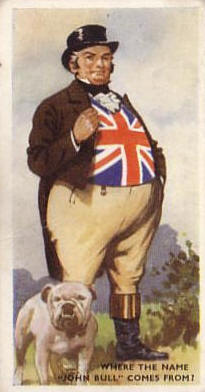
That’s an extract from John Darm, a song first published in 1823 and written by a nineteenth century “writer of verse” named John Ogden, recounting a trip taken by John Bull (the kedge-bellied personification of England and the English) to France. Once there, Bull attends a theatre, gets into a fight with a number of audience members, is arrested by “John Darm”, and thrown into prison. 

The trip ends with the two on better terms, however, with John Bull concluding:

Says I, “To-morrow home I go;
One Frenchman I’d not leave my foe;
John Bull, believe me, meant no harm—
Let’s part in peace—farewell John Darm!”

Ogden’s song (which was apparently a follow up to an earlier comic poem, Mounseer Nongtongpaw, once falsely attributed to Frankenstein author Mary Shelley) provides us with the earliest record of the name john as a nickname for a policeman that we know about. And although the word’s French origins and its connection to the gendarmerie has long since vanished into the haze of language history, the word itself has remained in use to this day.

8 June 2016

10 Colour Names

A few weeks ago, this intriguing factoid popped up on the HH Twitter feed:


It’s an interesting story, which we touched on again in this week’s YouTube video, all to do with the names and etymologies of 10 colours—including the perfect word to describe the perfect colour of a perfectly ripe banana (spoiler alert: it’s not yellow), to the reason why magenta is called magenta, and what connects a Tudor folk dance to a bowl of porridge and to a pile of goose droppings. Truly, it’s an embarrassment of riches.


But back to oranges. Yes, that fact above is completely true: the earliest record of an orange in the English language comes from the early 1400s; the earliest record of something being described as orange in colour, dates from as relatively recently as 1557. But things have been orange coloured since—well, forever. 

Take foxes, for instance. They and their orangey-brown fur have been around ever so slightly longer than the English language (a few hundred thousand years, give or take), which meant that writers in pre-orange-importing times had to get creative when it came to describing what colour they were. As in this line, from Chaucer’s Nun’s Priest’s Tale:

His colour was bitwixe yelow and reed,
And tipped was his tayl and both his eeris 
With blak, unlyk the remenant of hise heeris;
His snowte smal, with glowynge eyen tweye.
 
  
[His colour was between yellow and red,
And tipped was his tail and both his ears
With black, unlike the remainder of his hair;
His snout small, with two glowing eyes.]
With no word for the colour orange, Chaucer—writing in the 1390s—had to resort to describing the fox in terms of yellow and red. And things stayed like that for another century-and-a-half, until a connection between the colour orange and it’s corresponding fruit was made, and the English language finally gained a separate name for the second colour of the rainbow. (Shameless plug #4,229: there’s more on this in the HH factbook, Word Drops.)

So that’s that. But, just when you think English and it’s colours are all sorted, you find out this:


12 May 2016

London


A few weeks ago over on the HaggardHawks YouTube channel, we looked at the origins of 10 city names, covering everywhere from Chicago (“a place to grow wild onions”) to Funafuri, the capital of Tuvalu (“banana-woman”).


But one city that didn’t make the final cut was the largest city in the UK and the second largest city in Europe. The home of Britain’s smallest police station. The world’s oldest underground network. Two of the world’s best universities. And a woman with a pig’s face. Yep, we’re talking about London. 

So why—to resurrect our occasional series of Questions About The Language You Never Even Thought About—is London called “London?”

In terms of etymology (or rather toponymy, to give the study of place names its proper name), London is something of a mystery. Actually, that’s putting it mildly—over the past few hundred years, a number of linguists, scholars and geographers have put their heads together and come up with little more than a mutual discrediting of each other’s theories and one gigantic Buckingham Palace-sized question mark. Why is London called “London”? The short answer at least is that no one really knows.

That’s partly to do with a lack of written evidence. It’s also partly to do with the fact that we’re dealing with exceptionally old words and word elements, the barest bare bones of the language. And partly it’s because London is such a unique name—it really just doesn’t look like any other ancient word or word element that we know about, which makes working out what it might mean an especially tricky business. But just because we don’t have a definitive answer, doesn’t mean that we don’t have any answer at all.

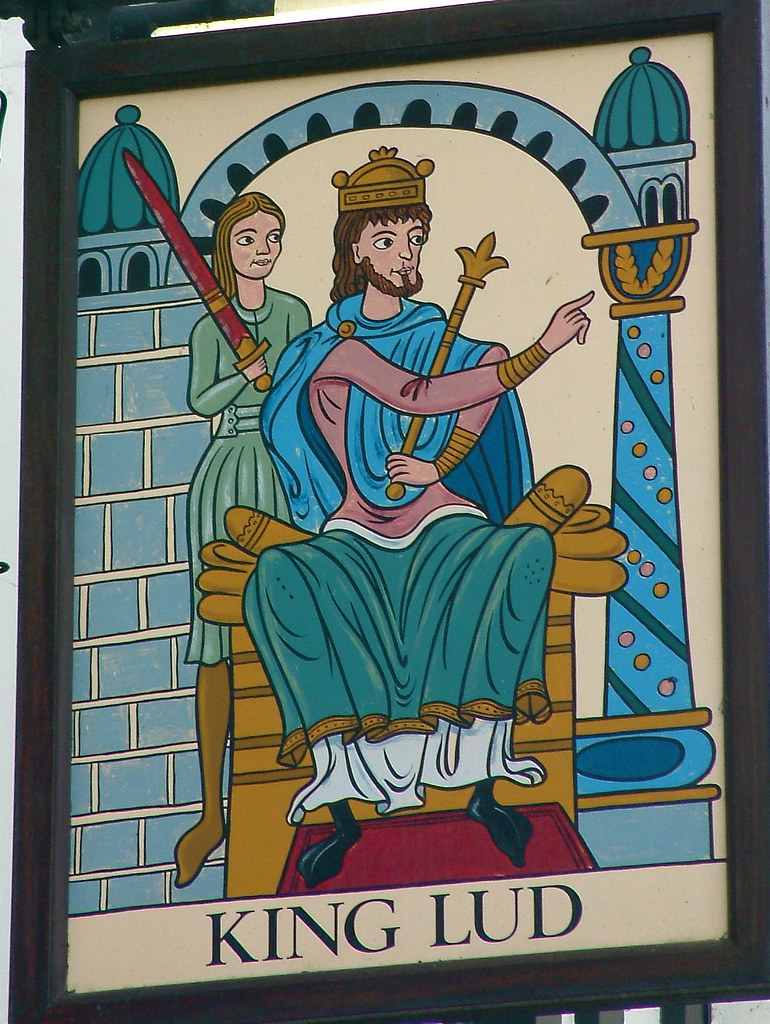
By far the oldest explanation on record is that of the twelfth century Welsh scholar and historian Geoffrey of Monmouth. In his History of the Kings of Britain (c.1135), Monmouth claimed that London was founded by and named in honour of a pre-Roman king of Britain named Lud, who built the city on the site of an even more ancient city called “New Troy” that had been founded by Brutus, grandson of Aeneas, in 1100BC. It’s a nice story alright. It’s just a shame it’s complete rubbish.


Geoffrey of Monmouth probably based his mythical tale of King Lud on that of a legendary figure from Welsh folklore called Lludd Llaw Eraint, or “Lud Silver-Hand”, who is said to have saved Wales from a plague of dragons and a magical giant who had the power to send people to sleep by playing music; to escape the giant’s soporific tunes, Lud dipped his head in a bucket of water. 

Oddly enough, it’s likely that none of that ever actually happened, which makes the idea that London is named after a dragon-slaying monarch with his head in a bucket somewhat implausible. Oh, and linguistically it’s highly unlikely that a word like Lud would morph into something like “Lond”. But still—dragons and giants. That’s probably all the proof you need there.


...and over there is the bucket I put my head in.

As unlikely as Geoffrey of Monmouth’s theory might be, he nevertheless might’ve been onto something by suggesting that London was named after or in honour of someone—but precisely who that “someone” was is another question.

For a while, one popular theory was that London was founded by or named in honour of someone called Londino or Londinos, a hypothetical name supposed to derive from an old Celtic word meaning “wild” or “fierce”. But there’s no historical precedent for that name whatsoever, and (without getting into too much detail) phonologists tend to agree that a Celtic word beginning lond– would give you a modern English word pronounced something like “loaned”, not like the “lund” of London. So despite being more than century old, this theory is now widely discredited. 

Alternatively it might not be the Lond– part of London that’s taken from someone’s name, but rather the –don. It’s been suggested that London might once have been called Lunadin, Luandan or Lan Dain, an ancient name meaning something like “moon temple of the goddess Diana”. Sir Christopher Wren certainly believed that he had unearthed a Roman temple dedicated to Diana when he rebuilt St Paul’s Cathedral, but again the linguistic and historical evidence just isn’t there to back this theory up.


So if it’s not an honorific name, how about a geographical one? 

Another theory is that London was originally llyn din, or llyn dain, both Welsh-inspired names literally meaning “lake-fort” or “pool of the river” respectively (the “lake” and “pool” in question possibly being the widening, deepening part of the river Thames)They’re both plausible theories, but linguistically a word like llyn would be expected to produce a modern name like Lindon-with-an-I, not London-with-an-O. 

And London has almost always been London-with-an-O: the earliest records we have of it are all from ancient Roman Latin documents and inscriptions that refer to it as Londinium or Londinion. The people of London themselves were the Londiniensi—a word taken from a stone tablet dating from around AD 150 that was unearthed at an archaeological dig in Southwark in 2002, and which provides us with the earliest known evidence of the name “London” that we have. And for the Romans to have spelled their “London” with an O (or a U, as they sometimes did) casts doubt on those Welsh-origin theories. 

Instead, we might have to look even further back in time.


Bring on the wall!

In 1998, Professor Richard Coates—then President of the English Place-Name Society—put forward perhaps the most convincing argument for the origin of the word London yet: Plowonida. If you think Plowonida sounds more like something you’d use to treat athlete’s foot rather than the origin of one of the most famous cities in the world, you’ve got a point. But the reason this looks so unfamiliar—and so unlike the modern name “London”—is because we’re dealing with impossibly old pre-Celtic language.

In Coates’ theory, Plowonida would have started life as a hydronym (a river name) referring to the part of the Thames on which London was founded. It combines (brace yourselves, we’re going even further back in time here) two Proto-Indo-European word roots meaning “to flow”, plew– and nejd–, whose descendants are found in river names all across Europe. In combination, it’s theorized that these two elements might have referred to the first noticeably deep, fast-flowing part of the Thames, where it was impossible to ford or cross on horseback.

Knowing what we know about pre-Celtic language, calling the river itself Plowonida would have given the town or village that stood on the banks of the river the name Plowonidonjon, which over centuries of simplification and alteration would have become a Celtic name along the lines of Lūndonjon, then the Latin name Londinium, and ultimately the modern English name “London”If Coates’ theory is correct, that would mean the name “London” could be interpreted as something like “the town at the unfordable part of the river”—which is a considerably better theory that “the town of the king who put his head in a bucket”.


5 May 2016

10 Origins of World Cities

Last year on the HH blog, we talked a bit about how Britain literally means “home of the tattooed people”.


As with a lot of particularly ancient place names like this, that’s just one of a few competing theories of course, nevertheless it’s still the most likely of the bunch suggested so far. 

But as we said back then, it’s easy to forget that when it comes to etymology—or rather, toponymy, which is the branch of linguistics dedicated to place name origins—the names of countries and continents, rivers and seas, towns and cities (and all the other proper nouns in the language for that matter) behave just like “ordinary” words. Put another way, there’s a reason why everywhere is called what it’s called. 

And it’s 10 of those stories and meanings that we’re looking at in this week’s 500 Words video.


25 April 2016

#Shakespeare400


You probably noticed a bit of a hoo-hah at the weekend surrounding the 400th deathiversary of someone called William Shakespeare. We marked the day with a video about 10 unsolved Shakespearean terms over on YouTube and a missing words quiz here on the HH blog, while over on Twitter we were ridiculously busy bombarding you with half-hourly tweets about the great man himself all day Saturday. And apologies to all non-Shakespeare fans out there, but we’re going to do the same again now.

There were quite a few calls over on Twitter for us to collate all our Shakespeare facts in one place. And as ever, your wish is our command. So from a Shakespearean shipwreck to a man extinguishing his trousers with beer, here is our #Shakespeare400 list in full:

10 March 2016

Histriomastix

Late on Monday night (or early on Tuesday morning, depending on where you’re reading this…) a brilliant word quietly crept onto the @HaggardHawks Twitter feed:


…and I thought you might like to know a bit more about it.

A histriomastix is indeed a theatre critic (or a “severe critic of playwrights” as this dictionary defines it), but that’s putting it lightly: the word histriomastix literally means “scourge of actors”, and the suffix –mastix derives from an Ancient Greek word for a horsewhip. There’s a reason why this word has such abrasive connotations, however: it was invented by someone who really, really, hated actors. 

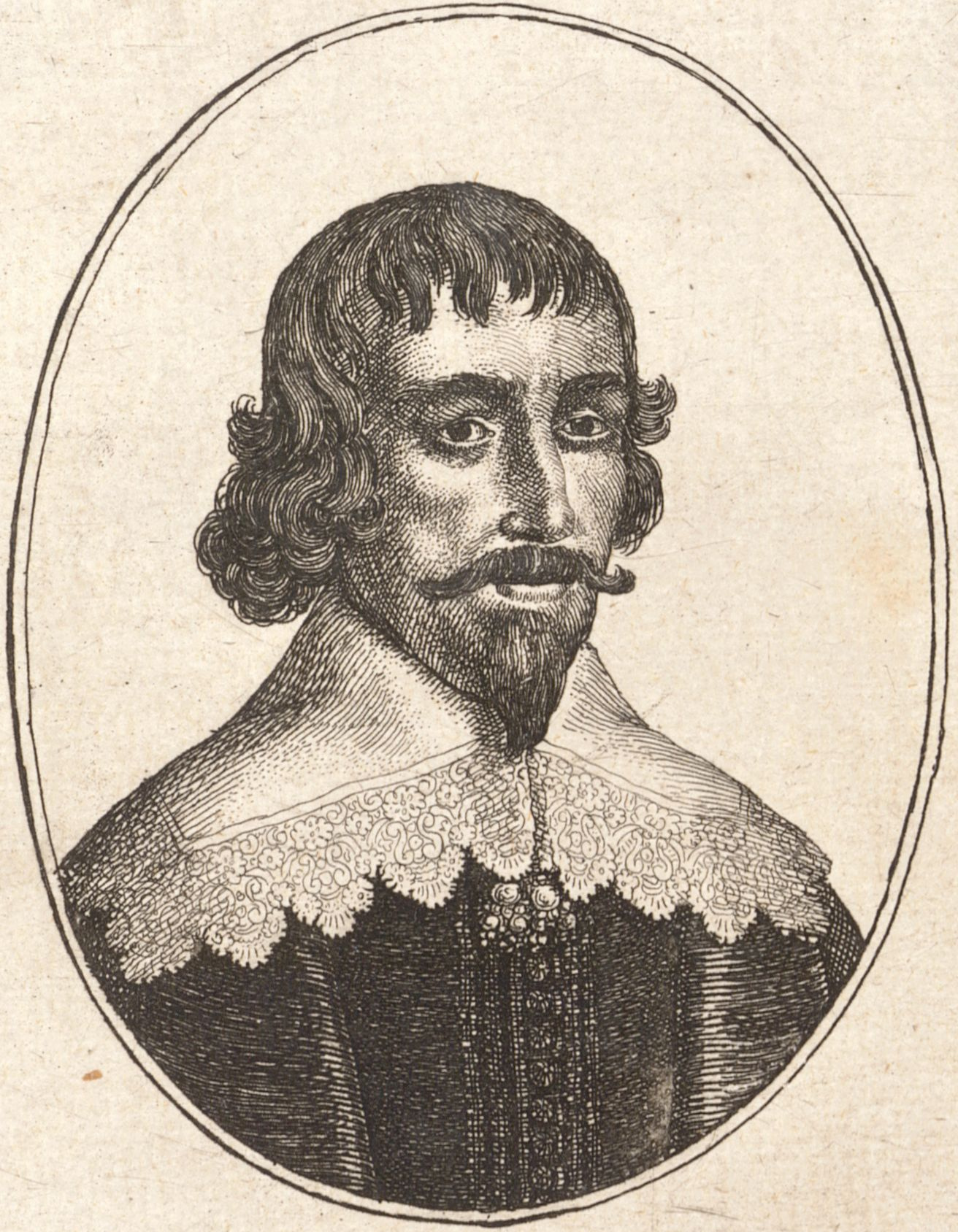
His name was William Prynne, a seventeenth century English lawyer, pamphleteer, and notoriously hard-nosed Puritan. Born in Somerset in 1600 and educated at Oxford, it’s thought that Prynne was first introduced to Puritanism during his training to become a barrister at London’s Lincoln Inn in the mid-1620s; he published his first Puritanical literature the year before he was called to the Bar in 1628.

Over the next four decades, Prynne published more than 200 books and pamphlets, the majority of which outlined his stringent views on everything from Christian redemption (some people were predestined never to be redeemed by Christ’s atonement on the Cross, he believed) to the length of a person’s hair (men’s hair should be kept short, women’s should be kept long, and anything in between was “unseemly and unlawful to Christians”). 

Like all Puritans, he railed against any form of celebration or revelry, and so out went singing, dancing, music, and Christmas, which was dismissed as derivative of the Roman Bacchanalia, a fact that “should cause all pious Christians eternally to abominate [it]”. But as unpopular and uncompromising as Prynne’s opinions were, none landed him in as much trouble as when he turned his reproachful attention to one group in particular: actors.

Prynne saw acting and masquerading as no different from any other kind of revelry, and in 1632 published a rambling 1,000-page essay of unadulterated condemnation to explain his stance. Entitled Histriomastix: The Player’s Scourge or Actor’s Tragedy, in it Prynne attacked almost every facet of the theatre, from the actors themselves (“sinful, heathenish, lewd, ungodly spectacles”, “pernicious corruptions”, “intolerable mischiefs to churches, to republics, to the manners, minds, and souls of men”) to their costumes (“a confluence of all whorish, immodest, lust-provoking attires … sufficient to excite a very hell of noisome lusts in the most mortified actors’ and spectators’ bowels”). 

Shakespeare’s trick of having men and boys dressing as women to play female characters—“representing the persons of lewd notorious strumpets”, according to Prynne—was “undoubtedly sinful, yea, utterly unlawful to Christians”. The plays themselves were written off as “deceitful fictions, which would quickly teach men to cheat, to steal, to play hypocrites and dissemblers”. And the “obscene, lascivious lust-provoking songs and poems” performed in them were “abominable unto Christians” as they risked “enflaming the outrageous lusts” of the audience, who are “transported by them to a Mahometan paradise or ecstasy of uncleanness”. Well, quite.

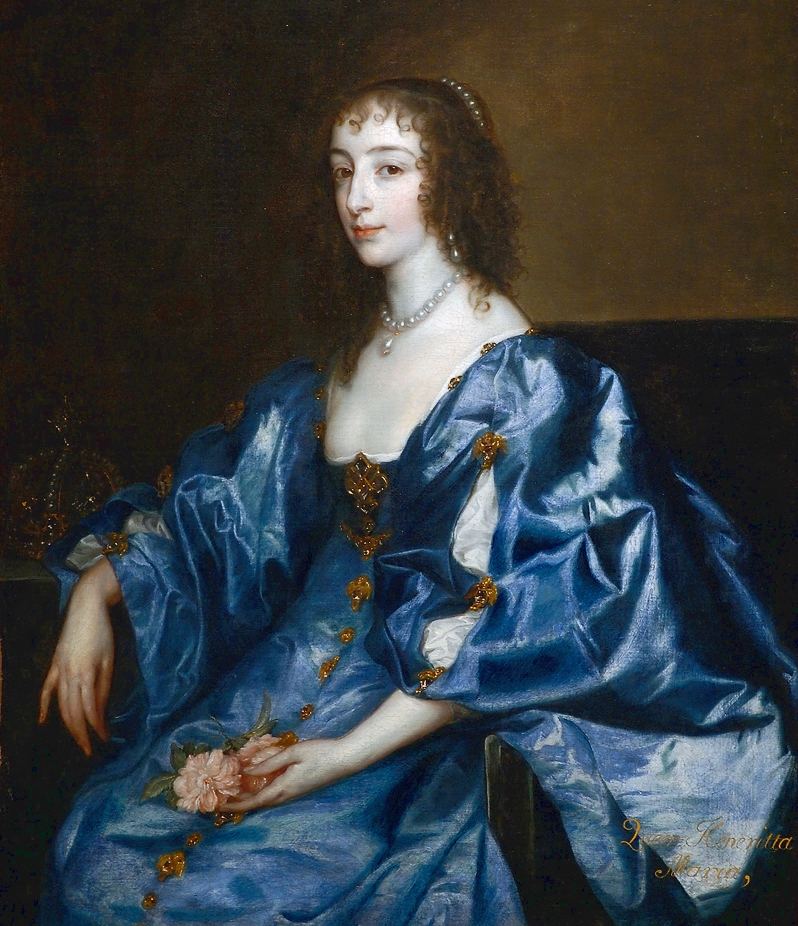
Each to their own, of course, but in this instance there was one small problem with Prynne’s vitriol: alongside her duties as queen consort, the reigning King Charles I’s wife Henrietta Maria liked nothing better than donning something from her confluence of all whorish attires and performing in a good old deceitful fiction. Put another way, she was an actress.

Consequently, Prynne’s Histriomastix soon attracted the attention of the royal household, and his outspoken opinions on the theatre were soon being spun as a less-than-subtle slight on Queen Henrietta herself. The Archbishop of Canterbury, William Laud, and the Attorney-General, William Noy, had Prynne arrested and thrown in the Tower of London, and on 17 February 1634 he was sentenced to life imprisonment, fined an eye-watering £5,000 (equivalent to £400,000 today), stripped of his Oxford degree, and, just when things could scarcely get any worse, ordered to be pilloried and have both his ears cut off. The case understandably caused a sensation—and amid all the brouhaha, the English language earned a new word for a harsh and uncompromising theatrical critic. 

But not even that insane catalogue of punishments was enough to stop Prynne. Thrown back into the Tower, he continued his writing, this time turning his attention away from the theatre and towards the moderate anti-Puritan clergy who had landed him in jail. In 1637, he found himself again in hot water after publishing an attack on the Bishop of Norwich. For a second time he was handed a life sentence, fined another £5,000, pilloried and, for what it was worth, sentenced to have what little remained of his ears again cut off. This time around he was also branded on both sides of his face with the letters “SL”, which according to the courts was to show everyone that he was “seditious libeller” —but Prynne preferred to tell people that it stood for stigmata laudus, or “the marks of praise”. 

Remarkably, Prynne’s luck suddenly changed in 1640, when the Long Parliament—convened by King Charles to fund his on-going battles against rebellion in Scotland—overturned his conviction, released him from the Tower, and reinstated all his legal qualifications (which he soon put to good work prosecuting Archbishop Laud when he was later arrested and tried for treason; Laud was eventually executed in 1645). Prynne also continued his pamphleteering, but as Charles I’s monarchy collapsed and England was thrown into Civil War, his condemnatory attention soon turned to Oliver Cromwell.

Although Cromwell himself was a Puritan, Prynne took exception to his and his supporters’ interpretation of radical Puritanism. He despised those championing the king’s execution, was suspicious of Cromwell’s republican army, and ultimately found himself supporting the Royalist cause. After Cromwell’s downfall and the Restoration of the monarchy in 1660, Prynne’s stance was rewarded by Charles II with a seat in Parliament—and, ironically, the position of Keeper of the Records of the Tower of London. 

He died in 1669, his hatred of actors and his invention of the word histriomastix earning him a place in the dictionary. It’s quite a life story, though—and would make a great play. Kickstarter, anyone?