_
Showing posts with label Dickens. Show all posts

26 August 2016

10 Words Coined By Writers – 500 Words Ep. 33


If you’ve been keeping up with the HH 500 Words YouTube series, you’ll have seen a few literary lists crop up amidst all the weird words and word origins. Back in February, we marked Dickens’ birthday with a list of words derived from his characters. In April, we marked the 400th anniversary of Shakespeare’s death with a list of words he used that no one can quite decipher. 

And this week, we’re heading back down the library with 10 Words Coined By Writers:


One word that could have made this list (and would have done, had we not already addressed it in our video on little-known opposites) is eucatastrophe, a term coined by Lord of the Rings author JRR Tolkien as the opposite of catastrophe: a sudden event of sheer good fortune in the plot of a story that typically hastens its conclusion.


Lewis Carroll’s chortle could have made our top 10 too, had we not already explained its origins in our video on portmanteaux. But one word that failed to make the final cut here and yet still deserves an explanation, is the story behind James Joyce’s little known contribution to particle physics: the quark.

A quark, for those of you not too well versed in this subject (a minority, surely…) is defined by the Oxford English Dictionary as:
Each of a group of subatomic particles regarded, with leptons, as basic constituents of matter, and postulated never to occur in the free state but to be combined in pairs to form mesons and in triplets to form baryons, and to have fractional electric charges, +⅔ and −⅓ that of the proton.
Well, that clears that up. But without going too deeply into the science behind the likes of leptons and quarks, all that concerns us here is that quarks were first postulated by American physicist and Nobel Prize winner Murray Gell-Mann in 1964. Although originally theoretical, Gell-Mann’s model of the subatomic “particle zoo” has since been validated, and ultimately the terminology he used in his original explanation has since become the standard across all physics. But why call them quarks in the first place? Well, why not let the man himself explain. 

In 1978, Gell-Mann wrote to the editor of the OED Supplement to explain the thinking behind his word:
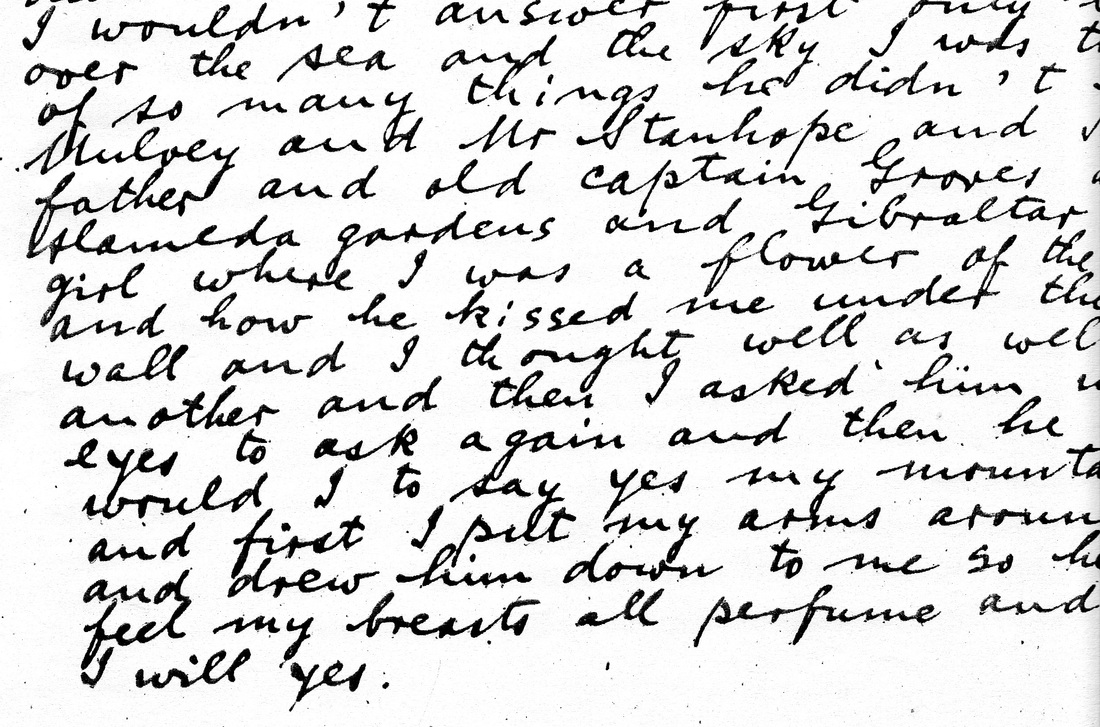
I employed the sound “quork” for several weeks in 1963 before noticing “quark” in Finnegans Wake, which I had perused from time to time since it appeared in 1939 ... I needed an excuse for retaining the pronunciation “quork” despite the occurrence of “Mark”, “bark”, “mark”, and so forth in Finnegans Wake. I found that excuse by supposing that one ingredient of the line “Three quarks for Muster Mark” was a cry of “Three quarts for Mister…” heard in H. C. Earwicker’s pub.
In other words, as Gell-Mann later expounded in his book, The Quark and the Jaguar (1995), he knew the sound of the word he wanted to use before he decided on how it should be spelled; at one time, he explained, quark might even have been spelled “kwork”. But then, purely by chance, he stumbled across the word quark in James Joyce’s enigmatic writing, and the Q spelling stuck. 

One question remains, however—what was James Joyce’s quark in the first place? Well, it’s presumed that the quark used in Finnegans Wake is meant to represent the sound of a seagull, and is used in the novel as a call to buy a round of drinks. Any excuse…


19 June 2016

10 Fossil Words


A while ago on the HH blog, we looked at the history of time immemorial—an expression now used to mean “time beyond memory” or “time out of mind”, but which began life as a legal term in mediaeval England referring to anything that happened before the coronation of Richard I, on 6 July 1189.


And that’s just one of 10 so-called “fossil” words that we’re looking at in this week’s YouTube video.


Fossils, or “fossilized” words, are words—like the immemorial of time immemorial, the shrift of short shrift, and the lurch of left in the lurch—that survive in the language only in one stock phrase or expression.

It’s fair to say that words like these are often hiding in plain sight: the phrases they appear in are so familiar that the obscurity of the word or words they contain slips by unnoticed. So you might not know what a caboodle is (it’s actually an alteration of boedel, an Old Dutch word for a person’s belongings), but you’ll know precisely what someone means when they talk about the whole kit and caboodle. You might not know that a pale is a wooden picket fence, but if someone or something is beyond the pale you’ll know it’s outside the accepted standards. And if we agree to let bygones be bygones, we let go of earlier contentious issues or disagreements. But what exactly is a bygone?

Well, back in the fifteenth century, bygone was an adjective rather than a noun, essentially meaning “former”, “elapsed”, or “that has gone by”—Shakespeare spoke of “the by-gone-day” in A Winter’s Tale in 1611. From there, the word came to describe anything dead or departed, and later obsolete or anachronistic—Dickens spoke of “the byegone old Assembly Rooms” in a letter dated 1869. But for bygones to be plural, it has to be a noun. So when did that happen?

Well, based on the original meaning of the word, back in the mid-sixteenth bygone came to be used not merely to describe something that has gone by or expired, but essentially as a placeholder name for it itself. Soon everything from overdue payments and financial arrears to a criminals’ previous convictions were being labelled bygones, before what we might call the modern meaning of the word—that is, “any past incident or event”—began to emerge in the mid-1600s. According to the OED, the earliest record of the phrase bygones be bygones itself dates from 1648. 


27 April 2016

10 Figures of Speech

Rhetorical terms and words for different figures of speech crop up every now and then on the HaggardHawks Twitter feed, and are without exception brilliant, brilliant words:


But with our YouTube channel now in full swing—incredibly, this is already video number 16!—we thought it might be good to dedicate an entire episode to bringing together a choice set of ten:


Many of the words language experts use to describe tropes like these—including all those included in the video—are based on Greek word roots, which are often brought together in quite inventive and memorable ways. Take one of those from the video, antanaclasis: it refers to a word being used with two different meanings, like “I can’t wait to wait tables all day” (which no one in the service industry has ever said) or “I can’t wait to bar him from the bar” (which absolutely everyone in the service industry has said). Because of this repetitious, back-and-forth arrangement, the word antanaclasis derives from the Greek word for a reflection.

Likewise another term from the video, chiasmus, takes its name from the X-shaped Greek letter chi because it refers to the criss-crossed arrangement of repeated words found in “ask not what your country can do for you, ask what you can do for your country”. 

And elsewhere in the rhetorician’s dictionary we find words like zeugma, which refers to the use of a single word in two different contexts in the same sentence, like “I will take my camera and some photographs”. It derives from the Greek word for an ox’s yoke, in the sense of one word “yoking” its two meanings together in one sentence. A prodiorthosis is a warning that you’re about to deliver bad news, and essentially means “a pre-apology”. Hendiadys is the emphatic use of two separate words rather than a single word and a qualifying adjective or adverb—like “the rain and the weather spoiled our holiday” rather than “the rainy weather”—and as such literally means “one through two”. And prosopopoeia is a form of personification in which an inanimate object is portrayed as talking:


Brilliantly, it literally means “making a face”.


3 March 2016

10 Words From Victorian Slang

If you’ve been following the new @HaggardHawks YouTube channel so far this year, you might remember that a few weeks ago we posted a list of 10 Words Derived From Dickens Characters, just in time for Dickens’ 204th birthday on February 7. And following on from that, this week as part of our #500Words series we’re heading back to the nineteenth century with 10 Words From Victorian Slang.

Nineteenth century slang crops up fairly regularly on the @HaggardHawks Twitter feed (indeed a few choice examples ended up being among the most popular tweets of 2015), but we’ve picked ten of the best and most interesting examples for this week’s video—from blue fire, the perfect theatrical term for something amazing or spectacular, to collieshangie, a word for a noisy argument that’s so Victorian it was even used by Queen Victoria.

Although we’re labelling it a Victorian slang term here (as that’s when it first gained any wider currency, and is often listed as such in slang dictionaries), the word collieshangie itself actually has its origins in eighteenth-century Scotland: it probably began life as culleshnagee or cullyshang, an old Scots dialect word presumed to be a compound of collie (a sheepdog) and shangie, a word used for both a noisy quarrel, and a restraint attached to a dog’s tail to make it behave. Either way, collieshangie can fairly confidently be said to derive from one very angry dog. 


3 February 2016

10 Words Derived From Dickens Characters

This weekend marks the 204th anniversary of the birth of the great English novelist Charles Dickens, who was born in Portsmouth on 7 February 1812.

The Oxford English Dictionary credits Dickens with the earliest record of a total of 226 English words, including such invaluable additions to your vocabulary like saucepanful, abuzz, boredom and cheesiness. That might sound like a lot, but compared to some other literary giants—like Sir Walter Scott (449 words), Ben Jonson (529), John Milton (563), Samuel Taylor Coleridge (613), William Shakespeare (1,504) and, top of the list, Geoffrey Chaucer (1,974)—Dickens is found trailing by quite some margin, sandwiched somewhere between the British Medical Journal (210) and the Daily Telegraph (230)*.

Dickens it seems might not have intentionally invented quite so many words as his fellow luminaries, but in retrospect he didn’t have to—the popularity and familiarity of his wonderfully well-drawn characters have given the English language more than its fair share of words, colourfully describing everyone from sermonizing hypocrites to amateurish, incompetent nurses. So, to mark what would be the great man’s 204th birthday, this week on YouTube, as part of @HaggardHawks’s ongoing #500Words series, here are 10 Words Derived From Dickens Characters.


______________

* Take these figures with a pinch of salt, of course—after all, having the earliest credit in the dictionary does not necessarily mean that an author invented a word; they may just have been the first or most notable figure to use it in print. Nevertheless, statistics like these do provide a general idea of an author’s neologizing inventiveness—just don’t take them at face value...

12 November 2015

Peripatetic

A pretty perfect P-word popped up on Haggard Hawks the other day:
Which raised this perceptively prompt post-script:
Actually, it’s the other way around. According to the OED (which labels this an “obsolete nonse-word”) the poet Robert Southey coined the word peripateticate in 1793, basing it on the much earlier fifteenth century adjective peripatetic

Nowadays of course you’re most likely to come across the word peripatetic in reference to itinerant or part-time jobs (and in particularly teaching positions) that involve moving from one location to another. But originally it was a noun: spelled with a capital P, a Peripatetic is a follower or advocate of the Ancient Greek philosopher Aristotle. So how the devil are these two meanings connected?

Etymologically, peripatetic brings together two Greek roots: peri, meaning “around” or “about” (as in perimeter and periphery), and pateo, a Greek verb meaning “to walk”, “tread”, or “trample” (which is a distant relative of the word path). So peripatetic literally means “walking around,” and hence peripateticate means “to walk about on foot”.

As for Aristotle, well, if there’s one thing he liked it was a good old cogitate. And what better to do while you’re quietly cogitating to yourself than to wander around a beautiful classical Greek garden, like that at Aristotle’s Lyceum?


The Lyceum: Good for cogitating, less good if it rains
At The Lyceum—the sports-ground-cum-scholarly-gymnasium used as a meeting point and debating area—Aristotle reportedly had a habit of horbgorbling his way around the porticos, corridors, and gardens while he taught his lessons and debated with students, which earned him and his followers the nickname Peripatetikos (literally “given to walking about”). And so when the word Peripatetic first appeared in English in the mid-1400s, it referred exclusively to Aristotelian beliefs and techniques.

Later writers—Southey included—eventually commandeered this word, and used it in more literal senses to mean “a person who wanders”, “an itinerant peddler”, and ultimately “someone who works in various locations”. Not only that, but the plural peripatetics can been used to mean “movements”, “journeys”, or “wanderings”, and Charles Dickens being Charles Dickens, he of course had to go one better and use it in a figurative sense to mean “rambling” or “long-winded”, as he did in Our Mutual Friend in 1865.

But now it’s time to participate in a prompt peripatetication of my own. Aristotle would be pleased as punch. 


25 June 2015

Smellfungus

So. The other day, we tweeted this:
It’s another one of those “seriously?” words:
HaggardHawks make something up? The very idea of it. Well, there was that one time, but that was entirely different. No—seriously, this is true. And not only that, but there’s a brilliant story behind it.

Smellfungus dates back to 1768. For once, we can be absolutely positive about the date of a word, because we know precisely who invented it, when, and why. So no need to play etymological Cluedo here—it was Laurence Sterne, in the Sentimental Journey, aided and abetted (albeit indirectly) by Tobias Smollett.

Smollett was born in Dunbartonshire in Scotland in 1721. A prolific and well-respected writer, perhaps best known for his comic novel The Adventures of Peregrine Pickle (1751), Smollett’s output covered almost every literary genre and influenced many later literary giants, including Dickens, George Eliot, and William Thackeray. Even the normally unforthcoming George Orwell wrote a glowing essay calling him “Scotland’s Best Novelist”.

Wait—what?! Had Orwell not read any Sherlock Holmes?! Disgraceful. But, I digress.

In all, Smollett’s vast back catalogue includes plays, a non-fiction History of England, several volumes of poetry, half a dozen novels, and even English translations of the likes of Voltaire and Cervantes. But in 1766, he added one more genre to his literary checklist when he published his Travels Through France And Italy, an account of a two-year journey he and his wife embarked on from spring 1763 to summer 1765. Stopping off in the likes of Paris, Nice, Cannes, Pisa, Sienna and Rome, to many it would have been the trip of a lifetime—but Smollett, by and large, remained unimpressed.

Of Florence’s magnificent San Lorenzo chapel, for instance, he wrote that it “will, in my opinion, remain a monument of ill taste and extravagance”. The Pantheon left him “much disappointed”, because “after all that has been said of it, [it] looks like a huge cockpit.” He dismissed Michelangelo’s The Last Judgement, painted behind the alter in the Sistine Chapel, as “a mere mob, without subordination, keeping or repose”, and likened it to “a number of people talking all at once”. Even the Vatican itself didn’t escape unscathed:
[Its] relicks of pretended saints, ill-proportioned spires and bellfreys, and the nauseous repetition of the figure of the cross (which is in itself a very mean and disagreeable object, only fit for the prisons of condemned criminals) have contributed to introduce a vicious taste into the external architecture, as well as in the internal ornaments of our temples.
Michelangelo’s Last Judgement: Crap, apparently

Unsurprisingly, when Smollett’s Travels were published, his fairly tactless and hypercritical attitude, as well as the disdainful way in which he wrote about many of the people he encountered (“At Brignolles … I was obliged to quarrel with the landlady and threaten to leave her house before she would indulge us with any sort of flesh-meat”), outraged his contemporaries. But his apparent arrogance and peevishness also made him a prime target for satire—which brings us to Laurence Sterne.

Sterne was born in Ireland in 1713, but spent much of his childhood in England. After graduating from Cambridge, he became the Anglican priest of a small church in rural Yorkshire where he remained for more than twenty years, dabbling in freelance writing in his spare time. In 1759, he self-published his first major work—two volumes of a vast satirical novel, The Life and Opinions of Tristram Shandy, Gentleman—and within months was one of the most famous authors in the country.

Flushed with success, Sterne quit the church and moved to London in 1760. But in the dank and dreary capital his already precarious health quickly deteriorated, so he and his wife left on a rejuvenating trip to the Mediterranean. They arrived in Montpellier in 1763—where, the following November, they were joined by Tobias Smollett.

It’s unclear exactly how much time Smollett and Sterne spent together, but a number of meetings and engagements are recorded in the letters they sent back home to England, before Smollett decided Montpellier’s cool mountain climate wasn’t for him and he continued on to Nice in early 1764. It’s also largely unclear how well the two men got along, but given what happened next, we can presume the pair hadn’t always seen eye to eye.

In 1768, in response to Smollett’s Travels, Sterne published his own Sentimental Journey Through France and Italy. Again, Sterne’s Journey was based around his own tour of the continent, but unlike Smollett his travelogue was also a part-fictionalized follow-up to his earlier novel, Tristram Shandy

Narrated by a genial English reverend named Mr Yorick (Sterne’s literary alter ego), the aptly-titled Sentimental Journey comprises a light-hearted series of comic episodes and romantic encounters, as Yorick travels down through France from Calais and on into Italy. Along the way, he meets a whole host of unusual and whimsical characters—including a glum, overcritical zoilist known only as “Smelfungus”:
The learned Smelfungus travelled from Boulogne to Paris, from Paris to Rome, and so on; but he set out with the spleen and jaundice, and every object he pass’d by was discoloured or distorted. He wrote an account of them, but ’twas nothing but the account of his miserable feelings.
Smelfungus—spelled with only one L by Sterne—is clearly a fairly unsubtle and unflattering caricature of Smollett, right down to his acerbic views on the architecture of Rome:
I met Smelfungus in the grand portico of the Pantheon—he was just coming out of it. ’Tis nothing but a huge cockpit, said he.
Unfortunately for Smollett the Sentimental Journey was an enormous success, even surpassing Tristram Shandy both critically and commercially. Nowadays it’s seen as having helped to establish travel writing as a respected literary genre in its own right—while Sterne’s acerbic lampoon of Smollett as “Smelfungus” gave the English language a whole new word for a carping, unhappy critic. 

Sadly, however, Sterne didn’t live to see any of the influence his novel would eventually have: he died just twenty days after its publication. And as for Smollett, well, his reputation as a glum, unimpressed tourist—“the most embittered and cantankerous Englishman that ever travelled abroad”, according to one account—might now be permanently installed in the language, but more recent commentators on his work have been considerably more understanding. They quite rightly point out that his Travels were written at a particularly difficult time in his life: both he and Sterne were suffering from the aftereffects of tuberculosis, and he and his wife were still reeling from the death of their only child, their 15-year-old daughter Elizabeth, the previous year.

Not only that, but modern readers who are aware of Smollett’s nit-picking are often surprised to discover how much admiration and positivity his Travels contain alongside the famously tactless criticisms. Indeed despite Smollett’s reputation, the Continent must have held some kind of attraction to him—having retired to Italy in his late 40s, he died in Livorno in 1771, and is buried in the Old English Cemetery in Tuscany.