_
Showing posts with label Ancient Greece. Show all posts

20 July 2016

10 Words For The People You Know - 500 Words Ep. 27


You might have spotted this tweet over on the HH Twitter feed the other day:


Which, as our friends at UWG English pointed out, is probably not the most appropriate word for that kind of person…:


But what about all the other characters that we know and love and love to hate? What other words are hiding out in the dictionary to describe them?

Well, from unknowledgeable critics to penniless friends, this week’s HH YouTube instalment is looking at 10 words for precisely those kinds of people:


One word that didn’t make the final cut here, however, was zoilist:


Just as (spoiler alert if you haven’t watched the video yet...) the ultracrepidarians of this world take their name from a story from Ancient Greece, the carping zoilists have their roots in a fourth-century BC Greek grammarian and literary critic named Zoilus of Amphipolis

Born in what is now Macedonia c.400 BC, Zoilus was one of the most scathing critics of the Greek poet Homer. Despite being the author of both the Iliad and Odyssey and one of the most well respected writers of Ancient Greece, writing two cornerstones of Western literature was not enough, it seems, to impress Zoilus. 

In a long-lost essay called Homeric Questions, Zoilus challenged Homer’s portrayal of the gods, and called out a number of plot holes and inconsistencies in his works: in the Iliad, for instance, Menelaus dies in battle only to be seemingly revived to witness the death of his son several pages later. Other writers might have fallen victim to Zoilus’ criticizing glare of the years, but it was for these criticisms of Homer’s writing that Zoilus was best known—and for which he deservedly the nickname Homeromastix, the “Scourge of Homer”, among his contemporaries. 

Zoilus’s writings have not survived, and as a result it’s unclear just how harsh his criticism really was. But the enduring popularity of Homer’s works has nevertheless led to history being somewhat less kind to his harshest critic. 

Various historical accounts record that Zoilus died having been thrown from a cliff by an angry mob, stoned to death on the island of Chios, or else tossed alive on top of a funeral pyre in Smyrna. Whether any of these gruesome demises ever truly occurred is debateable, but instead it’s likely that they are all just myths and smears rooted in little more than the unpopularity of Zoilus’s opinions—but it’s precisely those opinions that led to Zoilus the zoilist earning a permanent place in the language. 


2 July 2016

10 Words To Do With Halves - 500 Words Ep. 25

Ah, how the time flies. It seems like only yesterday HaggardHawks embarked on a series of fifty Top 10 YouTube videos, back when David Cameron was Prime Minister and the UK wasn’t being laughed at by everyone, but here we are! How. The time. Flies.

Unbelievably, we’re already at the halfway point in our series, as this week’s video—looking, appropriately enough, at the meanings and origins of 10 Words To Do With Halves—is the 25th of the 50 in the series. Ladies and gentlemen, we’re officially embarking on the home stretch...


Out of all the halves in the video, however, one word that nearly-but-didn’t make the final cut was Laodicean, a synonym (as Thomas Hardy fans will doubtless know) for half-heartedness or apathy, or else a byword for someone who is indifferent or uninterested in important matters.

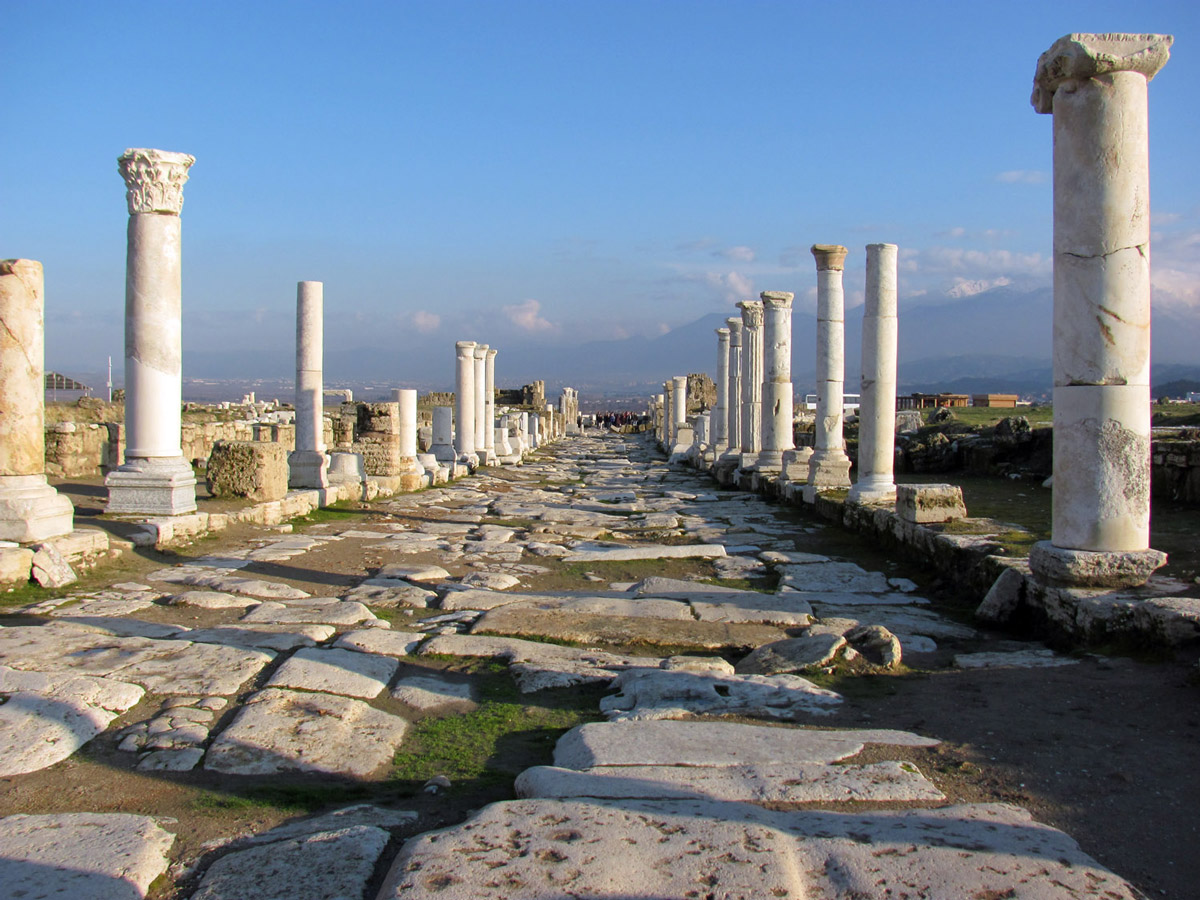
The word derives from Laodicea, a city and region of Ancient Greece now located in modern-day Turkey, whose inhabitants were notorious for their religious indifference. In the Book of Revelation, the Laodiceans were one of seven ancient peoples or Christian churches—alongside those of Ephesus, Smyrna, Pergamum, Thyateira, Sardis and Philadelphia (no, not that Philadelphia)—to whom messages were to be sent to stir them from their apathy. And in his letter to the Laodiceans, the author of the Book of Revelation John of Patmos accused them of being “neither cold not hot.”


“I would thou wert cold or hot,” he exclaimed, “so, then because thou are lukewarm, and neither hot nor cold, I will spew thee out of my mouth”. Good old John of Patmos, such a way with words.

It’s this image of someone or something being “neither cold not hot” in their opinions that led to the adjective Loadicean appearing in English in the early 1600s, as another word for a lukewarm disinterest, or apathy regarding important issues like politics and religion. Likewise, Laodiceanism is another word for unconcern or indifference—one thing John of Patmos certainly couldn’t be accused of. 


10 February 2016

Uranus

Before we begin, let’s get a few things out of the way. The noxious atmosphere around Uranus could kill a man. Uranus has a circumference of 100,000 miles. Scientists are looking at a black hole near Uranus. What are those two circular objects either side of Uranus? Ass-teroids, of course. If you got through that without laughing, then we’re good to go.

So. The other day, one of those stop-you-in-your-tracks facts cropped up on the @HaggardHawks Twitter feed:


But this really is too bizarre a fact to leave unexplained:


…so your wish is my command.

The discovery of Uranus (stop sniggering, you at the back) is credited to the German-born English astronomer William Herschel in 1781. Although it had been observed by scientists and astronomers for centuries, Uranus had always been mistaken for a star, and right up to Herschel’s discovery it was still being classed as 34 Tauri, a minor star in the constellation Taurus. Even Herschel himself initially believed he had spotted a comet rather than a planet, after noting that an object he had been looking at from his observatory in Bath had changed position in the sky over a series of nights.

Herschel announced his discovery in March 1781. As word of his new “comet” spread, astronomers all across Europe began to take note and observe it themselves. Soon, enough data had been compiled to plot its apparent trajectory—which, to everyone’s surprise, appeared to be an almost perfect circular orbit around the Sun. Herschel’s discovery was no comet.

Full colour photo of Uranus. Stop laughing.

By 1783, it had become universally acknowledged that Herschel’s discovery must surely be a planet—moreover, it was the first planet ever discovered by telescope, and the first new planet added to our Solar System in modern history. It was a truly monumental discovery, and one that earned Herschel an annual salary of £200 (equivalent to £27,000/$40,000 today) from King George III (on the condition that he move his observatory from Bath to Windsor, to be closer to the royal household), as well as the never-to-be-repeated title of Court Astronomer to The King.

But with the existence of a new planet confirmed, a pressing question soon emerged: what on Earth should it be called?

The Astronomer Royal, Nevil Maskelyne, wrote to Herschel asking him “to do the astronomical world the favour” and “give a name to your planet,” which, he continued, “is entirely your own, [and] which we are so much obliged to you for the discovery of.” In honour of his new financial patron, Herschel plumped for the only name he saw fit: Georgium Sidus, or “George’s Star.” He wrote to the Royal Society:

In the fabulous ages of ancient times the appellations of Mercury, Venus, Mars, Jupiter and Saturn were given to the Planets, as being the names of their principal heroes and divinities… The first consideration of any particular event, or remarkable incident, seems to be its chronology: if in any future age it should be asked, when this last-found Planet was discovered? It would be a very satisfactory answer to say, “In the reign of King George the Third”.

The seventh planet from the Sun, ultimately, was to be called George. But the response to Herschel’s suggestion was far from encouraging.

Outside of Europe, astronomers were wary of using a such an explicitly “British” name, especially given that it had taken an international collaboration to prove its status as a planet. Consequently, despite Maskelyne specifying that Herschel’s discovery and his choice of name were “entirely his own”, George failed to gain any widespread use or permanency. The name Georgium Sidus effectively became a placeholder, and over the years that followed astronomers across Europe began utilising and pitching their own choices and suggestions.

One popular choice was simply Herschel, a name honouring its discoverer. The Swedish astronomer Erik Prosperin ironically opted for Neptune (now the name of the eighth planet, discovered in 1846). But eventually a clear choice emerged—namely the German astronomer Johann Elert Bode’s suggestion, Uranus.

Bode had been one of the European astronomers who had calculated Uranus’ orbit, lending weight to the idea that Herschel’s discovery was a planet not a star. He suggested the name Uranus as it not only maintained the classical and mythological theme set out by the other six planets, but fittingly Uranus was the Greek god of the sky. Moreover, just as Saturn had been the father of Jupiter, Uranus was the father of Saturn, thereby creating a mythological family tree in the heavens.

Bose’s choice quickly gained momentum, and was reinforced by the German chemist Martin Klaproth in 1789, who named his famous discovery—the chemical element uranium—in support of Bose’s suggestion.

Out of deference to Herschel, however, it took another 60 years for the name Uranus to be universally acknowledged by the scientific community, when, in 1850, the official astronomical almanac published by the Royal Greenwich Observatory in London finally abandoned Herschel’s Georgium Sidus and in favour of Uranus.


21 January 2016

Lek


If you’ve been keeping up with the new HH YouTube channel, chances are you’ve already seen the second video in our new #500Words project, which went online yesterday. Looking at the meanings and origins of 10 Words Spelled Q Without U, this time around one of the words included the qindarka or qintar, the name of a monetary unit used in Albanian:


Qindarka itself essentially means “a little part of 100” in Albanian—which, let’s face it, isn’t the most original name for a coin equal to 1 one-hundredth of something. But it’s what the qindarka is 1/100th of that’s more interesting. 

As mentioned in the video, the principal unit of currency in Albania is the Albanian lek, which takes its name from Alexander the Great. According to the history books, Alexander was born in Pella in Macedon (now in modern-day Greece) in 356BC. 


But in Albania, there’s an uncorroborated (and somewhat controversial) theory that Alexander—along with the likes of Aristotle, Pyrrhus, and Alexander’s father Phillip II—was born in Illyria, the region of ancient Europe that corresponds today to the Balkans peninsula and modern-day Albania. Was Alexander the Great really Albanian? Well, it’s doubtful. But the theory is nevertheless commemorated by the name of the Albanian currency.

But what about the rest of the world? Are there any more etymological gems jangling around the pockets and wallets of other countries?

Admittedly, the vast majority of world currencies take their names from fairly bland or predictable roots. Many refer to weights and measures, like the pound, which once referred to the value of one pound of silver, and the lira, which in turn takes its name from libra, the Latin word for “pound”. 


Likewise, both shekel and peso literally mean “weight” in Hebrew and Spanish (peso derives from the same etymological root as pendant, in the sense of something being weighed on a balance or set of scales), while more obscure entries in this category include the Kazakhstani tenge (which literally means “a set of scales”), and the Mauritanian ouguiya, which takes its name via French and Arabic from the Latin word for “ounce”, uncia. The Ukrainian hryvnia too is named for an ancient local unit of weight once used to measure precious metals.

Like the qindarka, other currencies have straightforward numerical roots, referring to fractions or portions of something larger. Dinar, the name of the main unit of currency in 11 different countries, is derived from the Latin denarius, literally “a tenth part.” Similarly, the cent, centime, and centesimo all have names referring to a fraction of 1/100th.

Some names are even less inspired: the Afghanistan afghani is divided into 100 smaller units called pul, which literally means “money”. The taka of Bangladesh takes its name from a local Bangla word meaning “cash”. The Vietnamese đồng and the manat of Azerbaijan and Turkmenistan also just mean “money”, while the ngultrum of Bhutan has a Dzongkha name literally meaning “money pieces.” The Japanese yen, Korean won and Chinese yuan all mean “round”, while the yuan has also been known as the renmimbi since 1949—which literally means “the people’s currency”

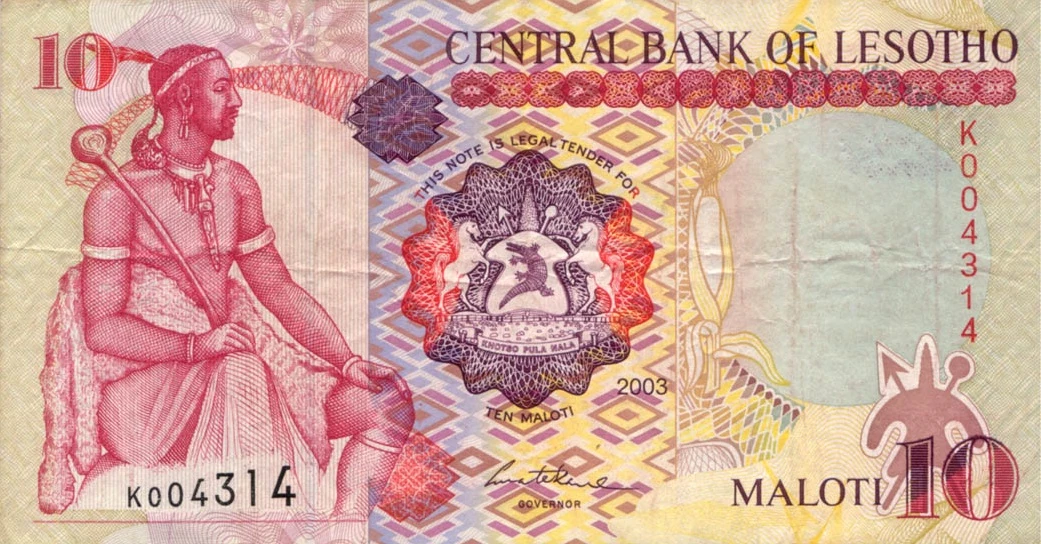
More imaginatively, some monetary units have geographical names, and refer either to their home country or to some notable feature therein. The loti of Lesotho, for instance, is named after the country’s Maloti Mountains. The Eritrean nakfa is named for the town of Nakfa that served as a based during the country’s fight for independence. And the kwanza, the unit of currency in four African countries, is thought to take its name from the River Cuanza that flows through Angola. 


By far the most famous geographical name, however, is the dollar, which traces its name back to the tiny Bohemian spa town of Joachimstal, now in the Czech Republic: the high-quality silver that was mined there was once used to make coins known as joachimstaler, which quickly shorted to thaler, and finally ended up in the New World as dollar via the colonial Dutch and Spanish. Incidentally, because these early coins were originally quite weighty, the colonial dollar was nicknamed the gourde in the 18th century slang, a name derived from a French word meaning “stupid” or “dull”—it lives on in the name of the currency of Haiti.

Like the dollar, some currencies take their names from their component metal or their means of manufacture. Ruble is thought to come from a Russian word meaning “to chop” or “hew,” possibly because the coins once had to be hewn from solid blocks of metal. The piaster or piastre—1/100th of an Egyptian, Lebanese, Sudanese or Syrian pound—takes its name from an Italian word, piastra, for a thin piece of metal. The Indian rupee, Indonesian rupiah, and Ethiopian birr all have names meaning “silver,” while the Kyrgyzstani and Uzbekistani som take their name from local words meaning “pure”, as in “pure gold”.

Stamps of royal authority are behind the names of the Czech koruna and all the various Scandinavian krones and krónas, all of which take their name from local words meaning “crown”. The Brazilian real, the Mauritanian ariary, and the rial of Iran, Yemen and Oman likewise mean “royal.”

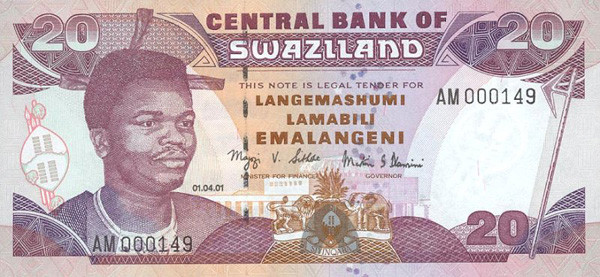
Many of the world’s krones and rials are stamped with crowns, and likewise some currencies take their names from the images that once decorated them. As well as the term sterling (literally a “little star”, a mark once stamped on pound-sterling coins) the Russian kopeck once bore a picture of a mounted knight, and derives from a Russian word meaning “lance”. The Hungarian forint (as well as the English and Dutch florin) derives from a coin once minted in Tuscany that was marked with a lily, and so was named for the Italian word for “little flower,” fiorino. The Bulagrian lev similarly means “lion,” and the Portuguese escudo (now replaced by the euro) means “shield”. Perhaps best of all in this category, however, is the Swaziland lilangeni, whose name simply means “a member of the royal family”.


Another currency replaced by the euro was the Greek drachma, whose name literally meant “handful”, or “as much as can be seized in one hand”. The dirham, used in both Morocco and the United Arab Emirates, is its etymological descendant. Along a similar path, the Georgian lari has a name literally meaning “hoard.” Former currencies are also name-checked in Ghana and the Pacific nation of Vanuatu, whose monetary units—the Ghanaian cedi and the Vanuatu vatu—mean “cowry shell” and “stone” respectively, both referring to items once used locally as money. (The cedi, incidentally, is divided into 100 pesewas, which literally means “a penny’s worth of gold dust”.) Similarly, the Guatemalan quetzal takes its name from the fact that the feathers of the tropical quetzal bird were also once so prized that they were used locally as money.

The lek also isn’t the only currency named in honour of someone. The Costa Rican colón, for instance, is named after Christopher Columbus. The Honduran lempira is said to take its name from a native local chief. The Tajikistani somoni is named in honour of the country’s founder, Ismail Samani, and the Venezuelan bolivar is named after Simón Bolívar.


Lastly, amongst the best of the world’s currency etymologies, are the dobra of São Tomé, which takes its name from a Portuguese word meaning “to fold” (which gives a whole new meaning to “folding money”), and the Zambian kwacha, which has a local Nyanja name meaning “dawn”—a reference to a former slogan of Zambian nationalism that promised a “new dawn of freedom.” In turn, it’s divided into 100 subunits called ngwee, which literally means “bright”.

Best of all however, is the Botswana pula, whose name was chosen by a public contest and literally means “rain” in the local Setswana language—in a country in which the Kalahari Desert accounts for 70% of the available land, rain, it seems, is just as valuable as money.


17 November 2015

Hyperborean

An intriguing word cropped up on @HaggardHawks the other day:


Which raised this equally intriguing question:

And that equally intriguing question has an equally intriguing answer.

Etymologically, the hyper– of hyperborean is the Greek word for “above” or “over”, as in words like hyperbole, hyperglycaemia and hyperventilate. The borean part simply means “northern” (as in aurora borealis), and it derives from the name of Boreas, the god of the north wind in Greek mythology.


To the Ancient Greeks, consequently, the adjective hyperborean referred to anyone or anything who lived or came from the land “beyond the north wind”—but we can be even more specific than that.

According to Homer’s Iliad, the god Boreas inhabited Thrace, a region in the far northeast of Greece on the Black Sea that today also covers parts of modern-day Bulgaria and Turkey. And beyond Thrace supposedly lay a legendary utopian land known to the Greeks as Hyperborea. There, there was no disease nor famine, and no one ever aged or fell ill. It was a land of utmost perfection, where the sun shone perpetually, twenty-four hours a day. (And where, presumably, everyone had very thick curtains.)

The fact that Hyperborea was a land of perpetual sunlight has led some classicists to believe that it might have been at least in part inspired by stories of the Arctic summer, but it is just as likely that it was a purely fictional invention and nothing more. The Greek poet Pindar, for instance, once wrote that Hyperborea could be reached “neither by ship nor by foot”.

Whether based on a real place or not, it was this mythical land that was the original “extreme north”: the adjective hyperborean originally referred to anyone who dwelt in or came from Hyperborea, and hence came from “above” or “beyond” Thrace. Over time, however, the use of the word became less restrictive and more figurative, and since the early 1600s writers in English have been using it more loosely to refer to anything or anyone of the far north.