_
Showing posts with label Ireland. Show all posts

26 August 2016

10 Words Coined By Writers – 500 Words Ep. 33


If you’ve been keeping up with the HH 500 Words YouTube series, you’ll have seen a few literary lists crop up amidst all the weird words and word origins. Back in February, we marked Dickens’ birthday with a list of words derived from his characters. In April, we marked the 400th anniversary of Shakespeare’s death with a list of words he used that no one can quite decipher. 

And this week, we’re heading back down the library with 10 Words Coined By Writers:


One word that could have made this list (and would have done, had we not already addressed it in our video on little-known opposites) is eucatastrophe, a term coined by Lord of the Rings author JRR Tolkien as the opposite of catastrophe: a sudden event of sheer good fortune in the plot of a story that typically hastens its conclusion.


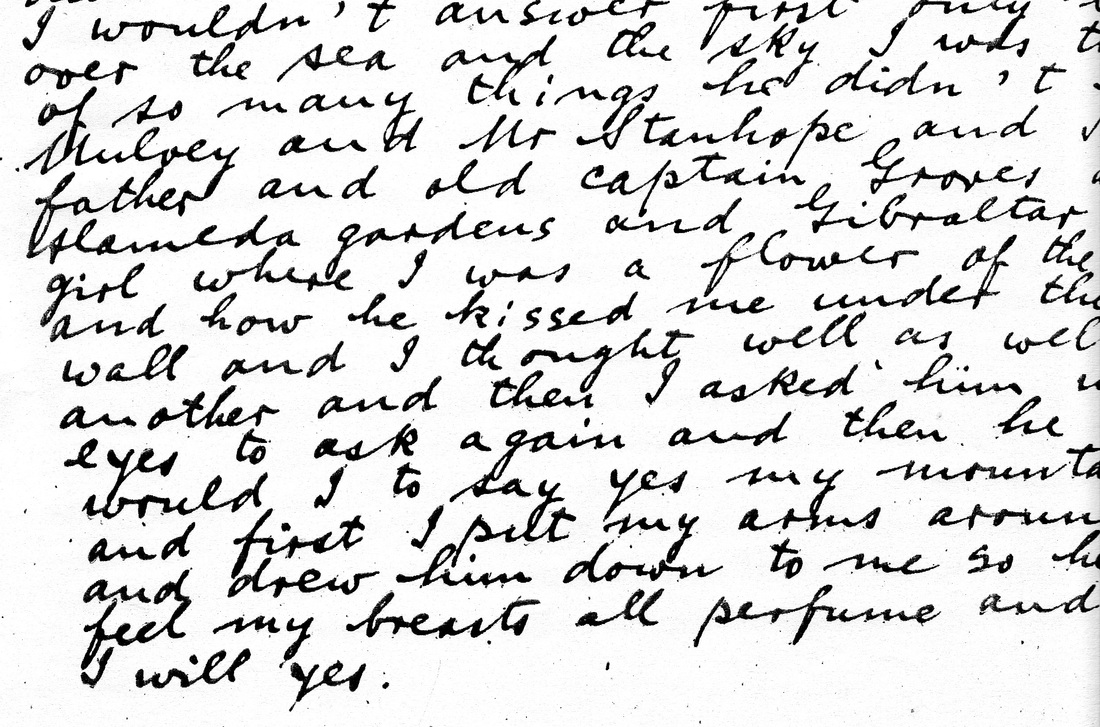
Lewis Carroll’s chortle could have made our top 10 too, had we not already explained its origins in our video on portmanteaux. But one word that failed to make the final cut here and yet still deserves an explanation, is the story behind James Joyce’s little known contribution to particle physics: the quark.

A quark, for those of you not too well versed in this subject (a minority, surely…) is defined by the Oxford English Dictionary as:
Each of a group of subatomic particles regarded, with leptons, as basic constituents of matter, and postulated never to occur in the free state but to be combined in pairs to form mesons and in triplets to form baryons, and to have fractional electric charges, +⅔ and −⅓ that of the proton.
Well, that clears that up. But without going too deeply into the science behind the likes of leptons and quarks, all that concerns us here is that quarks were first postulated by American physicist and Nobel Prize winner Murray Gell-Mann in 1964. Although originally theoretical, Gell-Mann’s model of the subatomic “particle zoo” has since been validated, and ultimately the terminology he used in his original explanation has since become the standard across all physics. But why call them quarks in the first place? Well, why not let the man himself explain. 

In 1978, Gell-Mann wrote to the editor of the OED Supplement to explain the thinking behind his word:
I employed the sound “quork” for several weeks in 1963 before noticing “quark” in Finnegans Wake, which I had perused from time to time since it appeared in 1939 ... I needed an excuse for retaining the pronunciation “quork” despite the occurrence of “Mark”, “bark”, “mark”, and so forth in Finnegans Wake. I found that excuse by supposing that one ingredient of the line “Three quarks for Muster Mark” was a cry of “Three quarts for Mister…” heard in H. C. Earwicker’s pub.
In other words, as Gell-Mann later expounded in his book, The Quark and the Jaguar (1995), he knew the sound of the word he wanted to use before he decided on how it should be spelled; at one time, he explained, quark might even have been spelled “kwork”. But then, purely by chance, he stumbled across the word quark in James Joyce’s enigmatic writing, and the Q spelling stuck. 

One question remains, however—what was James Joyce’s quark in the first place? Well, it’s presumed that the quark used in Finnegans Wake is meant to represent the sound of a seagull, and is used in the novel as a call to buy a round of drinks. Any excuse…


17 March 2016

10 Words Derived From Irish

March 17 is St Patrick’s Day, so in honour of that this week on the HaggardHawks YouTube channel we’re looking at 10 Words Derived From Irish.

A full list of words the English language owes to Irish would range from the fairly obvious (leprechaun, banshee) to the fairly surprising (trousers, Tory, slob), with a few etymological question marks thrown in for good measure. One of these is hooligan, which we’ve looked at on the blog before, and another, which we’ve included in the video, is kibosh.

People have been bringing things to a halt by putting the kibosh on them since the early nineteenth century. Although we’ve included it here in our list of ten Irish words, the theory that it derives from an old Irish expression, caidhpín bháis, for an judge’s black “cap of death” is by no means conclusive—competing theories variously attribute the word to everything from Yiddish to Scots, while others suggest it is and always has been a purely English word.

So if not derived from Irish, why do we put the kibosh on things? Well one theory is that the ki- of kibosh is the same as in words like kersplash! and kaboom!—in other words, it’s just there to emphasise the “bosh” (i.e. the stout hit or blow) that comes after it. Or perhaps kibosh is derived from an even earlier sound-alike, like caboshed (a heraldic term for an animal shown on a coat of arms from the neck up only), kye-boots (a Scots English word for a dairy cow’s shackles), or even courbache (the French name for an Arabian rhinoceros-hide horsewhip). Or maybe it’s from the Yiddish word for “eighteen coins”, which might once have been a slang word for a throwaway amount of money? (Shameless plug: there’s a bit more on that in the HaggardHawks factbook...)

In truth, etymologists aren’t entire surely, but we’re signing up to the Irish theory here—alongside nine other fascinating Irish etymologies… 


9 July 2015

Britain

It’s easy to forget that place names—just like surnames, first names, months of the year, and all other proper nouns—are still only words, and as such have their own histories and etymologies. We’ve mentioned quite a few of these before on the @HaggardHawks Twitter feed, from “the wooden temple” in central Asia to the original “white house” in north Africa, to America’s “place of the wild onion” and “the best place to grow potatoes”.

Unfortunately, because place names tend to be particularly ancient, their precise origins and meanings are often very tricky to pin down. Shortfalls and inconsistencies in what little historical evidence is available mean there’s often just as much conjecture and guesswork involved as there is hard fact, and even then some names defy all attempts to explain them. 

For instance, despite being one of the most famous cities in the world, no one really knows what “London” means. Instead, theories range from the relatively sensible—perhaps a long-forgotten Welsh word, meaning something like “river-fort” (llyn-din), or “pool on the river” (llyn-dain)—to the downright bizarre, with one idea even suggesting some kind of reference to Luna, the Roman goddess of the Moon. (Shameless plus: there’s more on that in the new book…)

We tweeted another bizarre place name origin a few weeks ago:
And, well, we thought it might need a bit more explaining.

So. The earliest written record of “Britain” that we know about comes from an Ancient Greek explorer and adventurer named Pytheas of Massalia. Sometime around 325BC, Pytheas circumnavigated and explored the entire British Isles, probably becoming the first person in history to do so. He also travelled high enough into northern Europe to describe the Midnight Sun (probably becoming the first person to do so); crossed the Arctic Circle and spotted the outer fringes of the great northern icecap (probably becoming the first person to do so); and was the first explorer from Mediterranean Europe to reach the Baltic Sea by boat. He was, it’s fair to say, a bit of a dude.

Pytheas’s accounts of his journeys were among the most celebrated geographical texts in antiquity, but unfortunately all of his original writings have long since been lost. Everything we know about his travels now comes from the smattering of quotes, extracts, and discussions that later writers and historians—including the great Roman naturalist Pliny the Elder, who keeps cropping up on here—included in their work. But what has survived is Pytheas’s early use of the word “Britain”, which he recorded more than 2,300 years ago as “Bretannike.

At the time of Pytheas’s visit, Britain would still have been a hodgepodge of different Celtic and pre-Roman tribes and languages. In the far north and west, however, two increasingly dissimilar branches of the ancient Celtic language family were starting to take shape: Goidelic, or “Q-Celtic”, in the far north and northwest (which eventually gave rise to Irish, Manx and Scots Gaelic), and Brythonic, or “P-Celtic”, in the west and southwest (which eventually gave us Welsh, Cornish and Breton). 

The nicknames “P” and “Q” refer to the fact that Brythonic Celtic tended to develop a p sound where Goidelic Celtic tended to have a hard q or k sound, and vice versa. We’re dealing with impossibly ancient words here, of course, but you don’t have to look too far to find evidence that this change took place: pick up an atlas or a road map of the British Isles, and you’ll find Pentire, a peninsula on the north coast of Cornwall, and Kintyre, a peninsula in southwest Scotland. Both names literally mean “headland”; both derive from P-Celtic (penn) and Q-Celtic (keann) words meaning “head”; and both are practically identical, except for their initial p and k sounds. 

But anyway, back to Pytheas. Based on linguistic evidence like this—and based on what little we know of Pytheas’s route—it’s thought that his “Bretannike” must be derived from some early Brythonic or “P-Celtic” word, suggesting that the people he learned it from originated somewhere around modern-day Wales or southwest England. We can only guess at what this original root word might have been, but from what we know about the Celtic languages, the consensus among etymologists and toponymists (that’s place name researchers to you and me) is that its closest modern descendant is probably an old Welsh word, prŷd, essentially meaning “form”, “image”, or “countenance”. 

If this presumption is correct, then the ancient Britons would quite literally have been “the people of the forms”, which, it’s again presumed, is an apparent reference to their supposed fondness for war paint and tribal tattoos. There are, admittedly, several rivalling theories here—and historians are undecided about whether these Iron Age Britons tattooed each other or not—but, etymologically at least, there is a strong argument to suggest Britain is quite literally the home of the “tattooed people”.


And, appropriately enough, Britain is now apparently the most tattooed nation in Europe. Everything really does come full circle. 


_______________________________

Hat tips to David Willbe (@DavidWillbe) and Dr Matt Lodder (@mattlodder) for links to the historical arguments for and against Pictish tattoos. Tatt you very much. (Sorry...) 

17 March 2015

Limerick


Look up the origin of the word limerick and there’s a good chance you’ll be pointed in the direction of the the English poet Edward Lear. Best known for writing The Owl and The Pussycat, in 1846 Lear published an aptly titled Book of Nonsense:

There was an Old Man who said, “Hush!
I perceive a young bird in this bush!”
When they said—“Is it small?”
He replied—“Not at all!
It is four times as big as the bush!”

Lear’s book contained more than 100 five-line poems just like this one, each of which relayed the consistently bizarre activities of a consistently bizarre parade of people, including “an Old Man of New York” (“who murdered himself with a fork”), “a Young Lady of Ryde” (“whose shoe-strings were seldom untied”), and “an Old Person of Ischia” (“whose conduct grew friskier and friskier”). The collection proved hugely popular, and soon Lear’s quirky five-line poems—with their jaunty rhythm and memorable AABBA rhyme scheme—soon became known as “Learic” verses.

King Lear
Over time the fairly clumsy word Learic drifted ever closer to one of its more easily pronounceable soundalikes—namely Limerick, a city and county in south-western Ireland—and eventually, this was this name that stuck. It’s a neat, if slightly flawed little story. The flaw being that it’s complete rubbish. 

For one thing, Lear didn’t invent the AABBA style of verse. That honour goes to the Italian Dominican friar and scholar Thomas Aquinas, who wrote this in the mid-thirteenth century:

Sit vitiorum meorum evacuatio
Concupiscentae et libidinis exterminatio,
Caritatis et patientiae,
Humilitatis et obedientiae,
Omniumque virtutum augmentatio.

Regrettably, Sit vitiorum meorum evacuatio is not the Latin for “There once was a girl from Nantucket”, as Aquinas’s poem was actually a prayer:

Let it be for the elimination for my sins,
For the expulsion of the desire and lust,
For the increase of charity and patience,
Humility and obedience,
As well as all virtue.

Aquinas didn’t call his poem a limerick of course—but then again, neither did Lear. Another problem with the “Learic” explanation is that, according to the Oxford English Dictionary, the word limerick didn’t appear in print until 1896, eight years after Lear’s death, when the author and artist Aubrey Beardsley wrote a letter to a friend to say that he had been trying “to amuse myself by writing limericks on my troubles”.

The limerick Beardsley came up with, inspired by a painting of St Rose of Lima, is far, FAR too indecent to reprint here. After all, there might be children reading this. But if you’re in the mood to be scandalized, you can read the original (alongside Beardsley’s accompanying illustration) here. Seriously—you have been warned...

But self-defiling Peruvian saints aside (you really want to know what that limerick says now, don’t you?) Beardsley tellingly used the word limerick in his letter without any accompanying explanation or context, suggesting the word was already well known by the time he came to use it. Could Learic have transformed into limerick in such a short period of time? It’s unlikely.

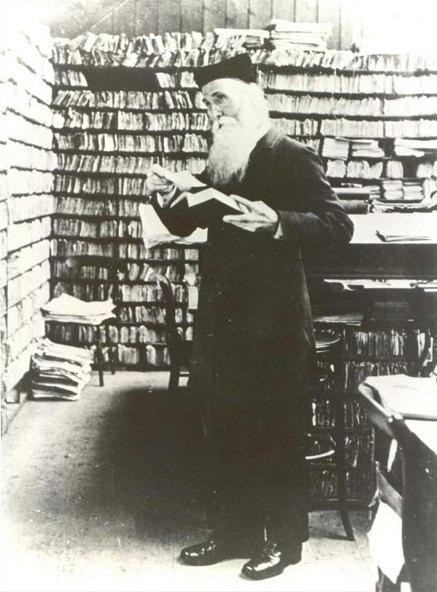
Sir James Murray: OED CEO
So where did the name come from? Well, according to Sir James Murray—founding editor of the OED, no less—the word actually derives from an old drinking song, once popular among troops in the British army, that apparently required all those taking part to make up their own verse, one person after another. Each verse was an improvised five-line poem, following an AABBA rhyme scheme, and was typically witty, nonsensical, satirical, or indecent in nature. And in between all of these spur-of-the-moment verses, the entire group would join together for the chorus, “Will you come up to Limerick?”. 

The game was probably based on an even earlier Irish jig called Will You Come Down To Limerick?, or Kitty Come Down To Limerick, which is still performed—albeit without the indecent lyrics—today.