_
Showing posts with label A. Show all posts

27 May 2016

Auburn


Earlier today, this peculiar etymological twist cropped up on the HH Twitter feed:


And so here’s a bit more about it.

Although nowadays auburn refers to red hair, the word itself is rooted in the Latin word albus, meaning “white”. That’s also where the word albinism comes from, as well as album (which originally referred to a white stone tablet on which Roman edicts would be displayed), albedo (the amount of light reflected by a surface), a cleric’s alb, and the albumen or white of an egg.

Then of course there’s this:


But we won’t go into all that now. So what about auburn?

Well, the Latin word albus led to a derivative alburnus, that was used to mean “nearly white” or “off-white”. That in turn drifted into Old French as alborne, which was brought across the Channel to England as aborne or auborne in the mid-fifteenth century.

On it’s earliest appearance in English, aborne was used to refer to a yellowish-white or brown-white colour, probably equivalent to what we’d call beige or buff today. But it didn’t take long for aborne to be confused with brown, which in the Middle English period was still called broune, or browne. This similarity eventually led the meaning of auburn to change from “yellowish-white” to “reddish-brown”, and it’s this meaning that’s remained in place ever since.


18 September 2015

Aluminium


This week over on @HaggardHawks, this intriguing little fact popped up: 
As a couple of diligent followers pointed out, yes, we’re only talking about English here. And yes, Q is also entirely absent from all 118 names. And, in case you’re wondering, there are Zs in zinc and zirconium, and Xs in xenon, oxygen and ununhexium (at least until it was renamed livermorium in 2012).

But with the New Scientist Twitter feed now seemingly muscling in on HaggardHawks’ patch (I can sense the geekiest showdown in internet history brewing already), now seems like the perfect time to spread our wings and try a little bit of science ourselves—albeit from a dictionary-orientated viewpoint.

So. All this talk of chemical elements raises an interesting question: why is it aluminium in Britain, and aluminum in America?

There’s an old story that claims a sizeable shipment of aluminium was once imported into the United States from Europe, but when it was recorded in the logbook of whatever port it arrived at, it was misspelled aluminum by the local harbourmaster (or harbormaster, as the case may be). It’s a neat story, but a fairly unrealistic one—would a mistake like this really be enough to alter the spelling of a word in an entire regional variety of English? It’s unlikely. Is this tall-tale probably a complete fabrication? That’s very likely. So what’s the truth?

Well, like a lot of the perceived differences between British and American English (we’re looking at you, zed vs. zee), things here haven’t always been as clear cut as they are today. Brace yourselves, then—here comes the science bit.


Minerals containing aluminium have been known and used since antiquity, but it wasn’t until the late eighteenth century that scientists began to realise that alums—naturally-occurring aluminium minerals, once used to do everything from dressing wounds to dyeing fabrics—all contained some kind of as-yet-undiscovered base metal. This metal was tentatively given the name alumine by the French chemist Guyton de Morveau in 1761, but it wasn’t until 1807 that the great Sir Humphrey Davy used his newly-refined process of electrolysis to try to isolate it from its mineral source.

Although he failed, in writing up his experiments Davy nevertheless discussed this tantalizingly unobtainable metal in English for the first time. As his paper, published in the Royal Society’s Philosophical Transactions the following year, explained:
Had I been so fortunate as to have obtained more certain evidences on this subject, and to have procured the metallic substances I was in search of, I should have proposed for them the names silicium, alumium, zirconium and glucium.
Confusingly, Davy’s list of the metals that eluded him—silicium (now silicon), alumium, zirconium and glucium (now beryllium)—means that the earliest written record we have of in English is neither spelled aluminium nor aluminum. At least that was until 1812, when Davy published a book cataloguing all of his discoveries to date, in which he stated:
This substance [alum] appears to contain a peculiar metal, but as yet Aluminum has not been obtained in a perfectly free state, though alloys of it with other metalline substances have been procured sufficiently distinct to indicate the probable nature of alumina.
This appears to give the American spelling aluminum the edge—but, confusing things even further, there’s this:
The result of this experiment is not wholly decisive as to the existence of what might be called aluminium and glucinium.
This final quote comes from an 1811 review of a lecture given by Davy at the Royal Society in London, two years earlier. Whether Davy himself had used the name aluminium in his lecture or whether it was merely the reviewer’s name of choice is impossible to tell, but one thing is clear: Davy, it seems, couldn’t make his mind up—and he was by no means alone.

While Davy’s original spelling alumium quickly dropped out of use, in the years that followed his experiments the names aluminium and aluminum were used interchangeably in both British and American literature, as well as by Davy himself. And all this confusion wasn’t helped by the fact that, because isolating aluminium was proving so problematic, the metal itself remained astonishingly scarce. In fact, for much of the nineteenth century aluminium was one of the rarest and most expensive metals in the world: in the 1850s, Emperor Napoleon III of France reportedly had a set of cutlery cast from aluminium that he reserved for only his most important guests, while everyone else had to make do merely with gold. The need to mention aluminium in print consequently remained small, and so a standardized form of the word failed to emerge.


Napoleon III: Expensive tastes, exceptional moustache

When Noah Webster published his American Dictionary of the English Language in 1828, however, the only spelling that made his final cut was aluminum; because aluminium was still so rare at the time, it’s possible that Webster’s preference for aluminum was an attempt to ally it more closely to  platinum, another equally rare and equally precious metal. Back in Europe meanwhile, the trend drifted the other way: the Latin-inspired –ium endings common to many of the other recently-discovered elements (including a number of those isolated by Davy’s more successful experiments) led to the spelling aluminium steadily gaining ground among classically-educated scholars in Britain. 

But the breaking point eventually came from the unlikeliest of places: behind a shed in the garden of a family home in northern Ohio.

In the early 1880s, an American chemist and inventor named Charles Martin Hall began experimenting with samples of alumina—solid aluminium oxide—to find a cheaper method of producing pure aluminium. Having constructed his own coal-powered furnace in his family’s garden in Oberlin, Ohio, Hall came up with a process in which alumina is dissolved in a bath of molten cryolite (a pale, quartz-like mineral), which is then electrolysed to produce a pool of pure molten aluminium at the bottom of the tank.

For the first time in history, Hall’s method—which was simultaneously discovered by the French chemist Paul Héroult, and is hence called the Hall-Héroult Process—allowed aluminium to be mass produced; within a matter of years of his process being patented in the United States, pure aluminium was reportedly 200 times cheaper than it had ever been before.

Although Hall used the spelling aluminium when filing the patent for his process, in his advertising and promotional material he opted for Webster’s spelling of aluminum. And as his business grew, and as his technique for producing pure aluminium became more widespread, this meant that aluminum steady established itself as the metal’s preferred spelling in North America, while the classical –ium ending remained in place back in Britain—a distinction that has remained in place ever since.


13 August 2015

Ananym

A few days ago over on @HaggardHawks, I posted this:
Which raised this perfectly appropriate question:
The short answer is, yes, there is. But the long answer is—well, much more interesting than that.

So, first things first: the ana– of ananym is the Ancient Greek word ana, which was variously used to mean “back”, “up”, “on”, “around”, “towards”, “throughout”, and just about every other preposition you can imagine. It’s the same root we find in words like anagram, analogy, and analysis, as well as in less obvious places like Anabaptist (literally “one who baptizes again”) and Anastasia (which means “resurrection”).

The suffix –nym comes from the Greek word for “name”, onyma, which is same the root as in much more familiar words like synonym, acronym, pseudonym and anonymous. So put together, an ananym is literally a “back-name”—a word formed by reversing another.

That’s all well and good, of course, but what about examples?

Well, admittedly the majority of ananyms in use today tend either to be proper nouns or fictional inventions: think of Oprah Winfrey’s Harpo Corporation, Samuel Butler’s Erewhon (a partially-reversed “nowhere”), or Dylan Thomas’s Under Milk Wood, which was set in the fictitious Welsh town of “Llareggub” (you can work that one out yourself).

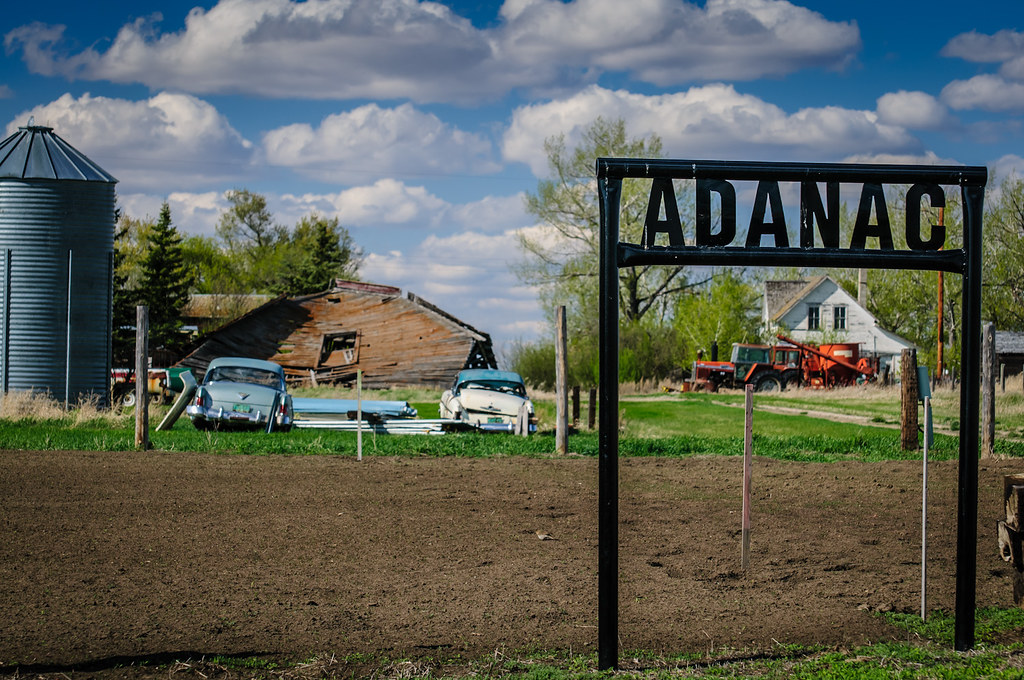
There are towns called Adanac in Canada, and Saxet in Texas. The girls’ names Segna and Nevaeh are “Agnes” and “heaven” spelled backwards. Dioretsa is the fantastically fitting name of an asteroid with an appropriately retrograde orbit. And if you’ve ever thought searching the Internet was too straightforward, why not try searching for everything backwards over on elgooG?

None of those will find its way into a dictionary any time soon, of course, but that’s not to say that a handful of ananyms haven’t already done so. Mho, for instance, is the name of a unit of electrical conductance, coined in opposition to the ohm, a unit of resistance. Along similar lines, physicists have at their disposal units called the yrneh (a unit of inverse electrical inductance, derived from the henry) and the daraf (a measure of electric elastance, as opposed to the farad, a measure of electrical capacitance). And not wanting to be outdone by the Michael Faradays of this world, in 1921 the US engineer Frank Bunker Gilbreth invented the therblig, a unit of work in a time-and-motion study. (Shameless plug—there’s more about these in the HaggardHawks fact book…)

By far the most familiar example of an ananymic word, however, is yob, which has been in use since the mid-nineteenth century to refer to what might otherwise be called a hooligan or a ruffian. It’s earliest record comes from a Dictionary of Modern Slang, Cant, and Vulgar Words, compiled by the English lexicographer John Camden Hotton in 1859.

The full title of Hotton’s dictionary (which is way too long to reproduce here) goes on to explain that it contains “glossaries of two secret languages spoken by the wandering tribes of London”: the two “languages” in question are Cockney rhyming slang and “back slang”, a much less familiar variety of Victorian English slang that, as its name suggests, involved reversing the letters of everyday words and phrases to form an entirely new (and fairly unintelligible) vocabulary. In other words, back slang it was a language of ananyms.

Like rhyming slang, back slang is thought to have first emerged in the early 1800s. In his dictionary, Hotton describes it as “the secret language of the costermongers”, suggesting that it probably originated among London street traders as a means of communicating exclusively with one another, presumably to the bewilderment of their customers.

So in London back slang, a cabbage was an edgabac, an orange was an edgenaro, and pinurt pots were turnip tops. An exis-yeneps was sixpence, a rouf-yeneps was fourpence, and earth gens was three shillings. After a good day’s trading, one seller might comment that he’d made a doogheno hit, or a “good hit” (“implying that he did well at market, or sold out with good profit,” according to Hotton), after which he might treat himself to a top o’reeb (a “pot of beer”), if not a track (a “quart”)—and end up quite kennurd (“drunk”), or at least flatch kennurd (“half-drunk”).

And second from last on Hotton’s list is yob, listed as Victorian back slang for “boy”:


Although linguistic techniques like back slang have remained in use ever since (and are by no means exclusive to English), aside from yob you’d be hard-pushed to find anyone who still uses any of the other entries on Hotton’s list, or to find any similar terms listed in a modern dictionary. 

Contrast that with rhyming slang, which has contributed considerably more to our language than meets the mince-pies: if you’ve ever used your loaf (loaf of bread = “bead”), 86ed something (eighty-six = “nix”), took the mickey out of someone (Mickey Bliss = “take the piss”), or called them a berk (Berkley Hunt = look that one up yourself), then you’ve used rhyming slang, whether you’ve realized it or not.

Os smynana thgim eb erar, tub er’yeht yb on snaem tcnitxe.


24 July 2015

Admiral

Last week HaggardHawks tweeted this screenshot, taken from a brilliantly-titled dictionary of Slang and Its Analogues Past and Present, published in 1890:
  

And, well, it probably all needs a bit more explaining.


Admiral is one of those deceptively straightforward words behind which lies the kind of history that keeps etymologists awake at night. They should really cut down on the caffeine after 5pm. It’s all a bit of a bewildering hodgepodge—the OED’s etymology alone comprises a 1300-word essay—but the basic theory is that, at its root, admiral derives from the old Arabic title amir, as in emir and emirates. This ancient title was then borrowed into and reshaped by the vocabularies of various Mediterranean countries and cultures around 1000 years ago, and via the all-conquering Normans eventually began to appear in English texts in the early thirteenth century.

Initially, admiral was used as a fairly general title for a ruler, a leader, or a military commander; things get confusing when we try to find out how it came to be used exclusively of a naval leader.

The first person we know to have held a naval title along the lines of admiral was the not-all-that-impressive-sounding George of Antioch in the early 1100s. George, who had already worked in several similar naval positions in Arabic-speaking North Africa, was put in charge of the fleet of the even-less-impressive-sounding Roger II, a twelfth-century King of Sicily, who gave him the Latin title ammiratus ammiratorum

It’s around this time that (etymologically, at least) things become a little hazy: it could be that George’s title ammiratus is a Mediaeval Latin spin on the Arabic title amir, which George would certainly have known of having served in North Africa. Alternatively, it could be a purely Latin title, with no connection to Arabic at all—on its own, ammiratus ammiratorum literally means “the most admired of the admired”.

Wherever the word’s ancient history might lead us from there, however, the fact is that by the time of George’s appointment Sicily too had been conquered by the Norman French—and it was the Normans who were responsible for transplanting the title from the sunny southern Mediterranean to the rainy European northwest. 

So. If that’s the story of admiral, what about the admiral of the narrow seas?

Well, in eighteenth century slang—long after admiral had established itself as a naval title in England—a curious trend emerged for applying fictitious “titles” to various people and characters. So a Captain Queernabs was “a shabby, ill-dressed fellow”, and a Captain Cork was a man who was “slow in passing the bottle”. A boatswain-captain was the naval equivalent of a swot: an overly competent seaman who never seemed to put a foot wrong. An admiral of the red was a wine-drinker. An admiral of the white was a coward. An admiral of the blue was a drunkard, or a publican (who would typically wear a blue tabard). An admiral of the red, white and blue was a ludicrously or ostentatiously dressed person. And an admiral of the narrow seas was the queasy, mulvathered seafarer mentioned above.

A vice admiral of the narrow seas, meanwhile, was an even worse drinking companion:


8 July 2015

Aphercotropism

Well, well, well. Every so often something just seems to click over on @HaggardHawks, and one unsuspecting tweet suddenly goes a bit berserk. The goldfinch did. Tantling did. The racehorse with the best name in history did. And that fantastically wind-sculpted tree undoubtedly did too.

But earlier this week, an obscure nineteenth century ecological term (paired with a tremendous photograph, for which we can take no credit whatsoever) broke all the HaggardHawks records:


Understandably, the obscurity of a word that seems seldom (if ever) to be used outside of old scientific literature—and so isn’t found in the pages of any major dictionaries—raised a few eyebrows:


So, 800 retweets and nearly 1000 favourites later, we thought you might like to know a bit more about aphercotropism, and thereby address a few of these queries (and the dozens more like them). Scalpels at the ready, then—let’s dissect this thing.

First of all, the prefix ap– or aph– derives from a Greek word, apo, meaning “off” or “away from”. It’s the same root we see in words like apocalypse (which literally means “uncovered” or “disclosed”), apocryphal (literally “hidden away”), and even apology, which originally referred to a formal defence or justification, or to a personal account of a story (and so literally means “from speech”).

Secondly, the –erco– part comes from another Greek word, herkos, referring to a fence, a barrier, or a some kind surrounding wall. It only has a handful of offspring in modern English, the majority of which are fairly obscure, long-forgotten terms (the kind that HaggardHawks devours) that have found their way into the dustier corners of the OED: hercotectonic (“pertaining to the construction of walls”), poliorcetic (“relating to the besieging of cities”), and hercogamous, a botanical term describing plants that grow “barriers” between their male and female parts in order to prevent self-fertilization. Apparently.

So that only leaves the suffix –tropism, which you’ll likely recognise from words like heliotropism (“turning towards the sun”) and phototropism (“growth towards a light source”). Scientists and ecologists have invented dozens of words for different kinds of “tropism” besides these, of course, including geotropism (“growth dictated by gravity”), thigmotropism (“movement in response to touch”), homolotropism (“fixed horizontal growth”), and and thixotropism, which refers to the property of certain fluids that makes them act like a solid when subjected to a force—which is why you can run across a pool of custard.

Wait a second—let me just stop to add those last six words to my bucket list… Right, let’s carry on.

Tropism
derives from another Greek root, tropos, which literally means “a turning”. So when we put everything back together, aphercotropism ultimately refers to an organism quite literally “turning away from an obstruction”. That’s all well and good, of course, but it still doesn’t explain where the word itself comes from. Did we just make it up?

No. Seriously, no. Believe me, finding out about genuinely interesting genuine words is much more fun than making them up. Instead, this particular term seems to date back to the late nineteenth century, with the earliest record we’ve so far uncovered coming from an 1899 volume of Nature Notes, a natural history journal published by The Selborne Society, an early conservationist organization:
Aphercotropism … is a peculiarity discovered by Darwin. His experiment was as follows: after allowing a radicle to be well developed in peas, beans, &c. the seed is suspended in the air. A tiny piece of card is attached to one side of the tip by a little gum; the tip will now move away from the vertical position, on the opposite side to the card. The tip may make one or more complete circles in a vertical plane; and it has been known to pass through the first loop so as to tie itself into a knot. This explains how a radish was once dug up and found to be thus tied up.


Charles Darwin outlined this experiment—in which the root of a single pea plant grows in an obscure shape in order to avoid the card glued above it—in his 1880 work, The Power of Movement in Plants. But in his account, he makes no reference to the word aphercotropism. So until any other evidence comes to light, we can presume that the word was coined sometime between the publication of Darwin’s book in 1880, and the publication of the Nature Notes journal in 1899, the author of which likewise makes no reference to having coined the word himself. Precisely who did coin the word, ultimately, remains a mystery.

Right. Now, back to that custard thing…


____________________
With grateful thanks to avid HH-er John (no surname supplied, unfortunately!) who emailed to say, quite rightly, that the second Greek root of aphercotropism discussed above should read herkos, not erkos as it did previously. For those of you not up to speed with your Ancient Greek (a minority, surely...) this is to do with “rough breathing”, an Ancient Greek diacritic marker that indicated the vowel in question was preceded by a “h” sound, which should be transliterated into English as an H, and which we had omitted the post has now been updated accordingly. Apologies for the oversight—a more up to date Dictionary of Ancient Greek has been purchased here at HaggardHawks HQ. The other has been unceremoniously banished to the back of the cupboard.