_
Showing posts with label place names. Show all posts

12 May 2016

London


A few weeks ago over on the HaggardHawks YouTube channel, we looked at the origins of 10 city names, covering everywhere from Chicago (“a place to grow wild onions”) to Funafuri, the capital of Tuvalu (“banana-woman”).


But one city that didn’t make the final cut was the largest city in the UK and the second largest city in Europe. The home of Britain’s smallest police station. The world’s oldest underground network. Two of the world’s best universities. And a woman with a pig’s face. Yep, we’re talking about London. 

So why—to resurrect our occasional series of Questions About The Language You Never Even Thought About—is London called “London?”

In terms of etymology (or rather toponymy, to give the study of place names its proper name), London is something of a mystery. Actually, that’s putting it mildly—over the past few hundred years, a number of linguists, scholars and geographers have put their heads together and come up with little more than a mutual discrediting of each other’s theories and one gigantic Buckingham Palace-sized question mark. Why is London called “London”? The short answer at least is that no one really knows.

That’s partly to do with a lack of written evidence. It’s also partly to do with the fact that we’re dealing with exceptionally old words and word elements, the barest bare bones of the language. And partly it’s because London is such a unique name—it really just doesn’t look like any other ancient word or word element that we know about, which makes working out what it might mean an especially tricky business. But just because we don’t have a definitive answer, doesn’t mean that we don’t have any answer at all.

By far the oldest explanation on record is that of the twelfth century Welsh scholar and historian Geoffrey of Monmouth. In his History of the Kings of Britain (c.1135), Monmouth claimed that London was founded by and named in honour of a pre-Roman king of Britain named Lud, who built the city on the site of an even more ancient city called “New Troy” that had been founded by Brutus, grandson of Aeneas, in 1100BC. It’s a nice story alright. It’s just a shame it’s complete rubbish.


Geoffrey of Monmouth probably based his mythical tale of King Lud on that of a legendary figure from Welsh folklore called Lludd Llaw Eraint, or “Lud Silver-Hand”, who is said to have saved Wales from a plague of dragons and a magical giant who had the power to send people to sleep by playing music; to escape the giant’s soporific tunes, Lud dipped his head in a bucket of water. 

Oddly enough, it’s likely that none of that ever actually happened, which makes the idea that London is named after a dragon-slaying monarch with his head in a bucket somewhat implausible. Oh, and linguistically it’s highly unlikely that a word like Lud would morph into something like “Lond”. But still—dragons and giants. That’s probably all the proof you need there.
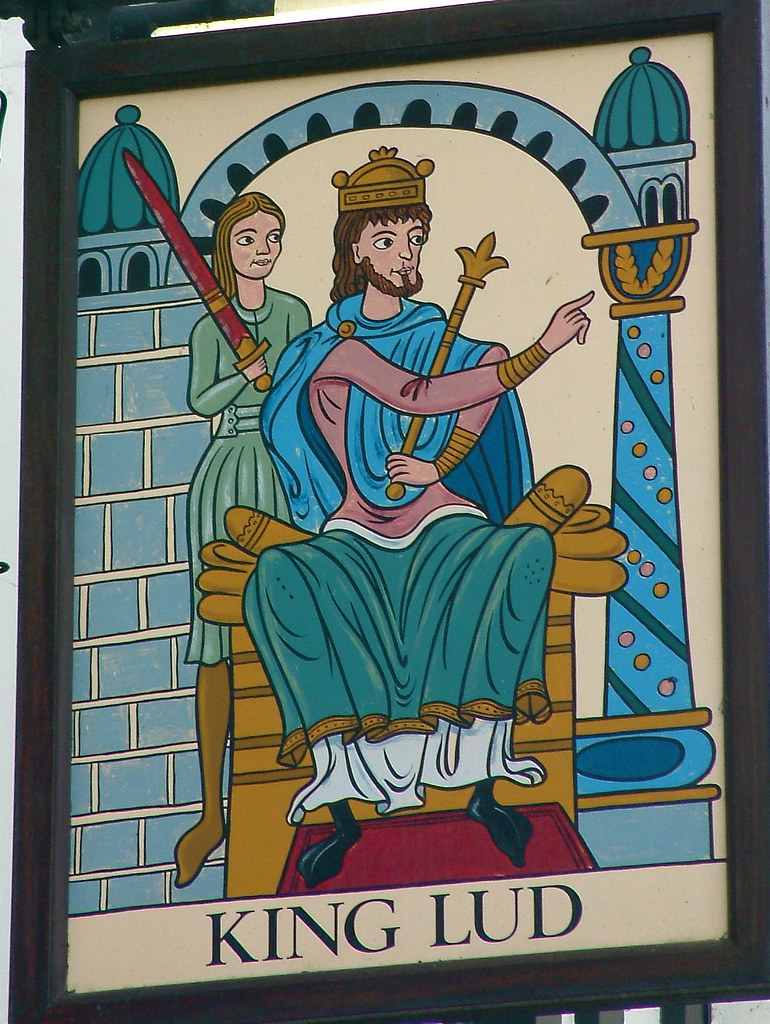

“...and over there is the bucket I put my head in.”

As unlikely as Geoffrey of Monmouth’s theory might be, he nevertheless might’ve been onto something by suggesting that London was named after or in honour of someone—but precisely who that “someone” was is another question.

For a while, one popular theory was that London was founded by or named in honour of someone called Londino or Londinos, a hypothetical name supposed to derive from an old Celtic word meaning “wild” or “fierce”. But there’s no historical precedent for that name whatsoever, and (without getting into too much detail) phonologists tend to agree that a Celtic word beginning lond– would give you a modern English word pronounced something like “loaned”, not like the “lund” of London. So despite being more than century old, this theory is now widely discredited. 

Alternatively it might not be the Lond– part of London that’s taken from someone’s name, but rather the –don. It’s been suggested that London might once have been called Lunadin, Luandan or Lan Dain, an ancient name meaning something like “moon temple of the goddess Diana”. Sir Christopher Wren certainly believed that he had unearthed a Roman temple dedicated to Diana when he rebuilt St Paul’s Cathedral, but again the linguistic and historical evidence just isn’t there to back this theory up.


So if it’s not an honorific name, how about a geographical one? 

Another theory is that London was originally llyn din, or llyn dain, both Welsh-inspired names literally meaning “lake-fort” or “pool of the river” respectively (the “lake” and “pool” in question possibly being the widening, deepening part of the river Thames). They’re both plausible theories, but linguistically a word like llyn would be expected to produce a modern name like Lindon-with-an-I, not London-with-an-O. 

And London has almost always been London-with-an-O: the earliest records we have of it are all from ancient Roman Latin documents and inscriptions that refer to it as Londinium or Londinion. The people of London themselves were the Londiniensi—a word taken from a stone tablet dating from around AD 150 that was unearthed at an archaeological dig in Southwark in 2002, and which provides us with the earliest known evidence of the name “London” that we have. And for the Romans to have spelled their “London” with an O (or a U, as they sometimes did) casts doubt on those Welsh-origin theories. 

Instead, we might have to look even further back in time.


Bring on the wall!

In 1998, Professor Richard Coates—then President of the English Place-Name Society—put forward perhaps the most convincing argument for the origin of the word London yet: Plowonida. If you think Plowonida sounds more like something you’d use to treat athlete’s foot rather than the origin of one of the most famous cities in the world, you’ve got a point. But the reason this looks so unfamiliar—and so unlike the modern name “London”—is because we’re dealing with impossibly old pre-Celtic language.

In Coates’ theory, Plowonida would have started life as a hydronym (a river name) referring to the part of the Thames on which London was founded. It combines (brace yourselves, we’re going even further back in time here) two Proto-Indo-European word roots meaning “to flow”, plew– and nejd–, whose descendants are found in river names all across Europe. In combination, it’s theorized that these two elements might have referred to the first noticeably deep, fast-flowing part of the Thames, where it was impossible to ford or cross on horseback.

Knowing what we know about pre-Celtic language, calling the river itself Plowonida would have given the town or village that stood on the banks of the river the name Plowonidonjon, which over centuries of simplification and alteration would have become a Celtic name along the lines of Lūndonjon, then the Latin name Londinium, and ultimately the modern English name “London”. If Coates’ theory is correct, that would mean the name “London” could be interpreted as something like “the town at the unfordable part of the river”—which is a considerably better theory that “the town of the king who put his head in a bucket”.


5 May 2016

10 Origins of World Cities

Last year on the HH blog, we talked a bit about how Britain literally means “home of the tattooed people”.


As with a lot of particularly ancient place names like this, that’s just one of a few competing theories of course, nevertheless it’s still the most likely of the bunch suggested so far. 

But as we said back then, it’s easy to forget that when it comes to etymology—or rather, toponymy, which is the branch of linguistics dedicated to place name origins—the names of countries and continents, rivers and seas, towns and cities (and all the other proper nouns in the language for that matter) behave just like “ordinary” words. Put another way, there’s a reason why everywhere is called what it’s called. 

And it’s 10 of those stories and meanings that we’re looking at in this week’s 500 Words video.


7 October 2015

Cocktail

The word cocktail is a bit of an etymological puzzle: originally only used as a nickname for an animal that rears up when irritated, by the late 1700s it had become another word for a horse with a “cocked” or shortened tail. How it then made the leap to alcoholic mixed drinks in the 1800s is, however, a mystery. 

One theory claims it’s to do with the drinks making you feel energised and sprightly, like an energetic horse, while another suggests it’s to do with cocktails being popular at the races. Alternatively, the two meanings could be entirely unrelated—one very plausible explanation is that cocktail might actually an anglicized version of the French coquetier, meaning “egg-cup”, which was perhaps once used to measure out quantities of spirits.

The names of individual cocktails are often just as problematic, and often it’s difficult to track down the histories of individual names. The margarita, for instance, is various credited to Marjorie King, a former Broadway dancer; the singer Peggy (i.e. Margaret) Lee; and Margarita Henkel, the daughter of a former German ambassador to Mexico. Even then, margarita is the Spanish word for “daisy”, and so it might instead take its name from an earlier drink known as the “tequila daisy”.

Equally, no one is quite sure why a sidecar is called a sidecar (although one story claims that it was invented in Paris just after World War I by an American Army captain who could often be seen being driven around the city in a motorcycle sidecar). The highball is another mystery: originally a straightforward mixture of Scotch and soda water, it’s thought that its name it refers to the drinks’ popularity in the bars on early steam locomotives. The train’s coal-powered boiler would be fitted with a pressure gauge with a floating ball inside it, so that when the train was going at its fastest speed, the pressure gauge would be “highballing”.

Some cocktails famously take their names from the places where they were invented. So while a sling is a general American name for any sweetened and flavoured drink made from a spirit base, the Singapore sling was invented in the early 1900s at the famous Raffles Hotel in Singapore. A classic daiquiri cocktail—essentially a mojito without the mint—is named after the village of Daiquirí on the southeast coast of the island; legend has it that the drink was invented by local American mining engineers in the early 1900s when they ran out of gin and had to use the local rum instead. (Mojito, incidentally, is thought to derive from mojo, the Cuban Spanish name of a type of sauce or marinade made with citrus fruit—so a mojito is literally a little mojo.)

But what about a Manhattan? Well, although accounts of the event are debatable, legend has it that the Manhattan cocktail was specially invented for a banquet hosted by Lady Randolf (mother of Winston) Churchill at the trendy Manhattan Club in New York in the late 1800s. The name Manhattan was, however, already in use long before then as the name of a different drink from the modern Manhattan cocktail—so, if the story is true, it was probably the success of Lady Randolf’s banquet that popularised the recipe used today.  

A Manhattan made with Scotch rather than Canadian whisky, incidentally, is a Rob Roy. It was originally invented at New York’s Waldorf Astoria Hotel in 1894 to celebrate the Broadway premiere of an operetta loosely based on the life of the Scottish folk hero Rob Roy.

Other more straightforward etymologies like this one include julep, which was borrowed into English from French as far back as the 1400s to refer to a sweet-tasting or sweetened drink, but has its earliest origins in the Arabic word for rose-water, julab. The mimosa takes its name from the mimosa plant, Acacia dealbata, which produces bright orange-yellow flowers the same colour as mixed champagne and orange juice. 

Piña colada means “strained pineapple” in Spanish, a reference to the drink’s fruity base, and maitai means “good” or “nice” in Tahitian. The pale orange-red colour of a classic Bellini cocktail reportedly reminded its inventor—Giuseppe Cipriani, the founder of Venice’s famous Harry’s Bar—of a similar colour often used in paintings by the Venetian artist Giovanni Bellini.

And when it became popular in the late 1800s to introduce liqueurs into cocktail recipes, the older more basic recipes that omitted them—and in particular this classic mix of whiskey and bitters—became known as “old fashioned” cocktails. Hence an old fashioned is a straightforward mix of Bourbon or rye whiskey, Angostura bitters, sugar.

Cheers!


25 September 2015

St Lucia

Here’s an intriguing little fact that popped up on @HaggardHawks the other day:
This is actually (shameless plug #1) one of the choicer entries cherry-picked from the Haggard Hawks fact book, Word Drops. And although (shameless plug #2) you can find out more about it (shameless plug #3) in the award-nominated book, maybe all this deserves a bit more explanation here.

On a global scale, the etymologies of country names are a bit of mixed bag. Some are so straightforward that they require no explanation at all (we’re looking at you, United Kingdom). Some are named after their inhabitants (France = “the land of the Franks”), or their colonists or conquerors (Philippines = “islands of Philip II of Spain”). Some are more descriptive (Bahamas = “the shallows”, Bahrain = “two seas”), or more poetic (Luxembourg = “little castle”, Zimbabwe = “land of stones”). And some are just plain weird (Cameroon = “land of shrimp”).

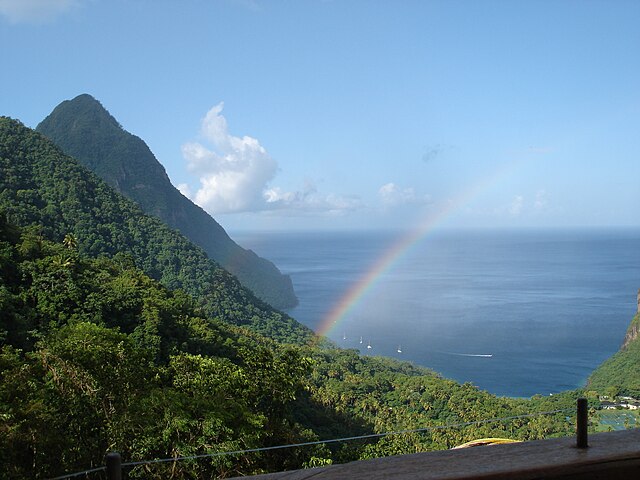
St Lucia takes its name from Lucy of Syracuse, a third-century Italian saint (the patron saint of blindness and throat infections, no less) who was martyred during the Roman Emperor Diocletian’s persecution of the Christians in AD 304. Although the reasoning behind the name is unclear, we nevertheless know that it was chosen by the island’s first European explorers and settlers, the French, who arrived there in the early 1600s—although rumour has it that the island was being used as a base by French pirates long before then. 

But according to the US Department of State, as of 2015 there are 195 countries (defined as “a people politically organized into a sovereign state with a definite territory recognized as independent”) in the world. Is it really true that only 0.51% of them are named after women? 

Unfortunately, yes—although there are a couple of very close calls.

One of the most famous almost-but-not-quites is the Republic of Ireland. Both Ireland and its Irish equivalent Éire derive from Eiru, the name of a goddess of the land and sovereignty in Celtic mythology. On a similar theme, one theory claims that Tunisia takes its name from Tanith, a Phoenician goddess of the moon who, with her husband Baal-Hammon, was the principal deity of the ancient city of Carthage.

But as far as eponymous women on our list of 195 countries go, that really is it: if we exclude all the ancient mythological and supernatural beings, St Lucia really is the only country named after a woman. Although, as a handful of astute followers noted, there is one final possibility:

St Helena is a tiny 50 square-mile volcanic island in the South Atlantic, home to around 4,500 people. It takes its name from St Helena of Constantinople (the patron saint of difficult marriages, should you need one), who was the wife of Constantinus Chlorus, ruler of the Western Roman Empire from AD 293-306. 

Can we add St Helena to our list? Well, the problem here is that St Helena is officially classed as just one-third of a British Overseas Territory known as St Helena, Ascension and Tristan da Cuhna—the collective name for a clutch of British-controlled islands in the South Atlantic Ocean. And so long as we’re limiting our list to independent countries, St Helena just doesn’t fit the bill. 

So it seems St Lucia it seems really is the only country in the world named after a woman. But, hey—it could be worse: 


13 August 2015

Ananym

A few days ago over on @HaggardHawks, I posted this:
Which raised this perfectly appropriate question:
The short answer is, yes, there is. But the long answer is—well, much more interesting than that.

So, first things first: the ana– of ananym is the Ancient Greek word ana, which was variously used to mean “back”, “up”, “on”, “around”, “towards”, “throughout”, and just about every other preposition you can imagine. It’s the same root we find in words like anagram, analogy, and analysis, as well as in less obvious places like Anabaptist (literally “one who baptizes again”) and Anastasia (which means “resurrection”).

The suffix –nym comes from the Greek word for “name”, onyma, which is same the root as in much more familiar words like synonym, acronym, pseudonym and anonymous. So put together, an ananym is literally a “back-name”—a word formed by reversing another.

That’s all well and good, of course, but what about examples?

Well, admittedly the majority of ananyms in use today tend either to be proper nouns or fictional inventions: think of Oprah Winfrey’s Harpo Corporation, Samuel Butler’s Erewhon (a partially-reversed “nowhere”), or Dylan Thomas’s Under Milk Wood, which was set in the fictitious Welsh town of “Llareggub” (you can work that one out yourself).

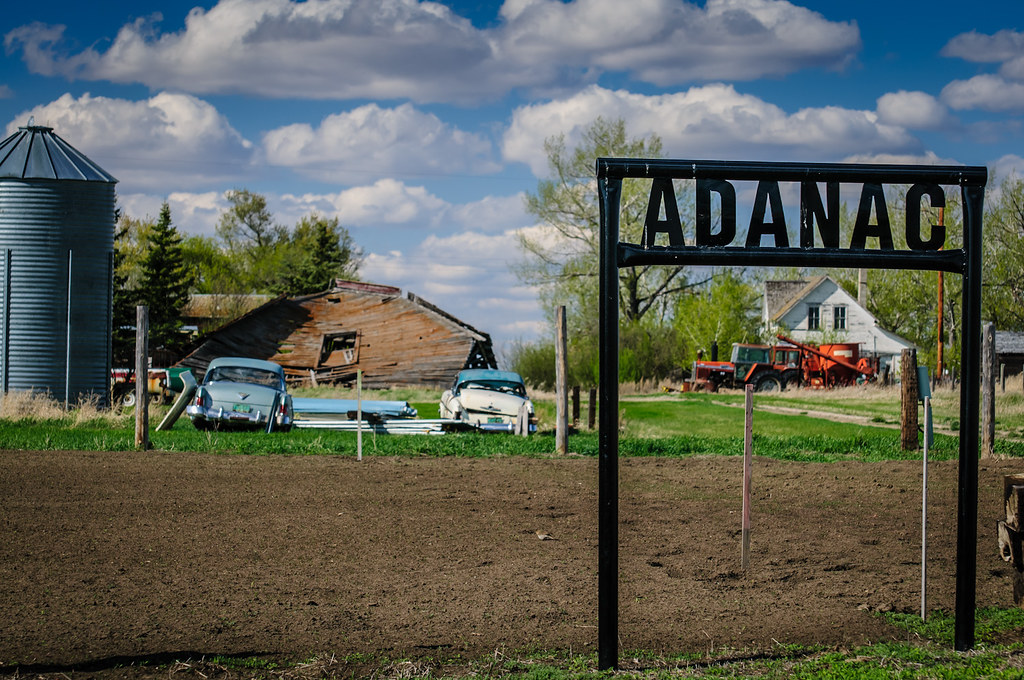
There are towns called Adanac in Canada, and Saxet in Texas. The girls’ names Segna and Nevaeh are “Agnes” and “heaven” spelled backwards. Dioretsa is the fantastically fitting name of an asteroid with an appropriately retrograde orbit. And if you’ve ever thought searching the Internet was too straightforward, why not try searching for everything backwards over on elgooG?

None of those will find its way into a dictionary any time soon, of course, but that’s not to say that a handful of ananyms haven’t already done so. Mho, for instance, is the name of a unit of electrical conductance, coined in opposition to the ohm, a unit of resistance. Along similar lines, physicists have at their disposal units called the yrneh (a unit of inverse electrical inductance, derived from the henry) and the daraf (a measure of electric elastance, as opposed to the farad, a measure of electrical capacitance). And not wanting to be outdone by the Michael Faradays of this world, in 1921 the US engineer Frank Bunker Gilbreth invented the therblig, a unit of work in a time-and-motion study. (Shameless plug—there’s more about these in the HaggardHawks fact book…)

By far the most familiar example of an ananymic word, however, is yob, which has been in use since the mid-nineteenth century to refer to what might otherwise be called a hooligan or a ruffian. It’s earliest record comes from a Dictionary of Modern Slang, Cant, and Vulgar Words, compiled by the English lexicographer John Camden Hotton in 1859.

The full title of Hotton’s dictionary (which is way too long to reproduce here) goes on to explain that it contains “glossaries of two secret languages spoken by the wandering tribes of London”: the two “languages” in question are Cockney rhyming slang and “back slang”, a much less familiar variety of Victorian English slang that, as its name suggests, involved reversing the letters of everyday words and phrases to form an entirely new (and fairly unintelligible) vocabulary. In other words, back slang it was a language of ananyms.

Like rhyming slang, back slang is thought to have first emerged in the early 1800s. In his dictionary, Hotton describes it as “the secret language of the costermongers”, suggesting that it probably originated among London street traders as a means of communicating exclusively with one another, presumably to the bewilderment of their customers.

So in London back slang, a cabbage was an edgabac, an orange was an edgenaro, and pinurt pots were turnip tops. An exis-yeneps was sixpence, a rouf-yeneps was fourpence, and earth gens was three shillings. After a good day’s trading, one seller might comment that he’d made a doogheno hit, or a “good hit” (“implying that he did well at market, or sold out with good profit,” according to Hotton), after which he might treat himself to a top o’reeb (a “pot of beer”), if not a track (a “quart”)—and end up quite kennurd (“drunk”), or at least flatch kennurd (“half-drunk”).

And second from last on Hotton’s list is yob, listed as Victorian back slang for “boy”:


Although linguistic techniques like back slang have remained in use ever since (and are by no means exclusive to English), aside from yob you’d be hard-pushed to find anyone who still uses any of the other entries on Hotton’s list, or to find any similar terms listed in a modern dictionary. 

Contrast that with rhyming slang, which has contributed considerably more to our language than meets the mince-pies: if you’ve ever used your loaf (loaf of bread = “bead”), 86ed something (eighty-six = “nix”), took the mickey out of someone (Mickey Bliss = “take the piss”), or called them a berk (Berkley Hunt = look that one up yourself), then you’ve used rhyming slang, whether you’ve realized it or not.

Os smynana thgim eb erar, tub er’yeht yb on snaem tcnitxe.


3 June 2015

Gotham

Yesterday, we tweeted this:
It’s a surprising one. To most people, Gotham is just another nickname for New York, and in that guise it’s by far and away best known as Batman’s stomping ground. 

Hang on—has someone done a superhero called Hawkman yet? They have? Curses. There really is nothing new under the Sun. But we digress. 

So—Batman. New York. Newcastle. Gotham City. How did all that happen?

Well, this particular story starts not with a bungled robbery in an inner-city alleyway, but way back in Tudor England. Sometime around the mid-fifteenth century, the name Gotham began to be used as a byword for any unsophisticated, backwater town or village, whose populace were all proverbially foolish, bumpkin-like characters. 

The earliest record we have of that comes from one of the Wakefield Mysteries, a series of thirty-two religious plays first performed in Wakefield, West Yorkshire, sometime in the mid-1400s. We know from the only surviving script of these plays (housed here) that one of them contained the line, “foles all sam, Sagh I never none so fare, Bot the foles of Gotham”—cut through all the late Middle English spelling and jumbled syntax, and you’ll have something along the lines of, “they’re all fools, I never saw a fool so fair [game] as the fools of Gotham.”

This allusion became so widespread in Tudor English that in 1540 an entire book of comic anecdotes about the ironically-named “Wise Men of Gotham” was published, including one story about a Gothamist who rode his horse while wearing a huge sack of grain on his back so that the horse didn’t have to carry all the weight, and another about a gang who decided to punish an eel that had eaten all the fish in a pond by trying to drown it. The joke even inspired a sixteenth-century folk rhyme, which described the hapless misadventures of three wannabe seamen from Gotham:

Three wise men of Gotham,
Went to sea in a bowl.
Had the bowl been stronger,
My song had been longer.


It’s unclear whether or not this proverbially foolish “Gotham” was based on an actual place. It’s been suggested that the real-life village of Gotham in Nottinghamshire may well have been where these Tudor writers had in mind, but connections have also been drawn to a long-lost “Gotham Hall” in Essex, the proximity of which to the capital could have made its rustic inhabitants a prime target for jokes among the more urbane Londoners nearby (although if that’s the case, it’s doubtful that the earliest written record of Gotham would appear 200 miles north in Wakefield). 

But whatever or wherever the original Gotham might have been, over time use of its name started to change—and that’s where Newcastle comes in.

During the seventeenth and eighteenth centuries, Gotham began to be used as a nickname for any place whose inhabitants were seen as less sophisticated or less cultured than those of larger, more cosmopolitan cities. In this context, it was probably applied to a number of different places across England, among them—entirely unfairly, of course—Newcastle upon Tyne. But as those Tudor folktales and rhymes steadily dropped out of fashion, the name Gotham began to lose all its negative connotations so that by the time the nineteenth century came into view, it was merely being used as a byword for any large town or city, regardless of the sophistication of the people who lived there. And in that context, it remained particularly associated with Newcastle. 

The earliest record of that that we have—which provides the earliest reference to any large city being labelled “Gotham”—comes from a local Newcastle ballad called Kiver Awa’ (“a command used in drilling”, according to the English Dialect Dictionary) written in November 1804, and first published in a collection of Rhymes of Northern Bards in 1812:


The “Gotham of the Tyne” mentioned here was Newcastle, and the first few lines of this, the last verse of Kiver Awa’, prove that by the time the poem was written Gotham was nothing more than a local name for the city—and clearly one used with considerable pride. 

So where does New York come into the mix? Well, English emigrants are presumed to have taken Gotham, their old nickname for a large city, across to America in the early 1800s and there began using it in reference to New York. It first appeared in print in the United States in an instalment of Washington Irving’s satirical magazine Salmagundi in November 1807, which made reference to “the chronicles of the renowned and antient [sic] city of Gotham”. 

For Irving’s article to have made sense to its readers, we can presume that the nickname Gotham was already fairly well established in New York by the time he came to use it in 1807. But given that Kiver Awa’ still predates Irving’s essay by three years—and given the lengthy history that the name Gotham had back in England—we can safely say that the first city we know of being called “Gotham City” was Newcastle upon Tyne, not New York.


So the dark night rises—just over the Tyne Bridge. 


28 February 2015

Serendipity

When we say that something is serendipitous, we mean that it’s a happy accident. Like finding some money you forgot about in a old coat. Or bumping into a friend somewhere you never normally go. Or, you know, discovering a copy of the Declaration of Independence hidden in the back of a $4 picture frame.

The word serendipity itself was coined by the English author and historian Horace Walpole, in a letter written to his friend (and distant cousin) Horace Mann on 28 January 1754. Mann had recently sent Walpole a much-prized portrait of Bianca Cappello, a sixteenth century Italian noblewomen who had married into the Medici dynasty, and while waiting for the picture to arrive Walpole had stumbled across the Cappello coat of arms in an old book. “This discovery, indeed,” he wrote, “is almost of that kind which I call Serendipity.”

But Walpole hadn’t just made the word up from thin air. Instead, he had taken it from “a silly fairy tale” he had read called The Three Princes of Serendip, whose title characters, he explained, “were always making discoveries, by accidents and sagacity, of things which they were not in quest of.” 

But neither had the fourteenth century writers of Walpole’s “silly fairy tale” invented the name Serendip. In fact, it’s an old name for Sri Lanka, and probably comes from some ancient Sanskrit word meaning “dwelling-place of lions” (although there are several rival explanations).

But if serendipity is a happy accident, what, then, can you call an unhappy accident? Like finding a spider in your old coat pocket. Or bumping into a boring workmate somewhere you never normally go. Or, you know, getting hit by a meteorite while you’re casually napping on the couch. 

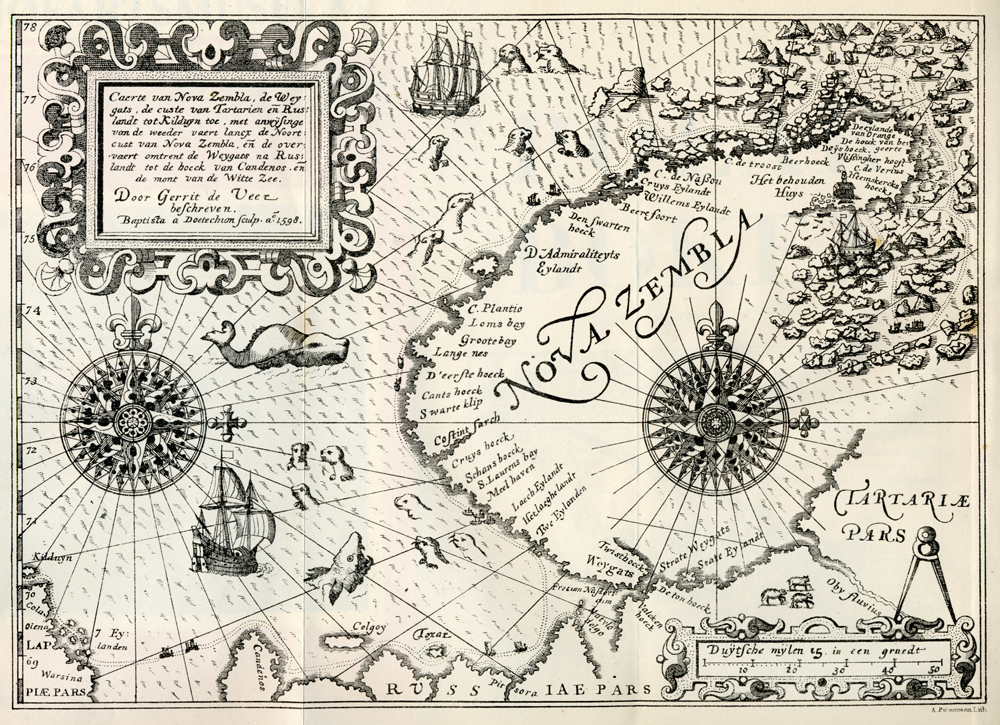
For that, we turn to the English writer William Boyd, who coined the fantastic antonym zemblanity in his 2001 novel Armadillo. Describing the practice of “making unhappy, unlucky and expected discoveries,” Boyd took the word zemblanity from the name of Novaya Zemlya, a bleak and barren Arctic archipelago in the far north of Russia that was once used as a Soviet nuclear testing site—in other words, about as far removed from a tropical island as it’s possible to be.

Novaya Zemlya. So cold even the sea monsters keep their distance.