_
Showing posts with label alphabet. Show all posts

17 March 2016

I, Part II

Last year on the HaggardHawks blog, we looked at why the lower-case letter i—and its alphabetical cousin j, for that matter—has a dot above it. Turns out it had something to do with stopping intelligent people being mistaken for their knees. But this week in our noticeably infrequent series of Questions About The Language You Never Even Thought About, we’re posing another I-related conundrum: why do we capitalize the pronoun I?

After all, none of the other English pronouns—including all the other first person pronouns, like me, mine, my and myself—is capitalized, unless you happen to be God or He Who Should Not Be Named. Nor was I’s ancestor, the Old English word ic, written with an uppercase letter. And the translated equivalent of I in most other languages is usually left in lowercase, like the French je, Spanish yo, Italian io, and German ich.


Speaking of German, it of course capitalizes all of its nouns, like Mann and Frau, Apfel and Orange, Kapitalbuchstaben and Kleinbuchstaben. That’s something that English reserves only for its proper nouns (John Smith, Australia, the Cabinet, Sister Act), unless you happen to have some kind of point-making rhetorical effect in mind, as in “He doesn’t just think he’s the bee’s knees, he thinks he’s The Bee’s Knees”.

German does however capitalize the formal form of its second person pronoun, Sie, “you”, along with all its derivate case forms like Ihr, “your”. That’s part of a linguistic phenomenon known as the T-V Distinction, which has nothing to do with how much better than terrestrial television Netflix is, but rather the way in which some languages like to show polite respect by altering the pronouns used to refer to people you don’t know very well or hold in high regard. It’s the same reason why French speakers will politely ask you to respondez s’il vous plaît, unless they know you particularly well (in which case résponds s’il te plaît will do just fine). Same goes for voulez-vous coucher avec moi, çe soir, but you really shouldn’t be saying that to someone you don’t hold in high regard.


So is this what’s happening in English? Do we think so highly of ourselves that we’ve grown accustomed to capitalizing our first person pronoun? Some etymologists have suggested so, and have even theorized that there’s a latently egocentric, psychological reason behind uppercase I. But if that’s the case, why hasn’t that filtered down to the likes of me and myself, or we and ourselves? And why is it only English speakers who are self-centred enough to capitalize ourselves while other languages are not? Don’t answer that.

So perhaps there’s something more pragmatic going on. An alternative theory claims that because the pronoun I occurs so frequently in sentence-first position, it’s only natural that it would eventually become capitalized. It’s a plausible idea, but does I really occur enough times in sentence-initial position to permanently alter its form in every other context? And again, why hasn’t the same thing happened to all the other pronouns?

Instead the most likely explanation of how we ended up with capital I is a surprisingly practical one, instigated by the fact that around the time capital-I first began to appear in English texts—in the Middle English period, roughly 700-800 years ago, so Chaucer’s Canterbury Tales provides much of its early evidence—there was a phonological change also taking place.

At that time, many dialects of English were busy reducing the Old English word for I—ic or ich, which was pronounced a bit like “itch” but without the T—to a single “i” sound, making the Cs and Hs normally used to spell it no longer necessary. In written English, however, a single lowercase letter i can look a little lost on its own, and in a densely handwritten document it’s easy to imagine just how easily a solitary pint-sized stroke, even with or without its dot, might be misread, overlooked, or even dismissed as a smudge or dash.

As a result, early Middle English scribes began making their single letter Is a little bigger, so that they could stand a little prouder and little more robust on the line of text. And over time, that became the standard and gave us the pronoun capital I. And that’s The Truth—or at least, the Best Theory We Have.


6 June 2015

D-Day

Today marks the seventy-first anniversary of the Normandy Landings—perhaps better known as D-Day. Etymologically, there’s a longstanding myth that the D of D-Day stands for something along the lines of “disembarkation”, “decision”, or “deployment”, or even “Deutschland” or “Doomsday”, but in fact:
So if the D doesn’t standing for anything, why is it there at all?

The fact is that while military operations are being planned, it’s not always clear from the outset when they’ll actually take place. As a result, their future start date—whenever that may be—is simply referred to as “D-Day”, and this title acts as a placeholder until a specific date can be finalized. (Shameless plug: there’s more on this in the new book.) 

If anything, the D of D-Day could be said to derive from the word ‘day’ (indeed the French equivalent is J-Jour, and the exact time an operation takes place is known as H-Hour) but it certainly can’t be said to stand for it.

Not only that, but the term D-Day is also a lot older than most people think. The earliest record we have of its use dates not from the Second World War, but from the First, and an American military order sent out on 7 September 1918:
The First Army will attack at H-Hour on D-Day with the object of forcing the evacuation of St. Mihiel salient.
Saint-Mihiel is a small town in the Meuse department of north-eastern France, that for three days in September 1918 was the site of one of the most important United States military operations of the entire First World War. Under the command of US Army General John Pershing, an enormous body of American Expeditionary troops—including thousands from the newly-formed United States Army Air Service, now the US Air Force—secured a decisive Allied victory over an ill-prepared and chaotic German contingent.

The Battle of Saint-Mihiel lasted from 12-15 September, during which more than half a million US soldiers, alongside 110,000 French troops, fought to secure the strategically significant Saint-Mihiel “salient”—a technical term for a narrow, isolated strip of land projecting from one region into another—in the hope of eventually recapturing the larger French city of Metz. As it happens, the attack on Metz was never realized, and as the German forces continued to crumble the War came to an end just weeks later, on 11 November 1918.

The term D-Day continued to be used intermittently throughout the 1920s and 30s, until it became all but permanently attached to “Operation Neptune”—the military codename of the decisive Normandy Landings—on 6 June 1944. 


24 April 2015

I

Earlier on today, we tweeted this:
It’s always nice to discover words for things you didn’t realise have names (we’re looking at you vartiwell, piqûre and manicule), and tittle undoubtedly falls into that category. But this great little fact raises a great little question: why do we even bother to put a dot over the letters i and j at all? 

Actually, the second part of that question is much easier to answer than the first: J is just a modification of the considerably older letter I, and probably first emerged as a means of signalling the last figure in a row of Roman numerals—so 18 might once have been written “xviij”, 28 as “xxviij”, and so on. And because lower-case i had a dot, so did lower-case j. (Shameless plug: there’s more on that in our new book.) 


Roman numerals: XI and they know it

Eventually J was used enough in written language to warrant its own place in the alphabet and ultimately to earn its own distinct sound—more often than not, in English at least, the voiced palato-alveolar affricate, /dʒ/, the j sound in words like jump, judge and janitor. But the fact that I and J were historically intertwined was enough for dictionaries as recently as the eighteenth century to continue lumping their I-words and J-words together. And it’s also the reason why Indiana Jones misspells “Jehovah” in The Last Crusade. What a film that was. Is it too late to make Marcus Brody the official mascot of HaggardHawks? It is? But we digress. 


So. If j has a dot because i has a dot, how did i get its dot?


Well, when distinct lower-case letters first began to appear more than 1000 years ago, they were typically just smaller, slightly simplified versions of their upper-case equivalents. This meant that lower-case i originally didn’t have a dot above it, because upper case I didn’t have one either. Instead, it was just a single, small vertical stroke: ı. 


This wouldn’t ordinarily have been a problem, except at the time a great deal of written language was still being written in Latin—and because of that, an unexpected snag began to emerge. 


Take a Latin word like foci, the plural of focus. Spell that with a dotless ı and it’s still perfectly legible, focı. But take a word like genii, the plural of genius—or for that matter radii, the plural of radius (or, according to Toyota at least, Prii, the plural of Prius). Change their two consecutive i’s to dotless ı and you’re left with genıı. Still legible? Well, maybe so in a nice, tidy, computer-generated typeface, but try to imagine it in handwritten cursive script, something along the lines of:

genıı

Suddenly these two ı’s become almost indistinguishable from a lower-case u:

genu

(which has the unfortunate added consequence of being the Latin word for “knee”, not the Latin word for “intelligent people”.) Ultimately, Latin scholars faced a problem: the ii combination, which turns up fairly frequently in Latin vocabulary, could easily be misinterpreted in these newly-emerging lower-case letters. So to ensure that their texts were legible, something had to be done—and that’s where the tittle came in.

Not long after the Norman Conquest, writers and scholars began adding tiny dots or strokes above lower-case i (and hence lower-case j) to show, without doubt, that it was a separate character, independent from those around it. Eventually this simple and ingenious solution became standard practice, and, like all the best solutions, has remained in place ever since. 


31 March 2015

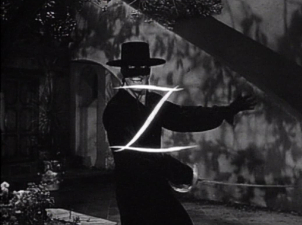
Zed

So zed is British and zee is American, yes? Well, that might be the case today, but once upon a time things were quite different...

Historically, both zed and zee were used pretty much interchangeably in both British and American English, alongside a whole host of other more outlandish names for the last (or rather, second last) letter of the alphabet, like izzard, uzzard, zad, shard and, our personal favourite, ezod. Of the two we’re talking about here, however, zed it by far the oldest, and takes its name via French and Latin from that of its Greek equivalent, zeta. Zed first appeared in print in the early 1400s, in a Middle English document that fairly straightforwardly described it as “þe laste lettre of þe a b c”—which is considerably nicer than what William Shakespeare had to say about it.

Zee, on the other hand, first appeared in print in a British language textbook—Thomas Lye’s New Spelling-book—in 1677. The name zee itself is thought to have originated as nothing more than a dialect variation of zed, probably influenced by the regular bee, cee, dee, ee pattern of much of the rest of the alphabet. But precisely how or why it became the predominant form in American English is unclear.

Thanks to his new calling card, everyone knew where Zubin Mehta had been

One widely-held theory is that because zed, as the older of the two, was the most widespread variation amongst British English speakers, during the Revolutionary War American English speakers looking to distance themselves from anything even vaguely British simply adopted the zee version as their own to make a stand—no matter how small it might seem—against British control. Alternatively, there mightn’t have been any political reasoning behind it at all, and the name might simply have come to the forefront as American English was forced to adapt and simplify as more and more colonists—coming from ever more distant countries, and speaking an ever more varied array of languages—began arriving in the New World.

Whatever the motivation might have been, by the mid-nineteenth century zee had become the standard form of the letter Z in the United States, and has remained so ever since. 

Though the campaign to resurrect ezod begins here...


7 March 2015

Ampersand

This:

is called an ampersand. It’s derived from a handwritten combination of the letters E and T, as in et, the Latin word for “and”. You might have already known that. But whether you did or you didn’t, the fact is that the swirly thing you usually call an “and sign” actually has a name. And if it has a name, then there’s a reason for it having that name. Which is where we come in.

Up until as recently as the mid 1900s, it was standard practice when reciting the alphabet to use the Latin phrase per se (literally “by itself”) to differentiate between individual letters of the alphabet—like A, I, and O—and single-character homographic words—like a, I and O.

So the letter A would be read as “A per se A”, to ensure it was distinguished from the indefinite article a. The letter I, similarly, would be “I per se I” to differentiate it from the pronoun I. And the letter O would be “O per se O” to differentiate it from the interjection O!

But because it was just another character representing just another unit of the English language, the symbol & was also once considered a letter of the alphabet, and was included after Z in twenty-seventh place. And so to differentiate & from the conjunction and, the alphabet once ended with a final “X, Y, Z, and & per se &”.


Eyetests were a lot easier in the 1920s

Sometime in the early nineteenth century, this “and per se and” ran together into a single word, and, eventually, the name ampersand was born. 


& that’s that.