_
Showing posts with label money. Show all posts

21 January 2016

Lek


If you’ve been keeping up with the new HH YouTube channel, chances are you’ve already seen the second video in our new #500Words project, which went online yesterday. Looking at the meanings and origins of 10 Words Spelled Q Without U, this time around one of the words included the qindarka or qintar, the name of a monetary unit used in Albanian:


Qindarka itself essentially means “a little part of 100” in Albanian—which, let’s face it, isn’t the most original name for a coin equal to 1 one-hundredth of something. But it’s what the qindarka is 1/100th of that’s more interesting. 

As mentioned in the video, the principal unit of currency in Albania is the Albanian lek, which takes its name from Alexander the Great. According to the history books, Alexander was born in Pella in Macedon (now in modern-day Greece) in 356BC. 


But in Albania, there’s an uncorroborated (and somewhat controversial) theory that Alexander—along with the likes of Aristotle, Pyrrhus, and Alexander’s father Phillip II—was born in Illyria, the region of ancient Europe that corresponds today to the Balkans peninsula and modern-day Albania. Was Alexander the Great really Albanian? Well, it’s doubtful. But the theory is nevertheless commemorated by the name of the Albanian currency.

But what about the rest of the world? Are there any more etymological gems jangling around the pockets and wallets of other countries?

Admittedly, the vast majority of world currencies take their names from fairly bland or predictable roots. Many refer to weights and measures, like the pound, which once referred to the value of one pound of silver, and the lira, which in turn takes its name from libra, the Latin word for “pound”. 


Likewise, both shekel and peso literally mean “weight” in Hebrew and Spanish (peso derives from the same etymological root as pendant, in the sense of something being weighed on a balance or set of scales), while more obscure entries in this category include the Kazakhstani tenge (which literally means “a set of scales”), and the Mauritanian ouguiya, which takes its name via French and Arabic from the Latin word for “ounce”, uncia. The Ukrainian hryvnia too is named for an ancient local unit of weight once used to measure precious metals.

Like the qindarka, other currencies have straightforward numerical roots, referring to fractions or portions of something larger. Dinar, the name of the main unit of currency in 11 different countries, is derived from the Latin denarius, literally “a tenth part.” Similarly, the cent, centime, and centesimo all have names referring to a fraction of 1/100th.

Some names are even less inspired: the Afghanistan afghani is divided into 100 smaller units called pul, which literally means “money”. The taka of Bangladesh takes its name from a local Bangla word meaning “cash”. The Vietnamese đồng and the manat of Azerbaijan and Turkmenistan also just mean “money”, while the ngultrum of Bhutan has a Dzongkha name literally meaning “money pieces.” The Japanese yen, Korean won and Chinese yuan all mean “round”, while the yuan has also been known as the renmimbi since 1949—which literally means “the people’s currency”

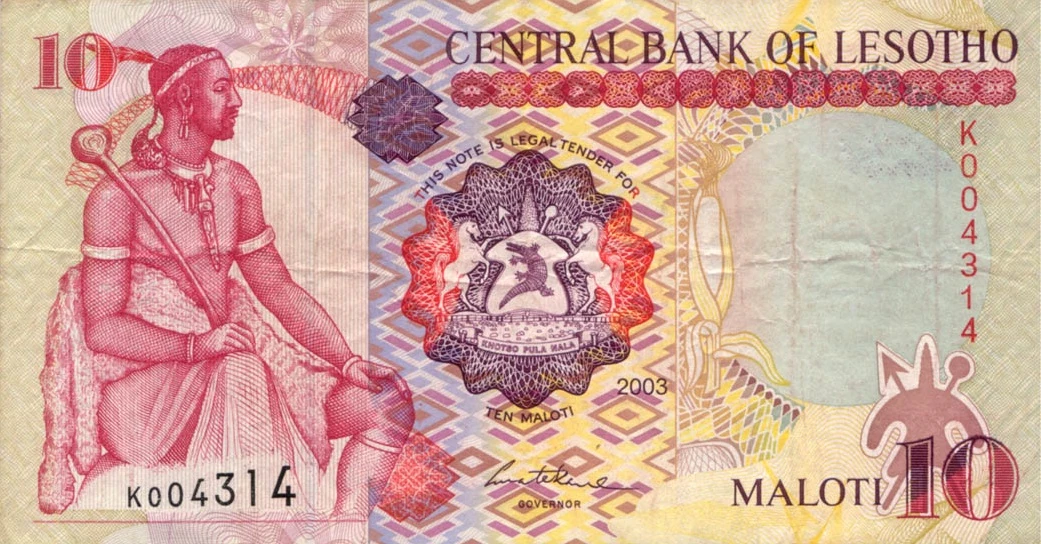
More imaginatively, some monetary units have geographical names, and refer either to their home country or to some notable feature therein. The loti of Lesotho, for instance, is named after the country’s Maloti Mountains. The Eritrean nakfa is named for the town of Nakfa that served as a based during the country’s fight for independence. And the kwanza, the unit of currency in four African countries, is thought to take its name from the River Cuanza that flows through Angola. 


By far the most famous geographical name, however, is the dollar, which traces its name back to the tiny Bohemian spa town of Joachimstal, now in the Czech Republic: the high-quality silver that was mined there was once used to make coins known as joachimstaler, which quickly shorted to thaler, and finally ended up in the New World as dollar via the colonial Dutch and Spanish. Incidentally, because these early coins were originally quite weighty, the colonial dollar was nicknamed the gourde in the 18th century slang, a name derived from a French word meaning “stupid” or “dull”—it lives on in the name of the currency of Haiti.

Like the dollar, some currencies take their names from their component metal or their means of manufacture. Ruble is thought to come from a Russian word meaning “to chop” or “hew,” possibly because the coins once had to be hewn from solid blocks of metal. The piaster or piastre—1/100th of an Egyptian, Lebanese, Sudanese or Syrian pound—takes its name from an Italian word, piastra, for a thin piece of metal. The Indian rupee, Indonesian rupiah, and Ethiopian birr all have names meaning “silver,” while the Kyrgyzstani and Uzbekistani som take their name from local words meaning “pure”, as in “pure gold”.

Stamps of royal authority are behind the names of the Czech koruna and all the various Scandinavian krones and krónas, all of which take their name from local words meaning “crown”. The Brazilian real, the Mauritanian ariary, and the rial of Iran, Yemen and Oman likewise mean “royal.”

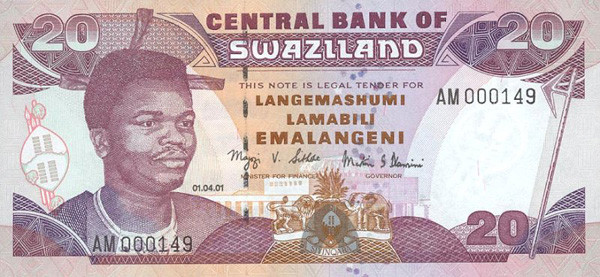
Many of the world’s krones and rials are stamped with crowns, and likewise some currencies take their names from the images that once decorated them. As well as the term sterling (literally a “little star”, a mark once stamped on pound-sterling coins) the Russian kopeck once bore a picture of a mounted knight, and derives from a Russian word meaning “lance”. The Hungarian forint (as well as the English and Dutch florin) derives from a coin once minted in Tuscany that was marked with a lily, and so was named for the Italian word for “little flower,” fiorino. The Bulagrian lev similarly means “lion,” and the Portuguese escudo (now replaced by the euro) means “shield”. Perhaps best of all in this category, however, is the Swaziland lilangeni, whose name simply means “a member of the royal family”.


Another currency replaced by the euro was the Greek drachma, whose name literally meant “handful”, or “as much as can be seized in one hand”. The dirham, used in both Morocco and the United Arab Emirates, is its etymological descendant. Along a similar path, the Georgian lari has a name literally meaning “hoard.” Former currencies are also name-checked in Ghana and the Pacific nation of Vanuatu, whose monetary units—the Ghanaian cedi and the Vanuatu vatu—mean “cowry shell” and “stone” respectively, both referring to items once used locally as money. (The cedi, incidentally, is divided into 100 pesewas, which literally means “a penny’s worth of gold dust”.) Similarly, the Guatemalan quetzal takes its name from the fact that the feathers of the tropical quetzal bird were also once so prized that they were used locally as money.

The lek also isn’t the only currency named in honour of someone. The Costa Rican colón, for instance, is named after Christopher Columbus. The Honduran lempira is said to take its name from a native local chief. The Tajikistani somoni is named in honour of the country’s founder, Ismail Samani, and the Venezuelan bolivar is named after Simón Bolívar.


Lastly, amongst the best of the world’s currency etymologies, are the dobra of São Tomé, which takes its name from a Portuguese word meaning “to fold” (which gives a whole new meaning to “folding money”), and the Zambian kwacha, which has a local Nyanja name meaning “dawn”—a reference to a former slogan of Zambian nationalism that promised a “new dawn of freedom.” In turn, it’s divided into 100 subunits called ngwee, which literally means “bright”.

Best of all however, is the Botswana pula, whose name was chosen by a public contest and literally means “rain” in the local Setswana language—in a country in which the Kalahari Desert accounts for 70% of the available land, rain, it seems, is just as valuable as money.





30 May 2015

Mortgage

If you’ve managed to escape the rack-renters and have found a place to call your own, there’s a good chance you’ll have (or, at least, will once have had but have now paid off, you lucky thing) a mortgage. In which case, it’ll likely come of no surprise to find out that a mortgage is literally a deal to the death:
Hmm. Suddenly, those rack-renters don’t look so bad.

The first half of the word mortgage is the Latin word for “death”, mors, which is the same root as in words like mortician, rigor mortis and immortal. The second half, however, is more obscure: gage is an old word for a pledge or a security that is put down “to ensure the performance of some action”, as the OED explains. 

English borrowed the word mortgage from French sometime around the fourteenth century, and it steadily all but replaced (outside of esoteric legal literature, at least) the earlier Latin term mortuum vadium—literally a “dead pledge”. That in turn was paired with a vivum vadium, or a “living pledge”, which referred to someone borrowing money from someone in exchange for their allowing them to use their lands or estate, usually at a nominal annual fee gleaned from the profits of the land, until the debtor was able to repay the money.

All in all then, a mortgage is indeed literally a “death pledge”—but fear not, homeowners, because it’s not you that’s doing the dying any time soon. Instead, it’s thought that the “death” involved in the mortgage’s ominous “death pledge” isn’t that of the debtor, but rather either the debt itself, or the estate against which the debt is secured. That is to say, by entering into a mortgage, you “pledge” to continue paying your debt until it is entirely cleared (and thereby figuratively “killed”), otherwise your ownership of your estate “dies” if you can’t pay up. 

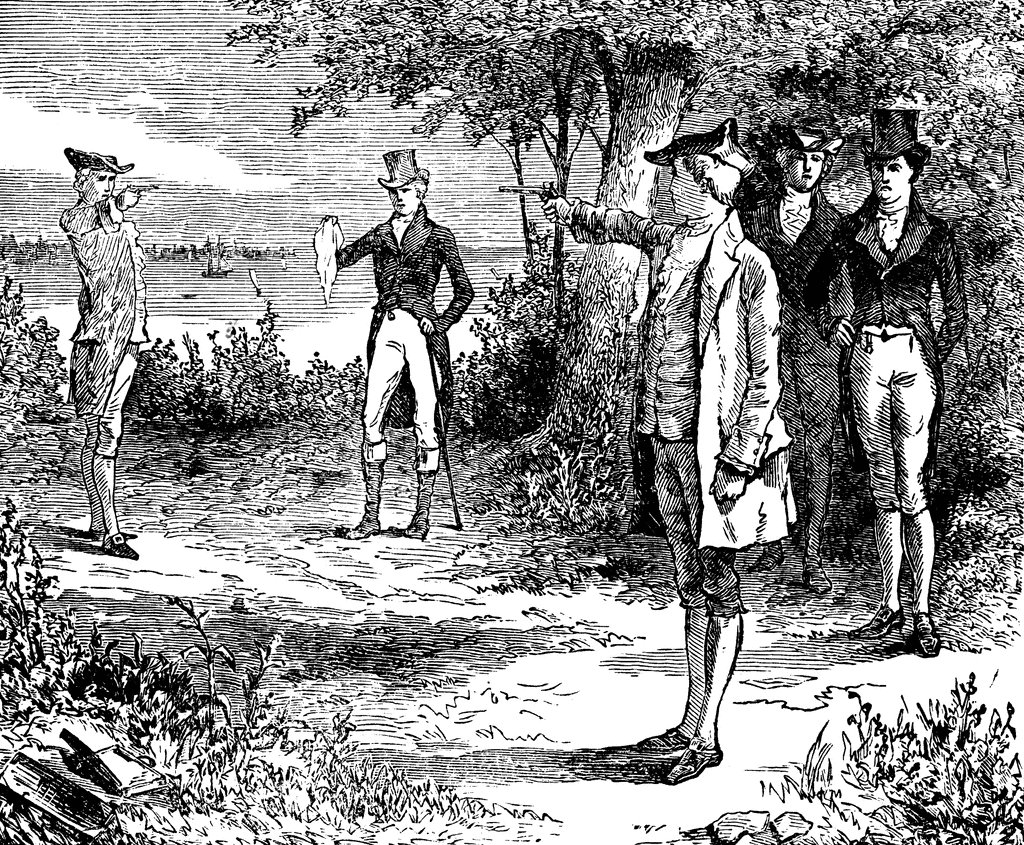
On a side note, the “gage” of mortgage was also once the name of a glove, or similar item, thrown contemptuously to the ground at the start of a conflict or duel to announce someone’s intention to fight—that’s also why you engage someone in battle. Might be worth taking one with you next time you have an appointment at the bank.
 
“You’re charging *how* much interest?”
 

10 April 2015

Vespasienne

We tweeted about toilets a lot today. Purely by coincidence, of course. But you know how it is—once you’ve done one, it’s hard not to do another. Though one of the things we’ve tweeted probably needs a little bit more explaining:
Urine tax. It’s all a bit too bizarre to leave open ended like that.

So, first things first: Titus Flavius Vespasian became Roman Emperor in AD69 after a brief period of turbulence—known as The Year of the Four Emperors—that was sparked by the Emperor Nero’s suicide the previous summer. Unfortunately, Nero’s successor, Galba, was assassinated after just seven months on the throne. (There we go talking about toilets again.) Then Galba’s successor, Otho, committed suicide after just ninety days in power, and in turn his successor, Vitellius, was overthrown and executed just eight months after that. Happily, Vespasian’s rule restored some much-needed stability to the Empire after a year of unrest, and he remained in power for the next decade—until he died trying to stand up during a fatal bout of diarrhoea in AD79. But we digress. That’s more than enough potty talk for now.

One of the high points of Vespasian’s rule was the construction of The Colosseum, which he commissioned in AD70, and which was completed one year after his death by his son and successor, Titus. One of the low points of his rule, however, was his introduction of the vectigal urinae, or “urine tax”. And we thought paying 30p to use the toilets at King’s Cross Station was bad. 

In Vespasian’s defence, the urine tax was actually the brainchild of Nero, who first introduced it sometime around AD60. But long after it had been repealed, it was Vespasian’s decision to reintroduce it. So why was he so keen to tax pee?

Well, chemically speaking, because the urea it contains can be used to produce ammonia, urine is actually quite a useful commodity—and the Romans knew it. They used urine to bleach fabric (including their gleaming white togas), to soak animal hides (making it easier to remove the hairs before tanning), and they even mixed it with powdered pumice to make toothpaste to whiten their teeth. 

So with all this potentially lucrative activity going on unchecked, Vespasian sought to levy his vectigal urinae onto anyone whose business involved collecting urine from the sewers and communal cesspools dotted around Rome—not exactly the most pleasant of job descriptions, but the fact that it was even worth taxing in the first place shows just how profitable a living it could be.


Roman togas: didn’t smell as clean as they looked

If you’re still a bit put off by the prospect of siphoning off other people’s urine and boiling your clothes in it, don’t worry—you’re in good company. When Titus, Vespasian’s son, first heard about the urine tax he was so disgusted by it that he complained in person to his father. In response, Vespasian simply held a gold coin up in front of his face, and asked him if he was just as revolted by it. Confused, Titus answered “non olet”, or “it does not smell”, to which Vespasian knowingly replied, “and yet, it comes from urine!” Recorded by the Roman historian Suetonius, this particular anecdote gave rise to an old Latin saying, pecunia non olet—or “cash doesn’t stink”—which is sometimes still used in English today to imply that money remains unaffected by how it’s earned.


But back to toilets—it was Vespasian’s advocacy of the urine tax that ultimately led to his name being attached to public toilets across the Roman Empire, and it’s through that that French public urinals eventually came to be known as vespasiennes. 

It gives a whole new meaning to the phrase “pay toilet”.


4 April 2015

Lottery

All this talk of competitions in the last few days got us thinking about lotteries.

The word lottery is a derivative of the Italian lotto adopted into English in the mid-sixteenth century. Lotto literally means a “lot” or portion of something in Italian—and so the entrants in a lottery are literally playing for their “lot” of the prize. 

It’s fair to say that this hardly ranks amongst the most surprising of etymologies, but a little more digging around in the origin of lottery nevertheless unearthed a bizarre tale from English history—and the surprising origin of an everyday expression.

According to the OED, the earliest record of the word lottery in English comes from 1567—when Queen Elizabeth I organised the English-speaking world’s first ever state lottery to raise funds for the “strength of the Realm and towards such other good publick works”. At the time, England was looking to expand its overseas trade, but in order to do that, ships, ports and harbours all needed to be built and upgraded. The cost of the project was understandably immense, but instead of raising taxes Elizabeth decided to organise a national lottery.


Hundreds of advertisements like the one above were printed and distributed across England, explaining that a total of 400,000 tickets were now on sale at the staggering price of ten shillings each—equivalent to more than £80 ($120) today. First prize, however, was a cool £5,000—or almost £1,200,000 ($1.8m) in 2015. 

As the leaflets explained, the prize was to be paid partly in cash, partly in gold and silver plate, and partly in other “sorts of merchaundizes”, including tapestries, wall hangings, and “good linnen cloth”. It was essentially an Elizabethan Prize Is Right, except that as an extra incentive everyone who bought a ticket was also given one week’s immunity from arrest for any crime barring murder, piracy or treason. Bob Barker never gave anybody that. 

Crucially, however, the leaflets also explained that Queen Elizabeth’s lottery was “without any blanckes”—and it’s this that leads us down another etymological path. 

At the time, it was standard practice when holding raffles and tombolas to have two “lot-pots”, one containing all the entrants’ tickets and the other containing a mixture of tickets bearing the prizes and a great deal more blank tickets, with nothing written on them at all. When the time came, one ticket would be drawn from each pot, but if your name was drawn along with a blank ticket you wouldn’t win anything—you would, quite literally, have drawn a blank. Elizabeth’s lottery temptingly did away with these frustrating “blanks”, so that whoever’s ticket was drawn first was guaranteed a prize. 

Over time, the phrase to draw a blank slipped into everyday use in English and gained the more general meaning of “to be unsuccessful” or “to search for something in vain”, and has remained in use in English ever since.

But all of this leaves one question unanswered: who won Elizabeth’s lottery? Sadly, the identity of the £5,000 winner is today unknown, but it’s fair to say that at the time it would have been a truly life changing prize. It makes giving away a few books seem pretty boring really... 


Elizabeth I: Never knowingly underdressed


28 February 2015

Handicap

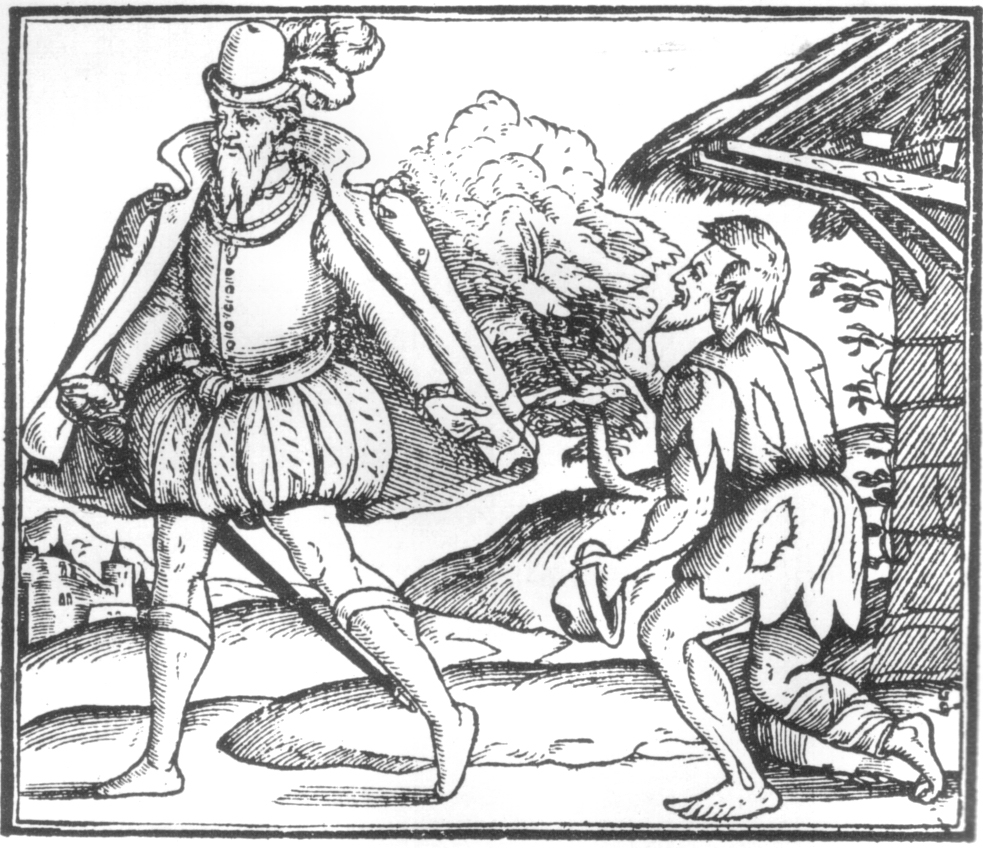
There’s an old story that claims the word handicap derives from wounded soldiers returning home from war with injuries preventing them from returning to their day jobs, and leaving them with no option other than to beg on the streets, their caps literally held in their hands to catch the pennies of passers-by.

Nothing says wealth and sophistication better than a puffball skirt

As ingenious a story as this is, it is of course completely untrue. (Not least because this would have likely given us the word “capihand” rather than handicap.) In fact the true origin of the word lies in an old method of trading goods called “hand-in-cap”, the origins of which date back as far as the fourteenth century at least.

Imagine there are two traders who want to exchange goods, but who are unsure about the relative value of the items they’re looking to swap. In a “hand-in-cap” trade, they would turn to a third party—essentially, a kind of umpire—who would take a look at the items up for exchange and assess their value. If he thought there were any kind of discrepancy between the two, he’d come up with a price (called the “odds”, or the “boot”) that the owner of the cheaper lot would then have to add into the exchange to make it fair.

Next, out comes the cap. The umpire, having given his assessment of the exchange, would then hold out his upturned cap. Both of the traders would take a few loose coins from their pockets, and go to drop them in it. If they agreed to the exchange, they’d drop their money into the cap, but if they didn’t, they’d keep it in their hands.

If both traders agreed, the exchange would go ahead as planned and the umpire would get to keep whatever change had been thrown in the cap as his fee. If neither of the traders agreed, the umpire would get nothing. And if only one agreed, he would get to retrieve his cash from the cap, the umpire would still get nothing, and no trade would go ahead. 

Whatever the outcome, the umpire was always incentivised to come up with as fair exchange as possible, and the trade would only go ahead once everyone was happy. 

So how does an obscure mediaeval trading system lead us to the word handicap as we have it today? Well, it was the idea of assessing the worth of something, just as the umpire did, that led to the idea of “handicap” horse races, in which an adjudicator is brought in to assess the quality of the horses taking part. Stronger horses would be laden down with weights to hamper their speed and make for a fairer race overall. And it’s this sense of something that hampers or encumbers an ordinary activity that we’ve retained in the language today.