_

17 March 2016

10 Words Derived From Irish

March 17 is St Patrick’s Day, so in honour of that this week on the HaggardHawks YouTube channel we’re looking at 10 Words Derived From Irish.

A full list of words the English language owes to Irish would range from the fairly obvious (leprechaun, banshee) to the fairly surprising (trousers, Tory, slob), with a few etymological question marks thrown in for good measure. One of these is hooligan, which we’ve looked at on the blog before, and another, which we’ve included in the video, is kibosh.

People have been bringing things to a halt by putting the kibosh on them since the early nineteenth century. Although we’ve included it here in our list of ten Irish words, the theory that it derives from an old Irish expression, caidhpín bháis, for an judge’s black “cap of death” is by no means conclusive—competing theories variously attribute the word to everything from Yiddish to Scots, while others suggest it is and always has been a purely English word.

So if not derived from Irish, why do we put the kibosh on things? Well one theory is that the ki- of kibosh is the same as in words like kersplash! and kaboom!—in other words, it’s just there to emphasise the “bosh” (i.e. the stout hit or blow) that comes after it. Or perhaps kibosh is derived from an even earlier sound-alike, like caboshed (a heraldic term for an animal shown on a coat of arms from the neck up only), kye-boots (a Scots English word for a dairy cow’s shackles), or even courbache (the French name for an Arabian rhinoceros-hide horsewhip). Or maybe it’s from the Yiddish word for “eighteen coins”, which might once have been a slang word for a throwaway amount of money? (Shameless plug: there’s a bit more on that in the HaggardHawks factbook...)

In truth, etymologists aren’t entire surely, but we’re signing up to the Irish theory here—alongside nine other fascinating Irish etymologies… 


14 March 2016

10 Words Derived From Numbers

Monday March 14 is Pi Day. That’s because when written out as numbers “March 14” becomes “3.14”, the first few digits of pi, 3.1415926… So in honour of the most mathematical day of the year, in this week’s #500Words video over on the HaggardHawks YouTube channel we’re looking at 10 Words Derived From Numbers.

You probably know a great many more words that fall under this category than you might think, from unicycle, bicycle and tricycle (“one-”, “two-” and “three-wheels” in Latin) to quartet and quintet (from the Latin for “fifth” and “sixth”), hexagon (“six-cornered” in Greek), heptathlon (Greek for “seven-contest”), and October, November and December (from the Latin for “eighth”, “ninth”, and “tenth”, as these were originally the eighth, ninth, and tenth months of the Roman year).

Alongside a handful of words you’ll recognise, however, we’re looking at some much less familiar words (like Septentrion and khamsin), as well as a few numerical word origins that you might not have known—including a part of the body named for the fact that it is typically 12 finger-breadths long, and a time of the day that now means three hours earlier than it used to


10 March 2016

Histriomastix

Late on Monday night (or early on Tuesday morning, depending on where you’re reading this…) a brilliant word quietly crept onto the @HaggardHawks Twitter feed:


…and I thought you might like to know a bit more about it.

A histriomastix is indeed a theatre critic (or a “severe critic of playwrights” as this dictionary defines it), but that’s putting it lightly: the word histriomastix literally means “scourge of actors”, and the suffix –mastix derives from an Ancient Greek word for a horsewhip. There’s a reason why this word has such abrasive connotations, however: it was invented by someone who really, really, hated actors. 

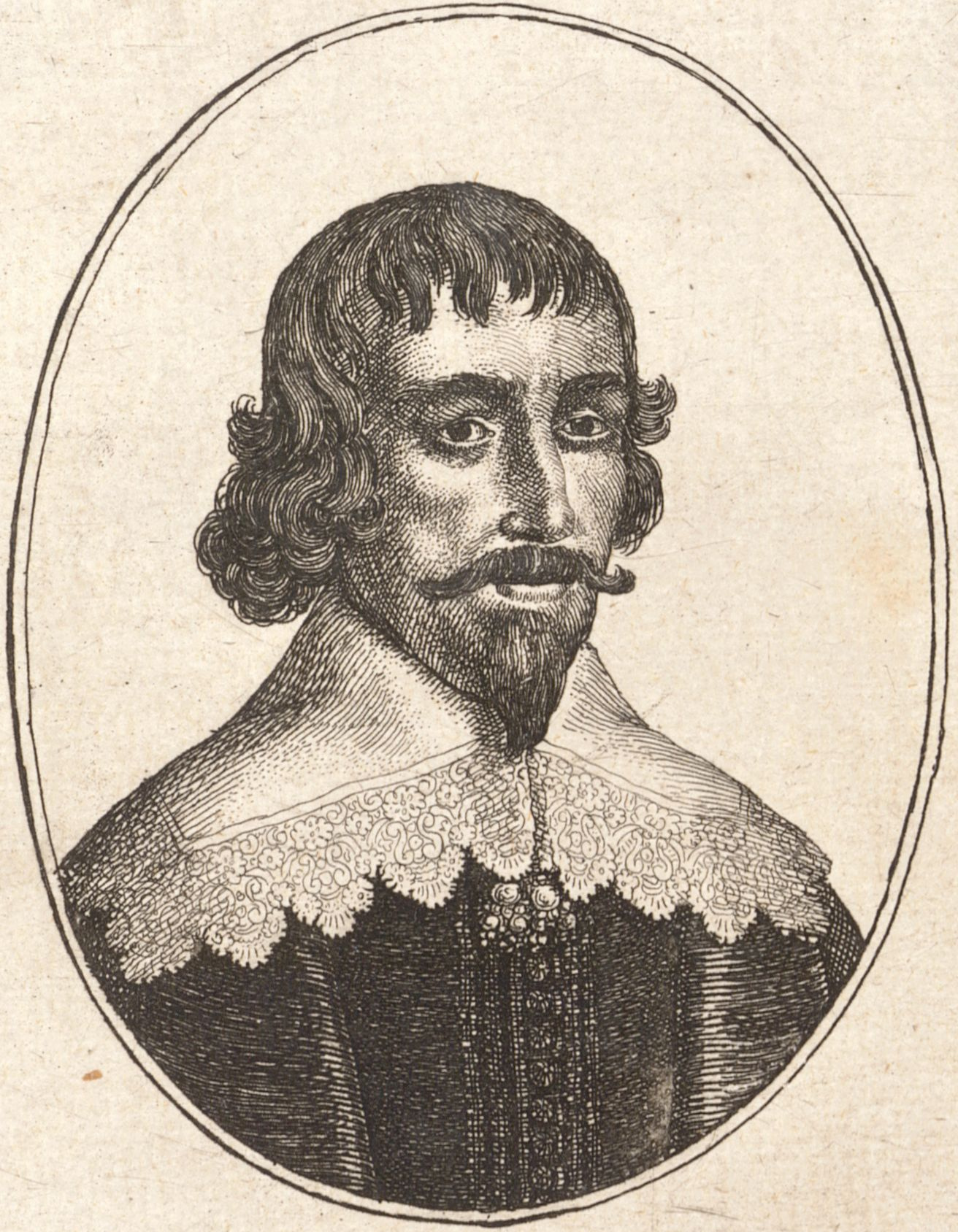
His name was William Prynne, a seventeenth century English lawyer, pamphleteer, and notoriously hard-nosed Puritan. Born in Somerset in 1600 and educated at Oxford, it’s thought that Prynne was first introduced to Puritanism during his training to become a barrister at London’s Lincoln Inn in the mid-1620s; he published his first Puritanical literature the year before he was called to the Bar in 1628.

Over the next four decades, Prynne published more than 200 books and pamphlets, the majority of which outlined his stringent views on everything from Christian redemption (some people were predestined never to be redeemed by Christ’s atonement on the Cross, he believed) to the length of a person’s hair (men’s hair should be kept short, women’s should be kept long, and anything in between was “unseemly and unlawful to Christians”). 

Like all Puritans, he railed against any form of celebration or revelry, and so out went singing, dancing, music, and Christmas, which was dismissed as derivative of the Roman Bacchanalia, a fact that “should cause all pious Christians eternally to abominate [it]”. But as unpopular and uncompromising as Prynne’s opinions were, none landed him in as much trouble as when he turned his reproachful attention to one group in particular: actors.

Prynne saw acting and masquerading as no different from any other kind of revelry, and in 1632 published a rambling 1,000-page essay of unadulterated condemnation to explain his stance. Entitled Histriomastix: The Player’s Scourge or Actor’s Tragedy, in it Prynne attacked almost every facet of the theatre, from the actors themselves (“sinful, heathenish, lewd, ungodly spectacles”, “pernicious corruptions”, “intolerable mischiefs to churches, to republics, to the manners, minds, and souls of men”) to their costumes (“a confluence of all whorish, immodest, lust-provoking attires … sufficient to excite a very hell of noisome lusts in the most mortified actors’ and spectators’ bowels”). 

Shakespeare’s trick of having men and boys dressing as women to play female characters—“representing the persons of lewd notorious strumpets”, according to Prynne—was “undoubtedly sinful, yea, utterly unlawful to Christians”. The plays themselves were written off as “deceitful fictions, which would quickly teach men to cheat, to steal, to play hypocrites and dissemblers”. And the “obscene, lascivious lust-provoking songs and poems” performed in them were “abominable unto Christians” as they risked “enflaming the outrageous lusts” of the audience, who are “transported by them to a Mahometan paradise or ecstasy of uncleanness”. Well, quite.

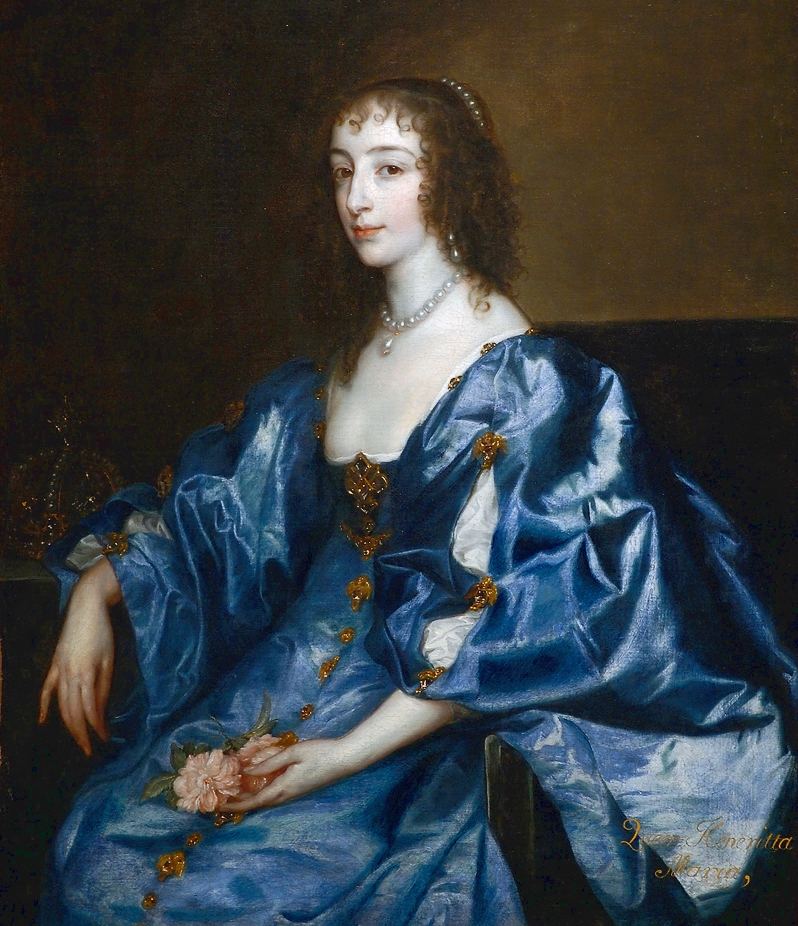
Each to their own, of course, but in this instance there was one small problem with Prynne’s vitriol: alongside her duties as queen consort, the reigning King Charles I’s wife Henrietta Maria liked nothing better than donning something from her confluence of all whorish attires and performing in a good old deceitful fiction. Put another way, she was an actress.

Consequently, Prynne’s Histriomastix soon attracted the attention of the royal household, and his outspoken opinions on the theatre were soon being spun as a less-than-subtle slight on Queen Henrietta herself. The Archbishop of Canterbury, William Laud, and the Attorney-General, William Noy, had Prynne arrested and thrown in the Tower of London, and on 17 February 1634 he was sentenced to life imprisonment, fined an eye-watering £5,000 (equivalent to £400,000 today), stripped of his Oxford degree, and, just when things could scarcely get any worse, ordered to be pilloried and have both his ears cut off. The case understandably caused a sensation—and amid all the brouhaha, the English language earned a new word for a harsh and uncompromising theatrical critic. 

But not even that insane catalogue of punishments was enough to stop Prynne. Thrown back into the Tower, he continued his writing, this time turning his attention away from the theatre and towards the moderate anti-Puritan clergy who had landed him in jail. In 1637, he found himself again in hot water after publishing an attack on the Bishop of Norwich. For a second time he was handed a life sentence, fined another £5,000, pilloried and, for what it was worth, sentenced to have what little remained of his ears again cut off. This time around he was also branded on both sides of his face with the letters “SL”, which according to the courts was to show everyone that he was “seditious libeller” —but Prynne preferred to tell people that it stood for stigmata laudus, or “the marks of praise”. 

Remarkably, Prynne’s luck suddenly changed in 1640, when the Long Parliament—convened by King Charles to fund his on-going battles against rebellion in Scotland—overturned his conviction, released him from the Tower, and reinstated all his legal qualifications (which he soon put to good work prosecuting Archbishop Laud when he was later arrested and tried for treason; Laud was eventually executed in 1645). Prynne also continued his pamphleteering, but as Charles I’s monarchy collapsed and England was thrown into Civil War, his condemnatory attention soon turned to Oliver Cromwell.

Although Cromwell himself was a Puritan, Prynne took exception to his and his supporters’ interpretation of radical Puritanism. He despised those championing the king’s execution, was suspicious of Cromwell’s republican army, and ultimately found himself supporting the Royalist cause. After Cromwell’s downfall and the Restoration of the monarchy in 1660, Prynne’s stance was rewarded by Charles II with a seat in Parliament—and, ironically, the position of Keeper of the Records of the Tower of London. 

He died in 1669, his hatred of actors and his invention of the word histriomastix earning him a place in the dictionary. It’s quite a life story, though—and would make a great play. Kickstarter, anyone? 


3 March 2016

10 Words From Victorian Slang

If you’ve been following the new @HaggardHawks YouTube channel so far this year, you might remember that a few weeks ago we posted a list of 10 Words Derived From Dickens Characters, just in time for Dickens’ 204th birthday on February 7. And following on from that, this week as part of our #500Words series we’re heading back to the nineteenth century with 10 Words From Victorian Slang.

Nineteenth century slang crops up fairly regularly on the @HaggardHawks Twitter feed (indeed a few choice examples ended up being among the most popular tweets of 2015), but we’ve picked ten of the best and most interesting examples for this week’s video—from blue fire, the perfect theatrical term for something amazing or spectacular, to collieshangie, a word for a noisy argument that’s so Victorian it was even used by Queen Victoria.

Although we’re labelling it a Victorian slang term here (as that’s when it first gained any wider currency, and is often listed as such in slang dictionaries), the word collieshangie itself actually has its origins in eighteenth-century Scotland: it probably began life as culleshnagee or cullyshang, an old Scots dialect word presumed to be a compound of collie (a sheepdog) and shangie, a word used for both a noisy quarrel, and a restraint attached to a dog’s tail to make it behave. Either way, collieshangie can fairly confidently be said to derive from one very angry dog. 


24 February 2016

10 Word Origin Stories That Are Completely Untrue

Often when the origin of a word isn’t known—and, just as often, even when it is—an entirely fictitious story emerges that purports to explain where the word in question came from. Typically, these stories provide neater, funnier, cleverer or more straightforward accounts than any real-life word etymology ever could, and so remain enduring popular—despite, however, being completely untrue… 

This week on the HaggardHawks YouTube channel, out #500Words project is turning its attention to debunking 10 of these word origin myths, from backronyms like posh, cabal and golf to a bird supposedly named for his nesting sites (that in fact takes its name from the colour of its behind) and a bird that Napoleon thought was only good for horse food (that in fact takes its name from a flatulent goblin). You have been warned—here are 10 Word Origins Stories That Are Completely Untrue