_
Showing posts with label Victorian era. Show all posts

8 September 2016

10 First Names Used As Words | 500 Words Ep. 35


You may remember this fact from the HH Twitter feed a while back:
...which led to a bit more explanation here on the blog: the name Rebecca was used (in allusion to a story from the Old Testament) for a series of toll gate protests in Wales in the mid nineteenth century. And it’s that story again that kickstarts this week’s YouTube video, which looks at the origins and meanings behind 10 first names that can be used as words in their own right.


One name that didn’t make the final cut here, however, is John.

John has a number of different uses in English, ranging from a toilet to a signature, a cuckolded husband to an unidentified corpse, and from a policeman to a priest, to the client of a prostitute. Blimey, definitions don’t get much more varied than those. 

In the majority of these cases, it’s the sheer commonality (and, therefore, the familiarity or anonymity) of the name John that is the root of the meaning: John was the most popular male first name in American every year since records began in the nineteenth century through to 1924 (and it remained in the top 10 until 1987), while in the UK 5.8 million men have been named John since 1530, and either it or William held the top spot among British men from the mid-1500s right through to the mid-1900s.

The use of john as another name for a person’s signature, however, owes its origin to John Hancock, the Governor of Massachusetts whose sign-manual gloriously outdoes everybody else’s on the Declaration of Independence (and which you can see—or rather, fail to miss—at the top of this page).

As another name for a toilet, meanwhile, john is probably an alteration of jakes or Jacques, a French borrowing that has been used as a euphemism for the smallest room in the house since the fifteenth century at least. And as another name for a detective, john has its roots in the French word for a policeman, gendarme.

The term gendarme (which itself began life as gens d’armes, or “men of arms”) was originally the name of a mounted soldier or infantryman, and it was in this sense that the word was first borrowed into English in the sixteenth century. It wasn’t until the first formal police forces began to be organized in the 1800s that the word gained its modern sense in its native French—and, for that matter, in English, where it quickly morphed into the humorous form johndarm in early Victorian slang:
“John Darm! Who’s he?” “What, don’t you know?! In Paris he is all the go; Like money here,—he’s every thing; A demigod—at least a king! You cannot fight, you cannot drink, Nor have a spree, nor hardly think, For fear you should create a charm, To conjure up the fiend John Darm! 
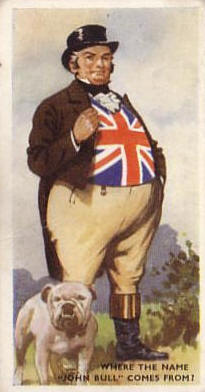
That’s an extract from John Darm, a song first published in 1823 and written by a nineteenth century “writer of verse” named John Ogden, recounting a trip taken by John Bull (the kedge-bellied personification of England and the English) to France. Once there, Bull attends a theatre, gets into a fight with a number of audience members, is arrested by “John Darm”, and thrown into prison. 

The trip ends with the two on better terms, however, with John Bull concluding:

Says I, “To-morrow home I go;
One Frenchman I’d not leave my foe;
John Bull, believe me, meant no harm—
Let’s part in peace—farewell John Darm!”

Ogden’s song (which was apparently a follow up to an earlier comic poem, Mounseer Nongtongpaw, once falsely attributed to Frankenstein author Mary Shelley) provides us with the earliest record of the name john as a nickname for a policeman that we know about. And although the word’s French origins and its connection to the gendarmerie has long since vanished into the haze of language history, the word itself has remained in use to this day.

3 March 2016

10 Words From Victorian Slang

If you’ve been following the new @HaggardHawks YouTube channel so far this year, you might remember that a few weeks ago we posted a list of 10 Words Derived From Dickens Characters, just in time for Dickens’ 204th birthday on February 7. And following on from that, this week as part of our #500Words series we’re heading back to the nineteenth century with 10 Words From Victorian Slang.

Nineteenth century slang crops up fairly regularly on the @HaggardHawks Twitter feed (indeed a few choice examples ended up being among the most popular tweets of 2015), but we’ve picked ten of the best and most interesting examples for this week’s video—from blue fire, the perfect theatrical term for something amazing or spectacular, to collieshangie, a word for a noisy argument that’s so Victorian it was even used by Queen Victoria.

Although we’re labelling it a Victorian slang term here (as that’s when it first gained any wider currency, and is often listed as such in slang dictionaries), the word collieshangie itself actually has its origins in eighteenth-century Scotland: it probably began life as culleshnagee or cullyshang, an old Scots dialect word presumed to be a compound of collie (a sheepdog) and shangie, a word used for both a noisy quarrel, and a restraint attached to a dog’s tail to make it behave. Either way, collieshangie can fairly confidently be said to derive from one very angry dog. 


10 February 2016

Uranus

Before we begin, let’s get a few things out of the way. The noxious atmosphere around Uranus could kill a man. Uranus has a circumference of 100,000 miles. Scientists are looking at a black hole near Uranus. What are those two circular objects either side of Uranus? Ass-teroids, of course. If you got through that without laughing, then we’re good to go.

So. The other day, one of those stop-you-in-your-tracks facts cropped up on the @HaggardHawks Twitter feed:


But this really is too bizarre a fact to leave unexplained:


…so your wish is my command.

The discovery of Uranus (stop sniggering, you at the back) is credited to the German-born English astronomer William Herschel in 1781. Although it had been observed by scientists and astronomers for centuries, Uranus had always been mistaken for a star, and right up to Herschel’s discovery it was still being classed as 34 Tauri, a minor star in the constellation Taurus. Even Herschel himself initially believed he had spotted a comet rather than a planet, after noting that an object he had been looking at from his observatory in Bath had changed position in the sky over a series of nights.

Herschel announced his discovery in March 1781. As word of his new “comet” spread, astronomers all across Europe began to take note and observe it themselves. Soon, enough data had been compiled to plot its apparent trajectory—which, to everyone’s surprise, appeared to be an almost perfect circular orbit around the Sun. Herschel’s discovery was no comet.

Full colour photo of Uranus. Stop laughing.

By 1783, it had become universally acknowledged that Herschel’s discovery must surely be a planet—moreover, it was the first planet ever discovered by telescope, and the first new planet added to our Solar System in modern history. It was a truly monumental discovery, and one that earned Herschel an annual salary of £200 (equivalent to £27,000/$40,000 today) from King George III (on the condition that he move his observatory from Bath to Windsor, to be closer to the royal household), as well as the never-to-be-repeated title of Court Astronomer to The King.

But with the existence of a new planet confirmed, a pressing question soon emerged: what on Earth should it be called?

The Astronomer Royal, Nevil Maskelyne, wrote to Herschel asking him “to do the astronomical world the favour” and “give a name to your planet,” which, he continued, “is entirely your own, [and] which we are so much obliged to you for the discovery of.” In honour of his new financial patron, Herschel plumped for the only name he saw fit: Georgium Sidus, or “George’s Star.” He wrote to the Royal Society:

In the fabulous ages of ancient times the appellations of Mercury, Venus, Mars, Jupiter and Saturn were given to the Planets, as being the names of their principal heroes and divinities… The first consideration of any particular event, or remarkable incident, seems to be its chronology: if in any future age it should be asked, when this last-found Planet was discovered? It would be a very satisfactory answer to say, “In the reign of King George the Third”.

The seventh planet from the Sun, ultimately, was to be called George. But the response to Herschel’s suggestion was far from encouraging.

Outside of Europe, astronomers were wary of using a such an explicitly “British” name, especially given that it had taken an international collaboration to prove its status as a planet. Consequently, despite Maskelyne specifying that Herschel’s discovery and his choice of name were “entirely his own”, George failed to gain any widespread use or permanency. The name Georgium Sidus effectively became a placeholder, and over the years that followed astronomers across Europe began utilising and pitching their own choices and suggestions.

One popular choice was simply Herschel, a name honouring its discoverer. The Swedish astronomer Erik Prosperin ironically opted for Neptune (now the name of the eighth planet, discovered in 1846). But eventually a clear choice emerged—namely the German astronomer Johann Elert Bode’s suggestion, Uranus.

Bode had been one of the European astronomers who had calculated Uranus’ orbit, lending weight to the idea that Herschel’s discovery was a planet not a star. He suggested the name Uranus as it not only maintained the classical and mythological theme set out by the other six planets, but fittingly Uranus was the Greek god of the sky. Moreover, just as Saturn had been the father of Jupiter, Uranus was the father of Saturn, thereby creating a mythological family tree in the heavens.

Bose’s choice quickly gained momentum, and was reinforced by the German chemist Martin Klaproth in 1789, who named his famous discovery—the chemical element uranium—in support of Bose’s suggestion.

Out of deference to Herschel, however, it took another 60 years for the name Uranus to be universally acknowledged by the scientific community, when, in 1850, the official astronomical almanac published by the Royal Greenwich Observatory in London finally abandoned Herschel’s Georgium Sidus and in favour of Uranus.


5 September 2015

Glasgow magistrate

Earlier this week, this popped up on HaggardHawks:
And, as so often happens with this kind of thing, there’s a brilliant—if a fairly sketchy—story behind it. Unlike a lot of slang expressions, the Glasgow magistrate has found its way into the OED, who have traced it back to 1833. But the OED also cites a 1950 issue of The Scots Magazine, which offers this tentative explanation of how the phrase came about:
Herring were cured there by Walter Gibson, a merchant of Glasgow and Provost of that city in 1688, and it is perhaps because of Provost Gibson that salt herring acquired their nickname of “Glasgow Magistrates.”
Walter Gibson indeed helped to found Glasgow’s lucrative herring industry in the late 1600s, and he did become provost (chief magistrate) of Glasgow in 1688. But is he really the origin of the term? And is the establishment of a herring-curing factory really the best story I could tell you? No. No it’s not.


The problem is that if Gibson were the original Glasgow magistrate, we’d have to accept a century-and-a-half gap between his appointment as provost in 1688 and the earliest record of the phrase in print in 1833. That’s not impossible of course (slang expressions are used relatively rarely in print, after all) but it nevertheless casts doubt over the Walter Gibson theory—and it becomes a lot more doubtful given the other explanation on offer. 

In the revised edition of his Dictionary of Phrase and Fable in 1894, Ebenezer Cobham Brewer included the Glasgow magistrate (alongside the Yarmouth capon and the Billingsgate pheasant) as a nickname for a salted herring. He also offered this brief yet brilliant account as an etymological explanation:
When George IV visited Glasgow, some wag placed a salt herring on the iron guard of the carriage of a well-known magistrate, who formed one of the deputation to receive him.
Where or how Brewer came across this story isn’t clear, but he goes on to explain:
I remember a similar joke played on a magistrate because he said, during a time of great scarcity, he wondered why the poor did not eat salt herrings, which he himself found very appetising.
So is this tale of a local Glaswegian scallywag secreting a herring onto a processional carriage true? 

Well, by name-checking George IV, Brewer is certainly proposing a date that seems to fit with the evidence: George took to the throne in 1820 and reigned for the next ten years, so written evidence dating from around 1833 is perfectly reasonable. There is, however, a problem: King George only visited Scotland once in his ten-year reign—and he never set foot in Glasgow.

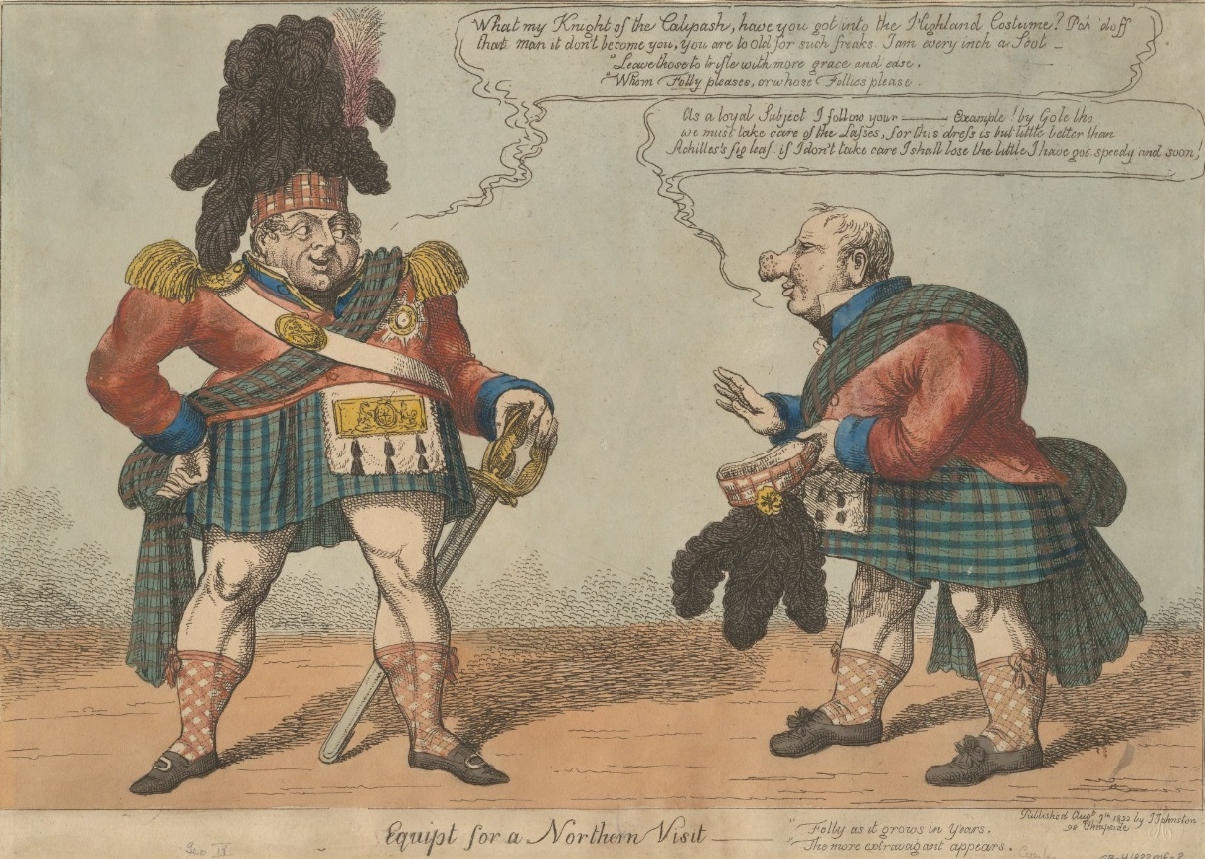
In 1822, George IV became the first Hanoverian monarch—as well as the first reigning monarch in nearly 200 years—to visit Scotland when he stayed in Edinburgh for three weeks in mid August. During that time, the king attended all sorts of predictably glamorous pageants and processions (all stage-managed by Sir Walter Scott, no less) and gamely managed to make a complete fool of himself by opting to wear bright pink stockings under a criminally undersized kilt. At no point, however, did he travel across to Glasgow. 

So does this blow Brewer’s fishy theory out of the water? Perhaps not. It’s thought that some 300,000 Scottish people—one in seven of the entire population at the time—turned out to see the various events put on for the royal visit in Edinburgh in 1822, and a large proportion of those had made the 40-mile trip from Glasgow, reportedly leaving the city all but deserted. 


So could it be that Brewer’s Glaswegian prankster was in fact among the crowds in Edinburgh, rather than his home city? It’s not only plausible, but it’s a much better story... 


13 August 2015

Ananym

A few days ago over on @HaggardHawks, I posted this:
Which raised this perfectly appropriate question:
The short answer is, yes, there is. But the long answer is—well, much more interesting than that.

So, first things first: the ana– of ananym is the Ancient Greek word ana, which was variously used to mean “back”, “up”, “on”, “around”, “towards”, “throughout”, and just about every other preposition you can imagine. It’s the same root we find in words like anagram, analogy, and analysis, as well as in less obvious places like Anabaptist (literally “one who baptizes again”) and Anastasia (which means “resurrection”).

The suffix –nym comes from the Greek word for “name”, onyma, which is same the root as in much more familiar words like synonym, acronym, pseudonym and anonymous. So put together, an ananym is literally a “back-name”—a word formed by reversing another.

That’s all well and good, of course, but what about examples?

Well, admittedly the majority of ananyms in use today tend either to be proper nouns or fictional inventions: think of Oprah Winfrey’s Harpo Corporation, Samuel Butler’s Erewhon (a partially-reversed “nowhere”), or Dylan Thomas’s Under Milk Wood, which was set in the fictitious Welsh town of “Llareggub” (you can work that one out yourself).

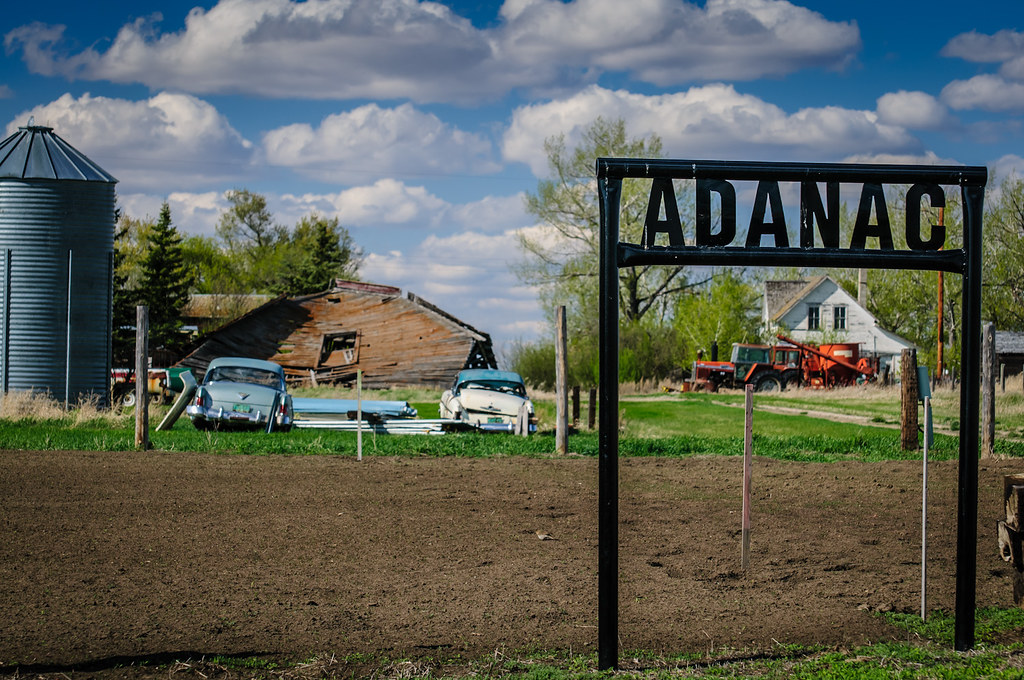
There are towns called Adanac in Canada, and Saxet in Texas. The girls’ names Segna and Nevaeh are “Agnes” and “heaven” spelled backwards. Dioretsa is the fantastically fitting name of an asteroid with an appropriately retrograde orbit. And if you’ve ever thought searching the Internet was too straightforward, why not try searching for everything backwards over on elgooG?

None of those will find its way into a dictionary any time soon, of course, but that’s not to say that a handful of ananyms haven’t already done so. Mho, for instance, is the name of a unit of electrical conductance, coined in opposition to the ohm, a unit of resistance. Along similar lines, physicists have at their disposal units called the yrneh (a unit of inverse electrical inductance, derived from the henry) and the daraf (a measure of electric elastance, as opposed to the farad, a measure of electrical capacitance). And not wanting to be outdone by the Michael Faradays of this world, in 1921 the US engineer Frank Bunker Gilbreth invented the therblig, a unit of work in a time-and-motion study. (Shameless plug—there’s more about these in the HaggardHawks fact book…)

By far the most familiar example of an ananymic word, however, is yob, which has been in use since the mid-nineteenth century to refer to what might otherwise be called a hooligan or a ruffian. It’s earliest record comes from a Dictionary of Modern Slang, Cant, and Vulgar Words, compiled by the English lexicographer John Camden Hotton in 1859.

The full title of Hotton’s dictionary (which is way too long to reproduce here) goes on to explain that it contains “glossaries of two secret languages spoken by the wandering tribes of London”: the two “languages” in question are Cockney rhyming slang and “back slang”, a much less familiar variety of Victorian English slang that, as its name suggests, involved reversing the letters of everyday words and phrases to form an entirely new (and fairly unintelligible) vocabulary. In other words, back slang it was a language of ananyms.

Like rhyming slang, back slang is thought to have first emerged in the early 1800s. In his dictionary, Hotton describes it as “the secret language of the costermongers”, suggesting that it probably originated among London street traders as a means of communicating exclusively with one another, presumably to the bewilderment of their customers.

So in London back slang, a cabbage was an edgabac, an orange was an edgenaro, and pinurt pots were turnip tops. An exis-yeneps was sixpence, a rouf-yeneps was fourpence, and earth gens was three shillings. After a good day’s trading, one seller might comment that he’d made a doogheno hit, or a “good hit” (“implying that he did well at market, or sold out with good profit,” according to Hotton), after which he might treat himself to a top o’reeb (a “pot of beer”), if not a track (a “quart”)—and end up quite kennurd (“drunk”), or at least flatch kennurd (“half-drunk”).

And second from last on Hotton’s list is yob, listed as Victorian back slang for “boy”:


Although linguistic techniques like back slang have remained in use ever since (and are by no means exclusive to English), aside from yob you’d be hard-pushed to find anyone who still uses any of the other entries on Hotton’s list, or to find any similar terms listed in a modern dictionary. 

Contrast that with rhyming slang, which has contributed considerably more to our language than meets the mince-pies: if you’ve ever used your loaf (loaf of bread = “bead”), 86ed something (eighty-six = “nix”), took the mickey out of someone (Mickey Bliss = “take the piss”), or called them a berk (Berkley Hunt = look that one up yourself), then you’ve used rhyming slang, whether you’ve realized it or not.

Os smynana thgim eb erar, tub er’yeht yb on snaem tcnitxe.