_
Showing posts with label profanity. Show all posts

1 April 2016

Cacafuego


There’s really no nice way of putting this, but the fact is that poop crops up more often than it duly should on this blog. And thanks to a tweet from the HH feed the other day, we’re going back down that way again now:


There’s no denying that cacafuego is a brilliant (and unavoidably usefulword, but is it really genuine? Or, to put it another way:


Wow, imagine if that were true. A plot twist to put M Night Shyamalan to shame. But let’s not get bogged down in piss halfway through a blog about shit, so to speak.

No prizes for guessing that cacafuego was borrowed into English from Spanish, and combines the verb cacar (modern Spanish cagar, “to void excrement”) with fuego, “fire”. It first appeared in English as another word for a blustering braggart in the early 1600s, but we can be fairly sure that it was in use before then thanks to the somewhat unlikely-sounding involvement of Sir Francis Drake.


Sir Francis Drake: looking a little ruff
In 1578, part-way through his circumnavigation of the Earth, Drake rounded Cape Horn and entered the Pacific Ocean, hot on the heels of a 120-tonne Spanish galleon called the Nuestra Señora that he had heard was laden with a rich cargo of silver and jewels from the Spanish colonies. And he wanted it.

Sailing up the Pacific coast of South America, Drake’s Golden Hind caught up with the Nuestra Señora off the coast of Ecuador. Knowing that an attack made under the cover of darkness was his best bet, he slowed his progress by tying some of his ship’s store of wine to the stern and throwing it overboard, so that by the time the Hind reached the Nuestra Señora it was the middle of the night. The Spanish crew were taken by surprise, and after a brief skirmish they surrendered, allowing Drake and his men to take control of the ship.


Drake sailed both the Nuestra Señora and the Golden Hind back to the South American coast to unload her treasure. Knowing just how substantial a prize he had secured for England he treated the Spanish crew well, inviting the officers to join him for a grand banquet and giving every crewmember a parting gift and a letter of safe conduct, ensuring as safe a journey home to Europe as possible. Drake himself continued on his journey, and having completed his circumnavigation arrived back in Plymouth on 26 November 1580.

So where does all the flaming poop come into this? Well, Drake’s captured galleon might have been officially known as the Nuestra Señora de la Concepción, or “Our Lady of the Immaculate Conception”, but to her crew she was the Cacafuego, or “fire-shitter”. That might seem like an odd (and fairly uncomplimentary) nickname for—well, anything really, but just like the Spitfire centuries after her, it was probably intended to be a reference to her impressive weaponry and blazing cannon fire, or else to her speed through the water and her “fiery” temperament. 

And just as spitfire was once a nickname for an irascible, hot-tempered person, in the seventeenth century cacafuego became a byword for a blustering, swaggering braggart—a meaning perhaps influenced by the fact that, despite her impressive armoury, the Cacafuego had proved no match for Drake. 


13 August 2015

Ananym

A few days ago over on @HaggardHawks, I posted this:
Which raised this perfectly appropriate question:
The short answer is, yes, there is. But the long answer is—well, much more interesting than that.

So, first things first: the ana– of ananym is the Ancient Greek word ana, which was variously used to mean “back”, “up”, “on”, “around”, “towards”, “throughout”, and just about every other preposition you can imagine. It’s the same root we find in words like anagram, analogy, and analysis, as well as in less obvious places like Anabaptist (literally “one who baptizes again”) and Anastasia (which means “resurrection”).

The suffix –nym comes from the Greek word for “name”, onyma, which is same the root as in much more familiar words like synonym, acronym, pseudonym and anonymous. So put together, an ananym is literally a “back-name”—a word formed by reversing another.

That’s all well and good, of course, but what about examples?

Well, admittedly the majority of ananyms in use today tend either to be proper nouns or fictional inventions: think of Oprah Winfrey’s Harpo Corporation, Samuel Butler’s Erewhon (a partially-reversed “nowhere”), or Dylan Thomas’s Under Milk Wood, which was set in the fictitious Welsh town of “Llareggub” (you can work that one out yourself).

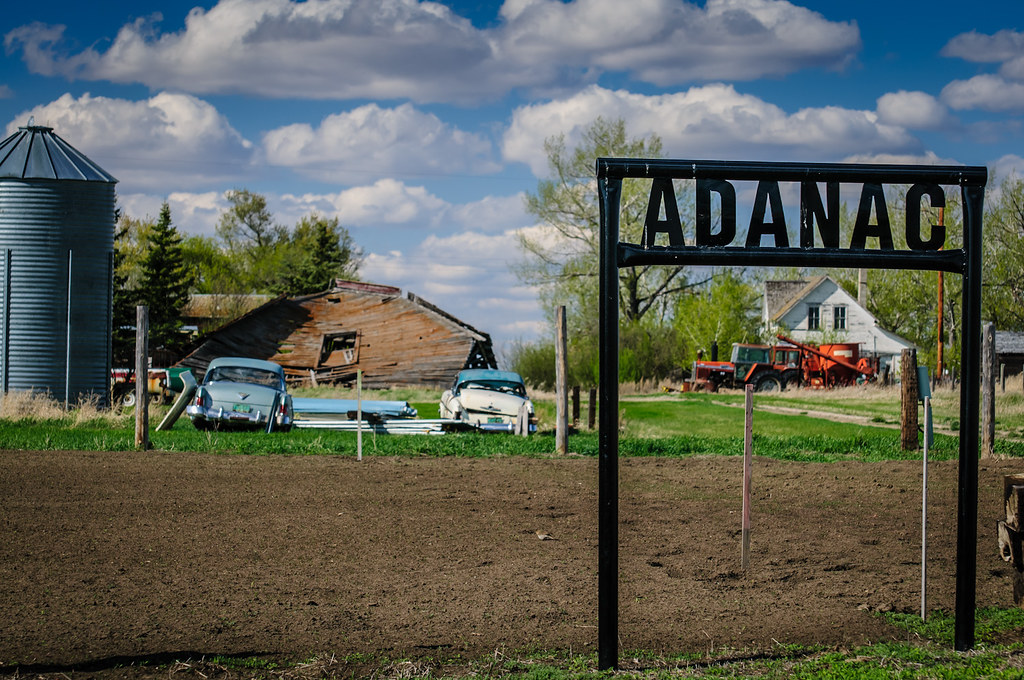
There are towns called Adanac in Canada, and Saxet in Texas. The girls’ names Segna and Nevaeh are “Agnes” and “heaven” spelled backwards. Dioretsa is the fantastically fitting name of an asteroid with an appropriately retrograde orbit. And if you’ve ever thought searching the Internet was too straightforward, why not try searching for everything backwards over on elgooG?

None of those will find its way into a dictionary any time soon, of course, but that’s not to say that a handful of ananyms haven’t already done so. Mho, for instance, is the name of a unit of electrical conductance, coined in opposition to the ohm, a unit of resistance. Along similar lines, physicists have at their disposal units called the yrneh (a unit of inverse electrical inductance, derived from the henry) and the daraf (a measure of electric elastance, as opposed to the farad, a measure of electrical capacitance). And not wanting to be outdone by the Michael Faradays of this world, in 1921 the US engineer Frank Bunker Gilbreth invented the therblig, a unit of work in a time-and-motion study. (Shameless plug—there’s more about these in the HaggardHawks fact book…)

By far the most familiar example of an ananymic word, however, is yob, which has been in use since the mid-nineteenth century to refer to what might otherwise be called a hooligan or a ruffian. It’s earliest record comes from a Dictionary of Modern Slang, Cant, and Vulgar Words, compiled by the English lexicographer John Camden Hotton in 1859.

The full title of Hotton’s dictionary (which is way too long to reproduce here) goes on to explain that it contains “glossaries of two secret languages spoken by the wandering tribes of London”: the two “languages” in question are Cockney rhyming slang and “back slang”, a much less familiar variety of Victorian English slang that, as its name suggests, involved reversing the letters of everyday words and phrases to form an entirely new (and fairly unintelligible) vocabulary. In other words, back slang it was a language of ananyms.

Like rhyming slang, back slang is thought to have first emerged in the early 1800s. In his dictionary, Hotton describes it as “the secret language of the costermongers”, suggesting that it probably originated among London street traders as a means of communicating exclusively with one another, presumably to the bewilderment of their customers.

So in London back slang, a cabbage was an edgabac, an orange was an edgenaro, and pinurt pots were turnip tops. An exis-yeneps was sixpence, a rouf-yeneps was fourpence, and earth gens was three shillings. After a good day’s trading, one seller might comment that he’d made a doogheno hit, or a “good hit” (“implying that he did well at market, or sold out with good profit,” according to Hotton), after which he might treat himself to a top o’reeb (a “pot of beer”), if not a track (a “quart”)—and end up quite kennurd (“drunk”), or at least flatch kennurd (“half-drunk”).

And second from last on Hotton’s list is yob, listed as Victorian back slang for “boy”:


Although linguistic techniques like back slang have remained in use ever since (and are by no means exclusive to English), aside from yob you’d be hard-pushed to find anyone who still uses any of the other entries on Hotton’s list, or to find any similar terms listed in a modern dictionary. 

Contrast that with rhyming slang, which has contributed considerably more to our language than meets the mince-pies: if you’ve ever used your loaf (loaf of bread = “bead”), 86ed something (eighty-six = “nix”), took the mickey out of someone (Mickey Bliss = “take the piss”), or called them a berk (Berkley Hunt = look that one up yourself), then you’ve used rhyming slang, whether you’ve realized it or not.

Os smynana thgim eb erar, tub er’yeht yb on snaem tcnitxe.


17 July 2015

Dandelion

For some reason, toilet talk keeps popping up on here (we’re looking at you, vespasienne), and unfortunately we’re heading back down that way now. That’s because last week we found out that when Italian slang gets weird, it gets brilliantly weird:
Pisacàn is an old Venetian word, which has long since dropped into local use in northern Italian slang. Predictably enough, the pis– means “urine”, while –càn comes from the same Latin root as canine (and Canary Islands). No surprises there then. But what is intriguing is that this is apparently another example of an etymological connection between dandelions and—well, what Samuel Johnson would euphemistically call “animal water”:
Quite right too. English is chock-full of slightly pee-tinged nicknames for dandelions, but more on those in a moment. First things first, though—why exactly is it called a dandelion?

English borrowed the word dandelion from French in the early Middle Ages. The original French name—itself derived from mediaeval Latin—was dent de lion, literally meaning “lion’s tooth”, which is a brilliantly imaginative reference to the dandelion’s jagged, sharply-toothed leaves:


Although a handful of even earlier examples of the word have been unearthed in Middle English herbals and medical textbooks—some dating back to the late 1300s—in those dandelion was still essentially a foreign word, and it wasn’t until the late Middle Ages that it started to become naturalized into English. Ultimately, the first truly English record we have comes from this translation of Virgil’s Aeneid, written in 1513.

Before then—and before we plundered dent de lion from the French—dandelions were known by all kinds of other names in English: in the fifteenth century, they were the priest’s crown (a reference to their bright golden colour) and the monk’s-head (a reference to their bald heads, after all the fluffy seeds have been blown away). Earlier still, the Old English name was ægwyrt, or “egg-wort”, an allusion to the dandelion’s egg yolk-coloured petals. But in the late Middle English period, another entirely different nickname began to emerge: pissabed

Pissabed derives from the old belief that the dandelions do indeed have a diuretic effect, increasing the amount of urine that the body produces. So have a nice fresh supper of dandelion salad and, well, you might end up having that dream where you’re asleep on the beach and the tide’s coming, or that you’re Ophelia in John Everett Millais’ painting. (If you know what I mean...)

Medicinally, diuretics are used to treat all kinds of different conditions from high blood pressure to liver disease, and in traditional and complementary medicine dandelions have been used to do precisely that for centuries. Whether they work or not (and the jury is certainly still out about that), this ancient association has become so ingrained in folklore that a whole host of pee-related nicknames for the dandelion have since emerged. 

The English Dialect Dictionary, for instance, lists pissabed alongside pissybed, pissymoor, pissimire, and pissimer-flower. Other dialect glossaries add pittly-bed, piddle-your-bedpee-the-bedpish-the-bed and pissy-mother to the list. And elsewhere there’s jack-piss-the-bed, tiddle-bed, wet-the-bed, and even pisshead. This association isn’t unique to English either: the original Middle English pissabed was probably a translation of the earlier French name piss-en-lit, and alongside that there are German nicknames like Pissblume and Bettnässer (literally “bed-wetter”), the Spanish slang meacama (“piss-the-bed”), and the Italian piscialetto.

A pappus. At 0000 hours, apparently.
It’s not just number ones that dandelions are blamed for either: the EDD also lists the fairly unsubtle shit-a-bed as another alternative name, while one nineteenth century Scots dialect dictionary likewise calls it the bumpipe. The dandelion’s supposed medical benefits are  alluded to in nicknames like heart-fever grass and live-long. There’s also dog-posy and dog-stinker, both of which tie in with the Italian “dog-pisses”. An entirely untrue bit of folklore that claims dandelions are poisonous is responsible for nicknames like devil’s-milk plant, canker flower, and witch gowan. And the ancient tradition that the number of breaths it takes to clear the dandelion’s fluffy seed head (known as the pappus, if you want to get technical) is the origin of a clutch of old nicknames like bessy-clock, one-o’clock, and fortune-teller plant

So just one question remains—why on earth are there so many different names? 

Well, it’s worth pointing out that dandelion is by no means alone here. Remember the dishwasher bird? Jack-jump-up-and-kiss-me? The lady-with-the-twelve-flounces? And take a look at this fantastic Storified list of local nicknames for woodlice, put together by Mr @MooseAllain. The fact is that many of our most familiar, most noticeable, and most frequently-encountered plants and animals end up with page after page of alternative names, simply because they’re so familiar, so noticeable, and so frequently encountered. And the fact that dandelions are edible, as well as medicinally useful, only serves to make them even more noteworthy. Just don’t eat too many of them before bed...


30 April 2015

Cacemphaton


Earlier this month, UK Labour Party leader Ed Miliband made headlines (as well as a new Labour Party slogan) by exclaiming that “Hell, yes!” he was tough enough to be the next Prime Minister. Then, earlier this week, David Cameron likewise made headlines when he admitted to feeling “bloody lively” about the upcoming election. Well, somebody has to.

But no matter how rousing, how convincing, or how appropriate you might think the two leaders’ sweary outbursts were (and if they think this is swearing, they should really try standing at a bar in Newcastle on a Friday night), their use of tongue-worms nevertheless brings to mind two brilliant terms from the murky world of rhetoric.

The first, cacemphaton, is the rhetorical use of bad language. It literally means “bad show” or “bad appearance” in Greek, the phaton suffix being a distant relative of words like phantom and epiphany. It was coined by the Roman rhetorician Quintilian in the first century AD, in his enormous guide to speech-making, Institutio Oratoria, or “The Institutes of Oratory”. Twelve volumes of rhetorical treatises, you say? Count me in! 

(Asking a rhetorical question and then answering it yourself? That’s anthypophora.) 

Marcus Fabius Quintilian: He’ll never catch a cab up there.

Quintilian, unsurprisingly, wasn’t a big fan of bad language—in fact he labelled it “objectionable”, “corrupt”, and “unbecoming”. So when it came to actually writing about the expletives he had in mind, he neatly dodged the issue by writing instead that, “it would be tedious to specify them, and in doing so I should dwell upon the very fault which I say should be avoided.” He’s got a fucking point.

But the bad language Quintilian was referring to wasn’t the same “bad language” we use today. Instead, he used cacemphaton to refer to a clumsy or ill-advised choice words, and in particular a chance combination of words that could be misinterpreted or misheard as something vulgar. By means of an example, he singled out the Latin word intercapedo, meaning “interruption” or “interval”, which he advised against using because its final two syllables sound remarkably like the Latin word for “I fart”.

So originally cacemphaton referred to the unintentional use of bad or vulgar language—like when the F word suddenly appears in the middle of your polite request to “pass a fork and knife”, or when you tell someone to “catch it!”, and instead it sounds like a warning not to step in a used litter tray. But over time Quintilian’s definition broadened, so that today cacemphaton generally refers to any rhetorical use of coarse or vulgar language, particularly for emphasis or effect. The unintentional “bad language” that Quintilian identified, meanwhile, is now termed cacosyntheton—literally “badly put together” language.

If you are going to swear, though, there should always be a good reason for it—which brings us to the second word on our list: lalochezia. It describes the use of foul language to relieve stress, pain or frustration. So those words that rush through your mind (and out of your mouth) when you miss your train, stub your toe, or accidentally brush against a hot iron? That’s lalochezia. 

Appropriately enough for a word concerning foul language, lalochezia itself has a pretty foul etymology. So while the initial lalo– is a derivative of the Greek word for “speech”lalia (as in glossolalia, the proper name for speaking in tongues), the –chezia part is a derivative of the Greek verb chezo—which means “to defecate”, and is a not-so-distant ancestor of the English word shit. So, etymologically speaking at least, lalochezia is literally “shitting out of your mouth”. 

Quintilian would have been horrified.