_

1 April 2016

Cacafuego


There’s really no nice way of putting this, but the fact is that poop crops up more often than it duly should on this blog. And thanks to a tweet from the HH feed the other day, we’re going back down that way again now:


There’s no denying that cacafuego is a brilliant (and unavoidably useful) word, but is it really genuine? Or, to put it another way:


Wow, imagine if that were true. A plot twist to put M Night Shyamalan to shame. But let’s not get bogged down in piss halfway through a blog about shit, so to speak.

No prizes for guessing that cacafuego was borrowed into English from Spanish, and combines the verb cacar (modern Spanish cagar, “to void excrement”) with fuego, “fire”. It first appeared in English as another word for a blustering braggart in the early 1600s, but we can be fairly sure that it was in use before then thanks to the somewhat unlikely-sounding involvement of Sir Francis Drake.


Sir Francis Drake: looking a little ruff
In 1578, part-way through his circumnavigation of the Earth, Drake rounded Cape Horn and entered the Pacific Ocean, hot on the heels of a 120-tonne Spanish galleon called the Nuestra Señora that he had heard was laden with a rich cargo of silver and jewels from the Spanish colonies. And he wanted it.

Sailing up the Pacific coast of South America, Drake’s Golden Hind caught up with the Nuestra Señora off the coast of Ecuador. Knowing that an attack made under the cover of darkness was his best bet, he slowed his progress by tying some of his ship’s store of wine to the stern and throwing it overboard, so that by the time the Hind reached the Nuestra Señora it was the middle of the night. The Spanish crew were taken by surprise, and after a brief skirmish they surrendered, allowing Drake and his men to take control of the ship.


Drake sailed both the Nuestra Señora and the Golden Hind back to the South American coast to unload her treasure. Knowing just how substantial a prize he had secured for England he treated the Spanish crew well, inviting the officers to join him for a grand banquet and giving every crewmember a parting gift and a letter of safe conduct, ensuring as safe a journey home to Europe as possible. Drake himself continued on his journey, and having completed his circumnavigation arrived back in Plymouth on 26 November 1580.

So where does all the flaming poop come into this? Well, Drake’s captured galleon might have been officially known as the Nuestra Señora de la Concepción, or “Our Lady of the Immaculate Conception”, but to her crew she was the Cacafuego, or “fire-shitter”. That might seem like an odd (and fairly uncomplimentary) nickname for—well, anything really, but just like the Spitfire centuries after her, it was probably intended to be a reference to her impressive weaponry and blazing cannon fire, or else to her speed through the water and her “fiery” temperament. 

And just as spitfire was once a nickname for an irascible, hot-tempered person, in the seventeenth century cacafuego became a byword for a blustering, swaggering braggart—a meaning perhaps influenced by the fact that, despite her impressive armoury, the Cacafuego had proved no match for Drake. 


31 March 2016

10 Words For Fools And Nincompoops

No jokes, April 1 is April Fools’ Day. So in honour of that, this week on the HaggardHawks YouTube channel we’re looking at 10 Words For Fools And Nincompoops. 

As explained in the video, the word nincompoop is something of an etymological mystery. Samuel Johnson suggested that it came from the Latin phrase non compos mentis, used to describe someone of less than sound mind, but a lack of early spellings following this template casts doubt on his theory. 

Alternatively, on its own the word poop (which crops up more often than it really should on this blog…) can be used as a verb meaning “to cheat” or “deceive”, but the nincom– part is a lot more challenging. Some accounts claim that it’s a twist on noddy or noddypoll, both even earlier words for fools or dunderheads, while others claim it comes from Nicodemite—a French-origin word for a follower of Nicodemus, but which became a byword for anyone who hides their faith to avoid persecution or ridicule. 

Whatever the truth might be, the word nincompoop continues to fool etymologist. But this and nine more words to boost your April Fools’ Day vocabulary are listed here—from a word derived from a gullibly catchable freshwater fish to a general word for a fool that began life as a psychiatric category based on a person’s IQ…


← Last Week: 10 Words You Won’t Believe Exist
→ Next Week: 10 Words You Didn’t Know Have Opposites


29 March 2016

The Feynman Point

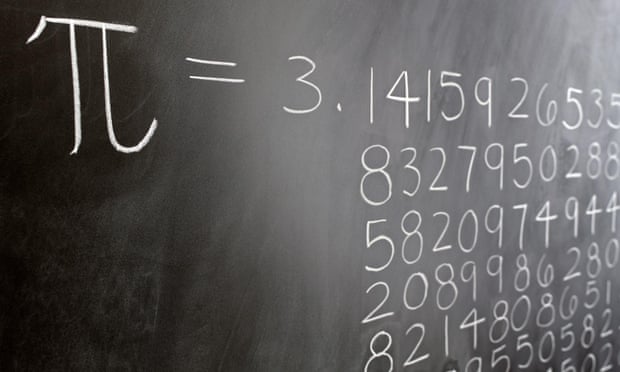
If you saw our video of words derived from numbers earlier this month, you’ll know that March 14 was Pi Day (or rather, the once-in-a-century Rounded-Up Pi Day), because when it’s written out numerically the date “3.14.16” forms the first few digits of pi.

Besides our mathematically-themed video, however, over on the HaggardHawks Twitter feed we marked Pi Day with this fairly remarkable fact:


Now. We’re not mathematicians here at HaggardHawks, and frankly the very idea of discussing the irrationality of an approximation of the mathematical constant representing the ratio of the circumference of a circle to its diametzzzzzzzzzzzzzzz…

Only joking, mathematicians, we love you really. But even dusty, bookish old wordsmiths like us can find some interest in mathematics every so often, and the Feynman Point is one of those times. So we thought you might like to know a little bit more about the point behind The Point.

The “Feynman” of the Feynman Point is the American theoretical physicist Richard Feynman. In a lifetime of achievement and accomplishment, Feynman did everything from helping develop the atomic bomb to assisting in the commission that investigated the Challenger disaster in 1986. He was also jointly awarded the 1965 Nobel Prize for Physics for his “fundamental work in quantum electrodynamics”, including his groundbreaking work on quantum path integral formulation challenging the existing notion of a unique quantum trajectory by replacing it with a functional integralzzzzzzzzzz…

Only joking, physicists, we love you as well. But long story short, Richard Feynman was a brilliant scientist—and he was also very interested in π.

According to the story, during a lecture at the California Institute of Technology, Feynman joked to his students that he would one day like to memorize pi up to the point, 762 decimal places in, that there are six consecutive nines. Why? Well, he wanted reach that particular repdigit and then state “...999999, and so on”, implying that the famously irrational π suddenly, 762 places in, becomes nothing more than an infinite chain of 9s.

Regrettably there’s little evidence that Feynman ever actually made that joke (and in fact the earliest account of it credits it to fellow scientist Douglas Hofstader), but it’s Feynman’s name that has ended up being attached to these six consecutive 9s, and its his name that has remained in place ever since.

Incidentally, another six consecutive 9s crop up in the 193,034th–193,039th decimal places of pi. Anyone fancy memorizing up to there? You could get your name in the dictionary if you do...


28 March 2016

10 Words You Won’t Believe Exist


If there’s one question that comes up more often than any other over on the HaggardHawks Twitter feed, it’s whether or not the words we tweet are genuine. The short answer is yes. They might be old, they might be local, they might be archaic, they might long have fallen out of use, but they’re all completely genuine dictionary words. Seriously, hunting out bizarre words is a lot more fun than making them up.

That can be a difficult truth to swallow, of course, especially given the existence of words like this one:


But it’s not less true. So in this week’s 500 Words video, we’re proving that when the English language gets strange, it gets really strange with this list we’re calling 10 Words You Won’t Believe Exist.

And they’re all completely genuine...


24 March 2016

17,000 Followers!

Well, well, well. It’s only been a few weeks since HaggardHawks hit its last milestone, and here we are again. Thanks so much everyone—unbelievably, all 17,000 of you!—for following, retweeting, commenting, sharing, questioning, and of course watching, now that our new YouTube series is in full flow…

But reaching another milestone can only mean one thing: it’s time for another of our fiendish 20-question quizzes. 

Same rules as always—no time limit, just a vintaine* of questions, designed to test your language knowledge to its max. So how closely have you been paying attention to @HaggardHawks? Let’s find out shall we…


* worth remembering that one…